
If a single chart pattern has earned the title of the most reliable reversal formation in all of technical analysis, it is the head and shoulders. A head and shoulders forex pattern marks the exhaustion of an uptrend through three peaks, a higher middle peak flanked by two lower shoulders, while its upside-down counterpart, the inverted head and shoulders pattern, signals the end of a downtrend. Respected by technical traders for decades, the pattern works because it tells a clear, readable story about buyers gradually losing control. This guide explains how to identify it correctly, how to trade both the standard and inverted versions with proper confirmation, and how to manage risk with logical stops and measured targets. Approached with discipline, a familiar shape becomes a genuine, repeatable edge rather than a pattern you only recognise after the move has already happened.
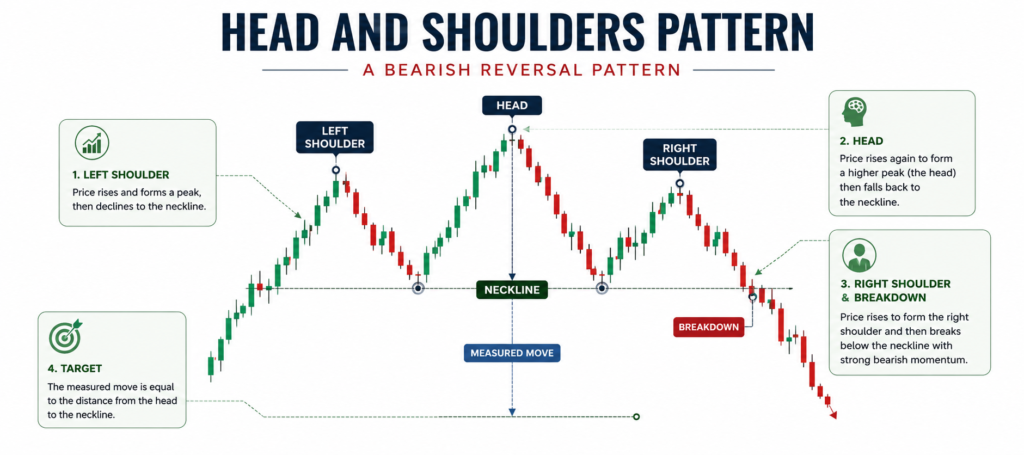
Fig 1.1 Head and shoulders forex chart
What Is a Head and Shoulders Pattern?
A head and shoulders forex pattern forms at the top of an uptrend and consists of three peaks: a first peak (the left shoulder), a higher peak (the head), and a third peak roughly level with the first (the right shoulder), all sitting above a support line called the neckline. The structure tells a story of fading strength. Buyers push to a new high to form the left shoulder, pull back, surge again to a higher high to form the head, then on the third attempt manage only a lower peak, the right shoulder, revealing that demand is exhausting and sellers are gaining the upper hand.
The pattern is not complete or tradeable until price breaks below the neckline, the line connecting the lows between the peaks. This is the single most important rule and the one beginners most often ignore. Until the neckline breaks, the formation is only a candidate; price could still resume its uptrend. The neckline break is the confirmation that the reversal has begun, transforming a suggestive shape into an actionable signal. Trading before the break is anticipation and the source of most head and shoulders losses.
The inverted head and shoulders pattern is the exact mirror, forming at the bottom of a downtrend. It shows three troughs, a first low (left shoulder), a deeper low (the head), and a third higher low (right shoulder), beneath a neckline of resistance. Confirmation comes on a break above the neckline, signalling that sellers have exhausted and buyers are taking control. Everything that applies to the standard pattern applies in reverse to the inverted version, so understanding one means understanding both.
How to Identify a Valid Pattern
A high-quality head and shoulders has clear, demandable characteristics. It must form after a genuine, established uptrend, because a reversal pattern requires a trend to reverse; the same shape in a sideways range is meaningless. The head must be a distinct higher peak than both shoulders, and the two shoulders should be roughly symmetrical in height and position, giving the pattern its recognisable balance. A vague, lopsided formation with no clear head is not a reliable pattern and should be passed over.
The neckline is central. It connects the reaction lows between the peaks and may be horizontal or slightly sloped, and its break is the trigger for the entire trade. A decisive break, ideally a strong close below the neckline rather than a fleeting wick, signals genuine seller control. The cleanest patterns also show waning momentum across the formation, with an indicator such as RSI making a lower high on the head or right shoulder, hinting at exhaustion before the neckline even breaks. Volume considerations, where available, traditionally show diminishing buying interest into the right shoulder.
Context multiplies reliability. A head and shoulders that completes at a significant higher-timeframe resistance level carries far more weight than one in open space, because it represents exhaustion where the wider market was already likely to react. Stacking factors, an established prior uptrend, a symmetrical three-peak structure with a clear head, momentum divergence, and a decisive neckline break at a meaningful level, turns this classic shape into one of the highest-probability setups in technical trading.
How to Trade the Pattern
The disciplined entry on a head and shoulders forex pattern is on the confirmed break of the neckline, entering short as price closes decisively below it. More conservative traders wait for a retest, where price breaks the neckline, pulls back to it from below, and is rejected, offering a tighter, lower-risk entry at the cost of occasionally missing moves that never retest. Both approaches respect the core principle of trading the confirmation rather than anticipating it at the right shoulder.
Stop placement and targets follow the pattern’s structure. A logical stop sits just above the right shoulder, because a move back above it undermines the reversal thesis, while a retest entry allows a tighter stop just above the neckline. The conventional target is the measured move: take the vertical distance from the head down to the neckline and project it downward from the break point, giving an objective, structured target rather than a guess. For the inverted head and shoulders pattern, everything mirrors, entry on the break above the neckline, stop below the right shoulder, target the head-to-neckline height projected upward.
| Element | Head & Shoulders | Inverted Head & Shoulders |
|---|---|---|
| Location | Top of an uptrend | Bottom of a downtrend |
| Structure | Three peaks, higher head | Three troughs, lower head |
| Confirmation | Break below neckline | Break above neckline |
| Stop | Above right shoulder | Below right shoulder |
| Target | Head-to-neckline projected down | Head-to-neckline projected up |
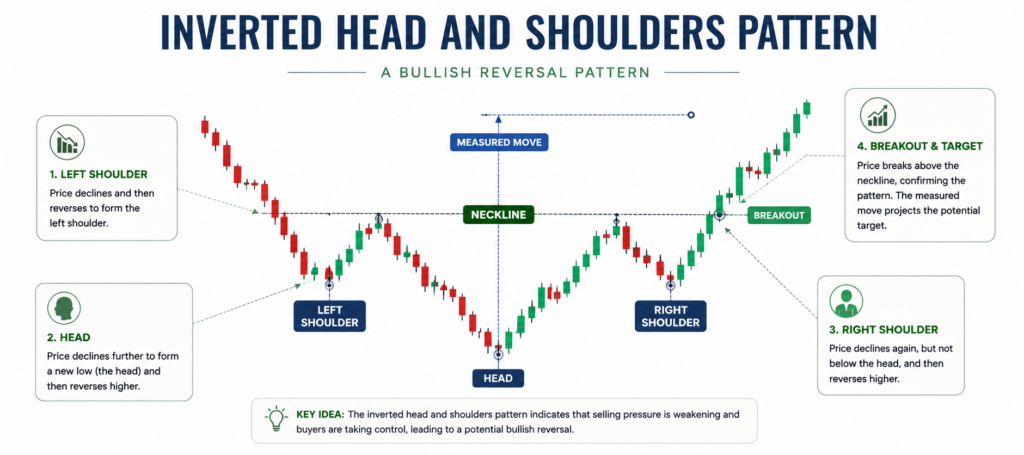
Fig 1.2 Inverted head and shoulders pattern
What Top Traders and Research Say
The head and shoulders is one of the few patterns to have been studied formally with encouraging results. In their influential work “Foundations of Technical Analysis,” Andrew Lo, Harry Mamaysky, and Jiang Wang applied rigorous statistical methods to common technical patterns and found that the head and shoulders, among others, carries genuine, measurable informational value. This lends real credibility to the disciplined, confirmation-based trading of the pattern rather than dismissing it as folklore, while still reminding traders that informational value is not a guarantee on any single trade.
The behavioural logic is equally sound. The work of Werner De Bondt and Richard Thaler on market overreaction explains why trends exhaust and reverse, the very dynamic the pattern captures as an overextended move runs out of buyers. The veteran technical analyst Thomas Bulkowski, who studied pattern performance extensively, has long stressed that the neckline break and proper context, not the shape alone, determine reliability. And the trader’s discipline is captured by the old market adage to trade what you see, not what you think, which for a head and shoulders means waiting for the neckline to break before acting on a reversal you may feel is coming.
Common Mistakes to Avoid
The most common and costly mistake is entering before the neckline breaks, shorting at the right shoulder on the assumption the pattern guarantees a reversal. Many head and shoulders patterns fail and resolve as continuations, so trading before confirmation is trading hope. Waiting for the decisive neckline break filters out a large share of these false patterns and is the single most important discipline in trading the formation.
A second frequent error is forcing the pattern, seeing a head and shoulders in a sideways range, ignoring the requirement for a prior uptrend, or accepting a lopsided structure with no clear head and asymmetric shoulders. Demanding a clean, well-formed pattern at a meaningful level avoids low-quality setups. Equally damaging is neglecting risk management; no pattern is certain, so the stop above the right shoulder and a sensible position size are non-negotiable. Finally, ignoring the measured-move target and exiting randomly squanders the pattern’s main analytical advantage, its objective, structured profit projection.
Frequently Asked Questions
What is a head and shoulders pattern in forex?
A head and shoulders forex pattern is a reversal formation at the top of an uptrend, made of three peaks: a left shoulder, a higher head, and a right shoulder roughly level with the left, sitting above a support line called the neckline. It signals that buyers are exhausting, with the lower right shoulder showing fading strength. The pattern is confirmed only when price breaks decisively below the neckline; before that, it is merely a candidate that could still resume its uptrend.
How do I trade an inverted head and shoulders pattern?
The inverted head and shoulders pattern is the mirror image at the bottom of a downtrend, traded long. Identify three troughs, a left shoulder, a deeper head, and a higher right shoulder, beneath a neckline of resistance, then wait for a decisive break above the neckline to confirm. Enter on the break or on a retest of the neckline from above, place the stop below the right shoulder, and project the head-to-neckline distance upward from the break for an objective target. It signals sellers exhausting and buyers taking control.
How reliable is the head and shoulders pattern?
The head and shoulders is widely regarded as one of the most reliable reversal patterns, and research on technical patterns, including the work of Lo, Mamaysky, and Wang, found it carries genuine informational value. Reliability depends on demanding a real prior trend, a symmetrical three-peak structure with a clear head, and a decisive neckline break, ideally at a significant level with momentum divergence. Traded on shape alone without confirmation, patterns fail more often; the neckline break, sensible stops, and context are what make it dependable.
Where do I place my stop and target?
On a standard head and shoulders, place the stop just above the right shoulder, where a move higher undermines the reversal, or just above the neckline on a retest entry. The target is the measured move: the vertical distance from the head to the neckline, projected downward from the break point. The inverted pattern mirrors this, stop below the right shoulder, target the height projected upward. Always size the position so the stop distance represents a small, fixed percentage of your trading account.
Can beginners trade head and shoulders patterns?
Yes, the head and shoulders is well suited to beginners because its structure, neckline, and measured-move target are clear and objective. The essential discipline to learn is patience: waiting for the neckline break rather than anticipating the reversal at the right shoulder, which is the most common error. Trading on higher timeframes produces cleaner, more reliable patterns with less noise. With confirmation-based entries, a stop above the right shoulder, and attention to the prior trend and context, beginners can trade this classic pattern effectively and confidently.
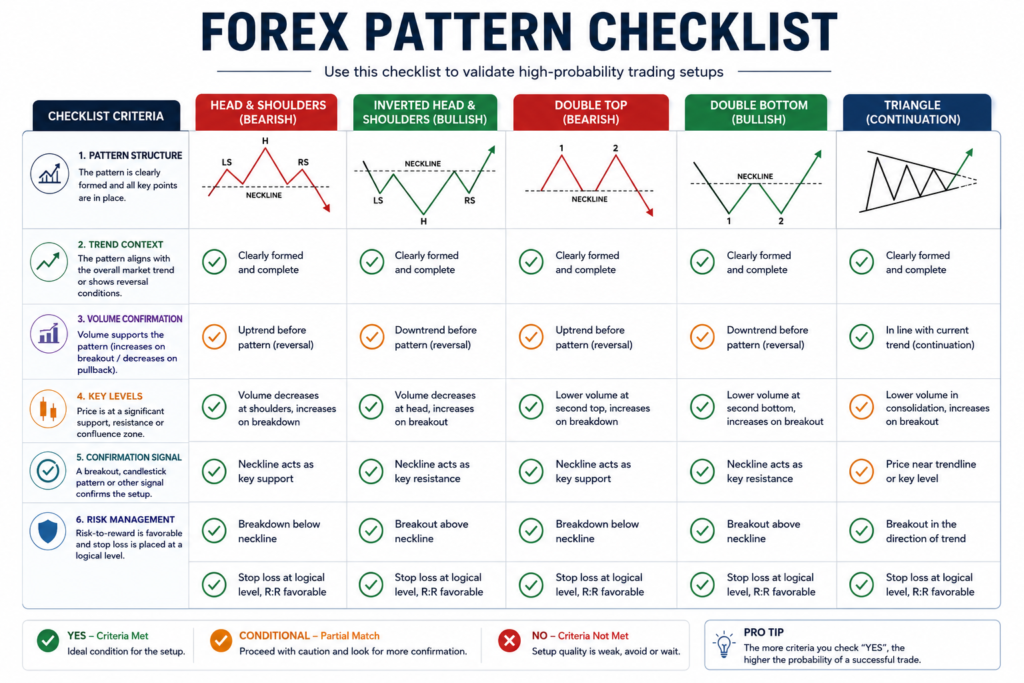
Fig 1.3 Head and shoulders forex infographic summarizing structure
Final Thoughts
The head and shoulders forex pattern has earned its reputation as the king of reversal formations because it tells an unusually clear story: three peaks, a fading right shoulder, and a neckline break that confirms buyers have lost control. Its mirror, the inverted head and shoulders pattern, does the same at the bottom of a downtrend, and mastering one means mastering both. The decisive lesson, repeated throughout, is that the neckline break confirms the pattern, not the appearance of three peaks, and trading before that break is the chief source of losses. A high-quality setup demands a genuine prior trend, a symmetrical structure with a distinct head, momentum divergence, and a decisive break at a meaningful level, and it rewards the trader with an objective measured-move target and a logical stop above the right shoulder. The research of Lo, Mamaysky, and Wang lends real credibility to disciplined pattern trading, De Bondt and Thaler explain why these reversals occur, and Bulkowski’s emphasis on confirmation keeps the approach grounded. Trade the neckline break, not the anticipation.