
Forex Trading Glossary: A Complete Forex Dictionary for Smart Traders
Introduction
Entering the world of forex trading without understanding its language is like trying to navigate a foreign country without knowing the local dialect. The forex trading glossary serves as your essential guide, helping you understand every concept, term, and phrase used in the global currency market. Many traders fail not because of poor strategies, but because they lack clarity on fundamental terminology.
A well-structured forex dictionary does more than define words it builds your confidence and sharpens your decision-making ability. When you clearly understand terms such as spread, leverage, margin, and liquidity, you begin to see the market from a professional perspective rather than a speculative one. This transformation is critical for long-term success.
In this comprehensive guide, you will not only learn definitions but also understand how these terms work together in real trading scenarios, enabling you to make informed and profitable decisions.
Fig 1.1 Forex trading chart showing price movements and trends
The Importance of a Forex Trading Glossary in Modern Trading
The forex market operates 24 hours a day and involves trillions of dollars in daily transactions. In such a fast-moving environment, every second counts, and every decision must be based on precise understanding. This is where the forex trading glossary becomes indispensable.
Without a solid grasp of forex terminology, traders often misinterpret signals, misunderstand broker conditions, and miscalculate risk. For example, confusing margin with leverage or ignoring the impact of spread can lead to unexpected losses. A professional forex dictionary eliminates these risks by providing clarity and consistency.
Moreover, understanding the language of trading enhances your ability to analyze educational resources, follow expert strategies, and communicate effectively within trading communities. It allows you to transition from a beginner mindset to a more analytical and disciplined approach.
Understanding Core Forex Terms in Depth
At the foundation of every forex trading glossary are the core terms that define how trades are executed and measured. These terms may seem simple at first glance, but their practical implications are significant.
A “pip,” for instance, represents the smallest unit of price movement in most currency pairs. While it appears minor, a few pips can translate into substantial profits or losses depending on your trade size. This is why understanding pips through a reliable forex dictionary is crucial for risk management.
Another fundamental concept is “lot size,” which determines the volume of a trade. Whether you are trading micro lots or standard lots, this directly affects your exposure to the market. Beginners often underestimate this aspect, leading to overtrading or excessive risk.
The “spread” is equally important. It is the difference between the buying and selling price and acts as a hidden cost in every trade. A deeper understanding of spread helps traders choose the right broker and optimize their trading strategy.
Leverage, perhaps the most powerful tool in forex, allows traders to control large positions with a small amount of capital. However, it is a double-edged sword. While it can amplify profits, it can also magnify losses. A comprehensive forex trading glossary emphasizes the importance of using leverage responsibly.
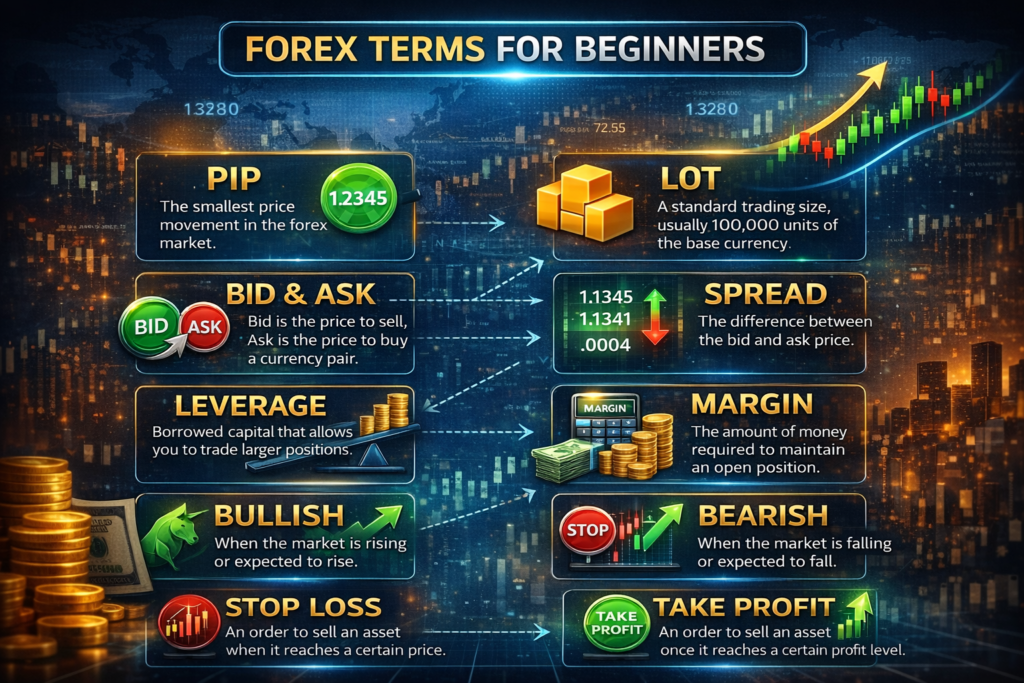
Fig 1.2 Forex trading glossary infographic with key trading definitions
Market Behavior and Trading Psychology Through Forex Terminology
The forex trading glossary also includes terms that describe how markets behave under different conditions. Words like bullish, bearish, consolidation, and breakout are not just descriptive they provide insight into market sentiment and direction.
For example, a bullish market indicates strong buying pressure, while a bearish market reflects selling dominance. Understanding these conditions through a structured forex dictionary helps traders align their strategies with market trends rather than going against them.
Volatility is another critical concept. It measures how quickly prices change within a given period. High volatility can create opportunities for profit, but it also increases uncertainty. Traders who understand volatility can adjust their strategies accordingly, using tighter stop losses or reducing position sizes.
Liquidity, on the other hand, refers to how easily trades can be executed without causing significant price changes. Major currency pairs typically have high liquidity, making them more stable and cost-effective to trade. This is why professional traders often focus on these pairs.
Technical Analysis Terms Explained in Detail
Technical analysis is a cornerstone of modern trading, and a complete forex trading glossary must include its key concepts. This approach involves analyzing price charts, patterns, and indicators to predict future movements.
Support and resistance levels are among the most widely used concepts. Support represents a price level where buying pressure prevents further decline, while resistance is where selling pressure limits upward movement. These levels act as psychological barriers in the market.
Indicators such as RSI (Relative Strength Index) and MACD (Moving Average Convergence Divergence) help traders measure momentum and trend strength. A professional forex dictionary explains not only what these indicators are but also how to use them effectively.
Candlestick patterns provide visual insights into market sentiment. Patterns like doji, engulfing, and hammer can signal potential reversals or continuations. Understanding these patterns allows traders to make more precise entry and exit decisions.
Fundamental Analysis and Economic Terminology
While technical analysis focuses on charts, fundamental analysis examines the economic forces that drive currency values. A well-developed forex trading glossary includes terms related to global economics and financial indicators.
Interest rates play a significant role in determining currency strength. Higher interest rates tend to attract foreign investment, increasing demand for a currency. Inflation, GDP, and employment data are also key indicators that influence market movements.
One of the most important events in forex trading is the Non-Farm Payroll (NFP) report, which measures job growth in the United States. Such events can cause significant volatility, making it essential for traders to understand their impact through a reliable forex dictionary.
Practical Application of Forex Glossary in Real Trading
The real value of the forex trading glossary lies in its practical application. When you open a trade, you are not just clicking buttons, you are applying multiple concepts simultaneously.
For instance, you analyze the market trend, identify support and resistance levels, calculate your lot size, consider the spread, and set a stop loss to manage risk. Each of these steps is rooted in the terminology explained in a professional forex dictionary.
As you gain experience, these concepts become second nature. You begin to think in terms of pips, risk-reward ratios, and market conditions, allowing you to make faster and more accurate decisions.
How to Master the Forex Trading Glossary Effectively
Mastering the forex trading glossary requires a combination of study and practice. Simply memorizing definitions is not enough. You need to understand how each term applies in real trading scenarios.
Start by focusing on the most essential terms and gradually expand your knowledge. Use a demo trading account to practice applying these concepts without risking real money. Over time, you will develop a deeper understanding of the market.
Consistency is key. Regularly revisiting your forex dictionary and staying updated with new terms will keep your knowledge sharp and relevant.
FAQs About Forex Trading Glossary
What is a forex trading glossary?
Why is a forex dictionary important for beginners?
Which terms should I learn first in the forex trading glossary?
How does understanding forex terminology improve trading performance?
Can I rely only on a forex dictionary to become a successful trader?
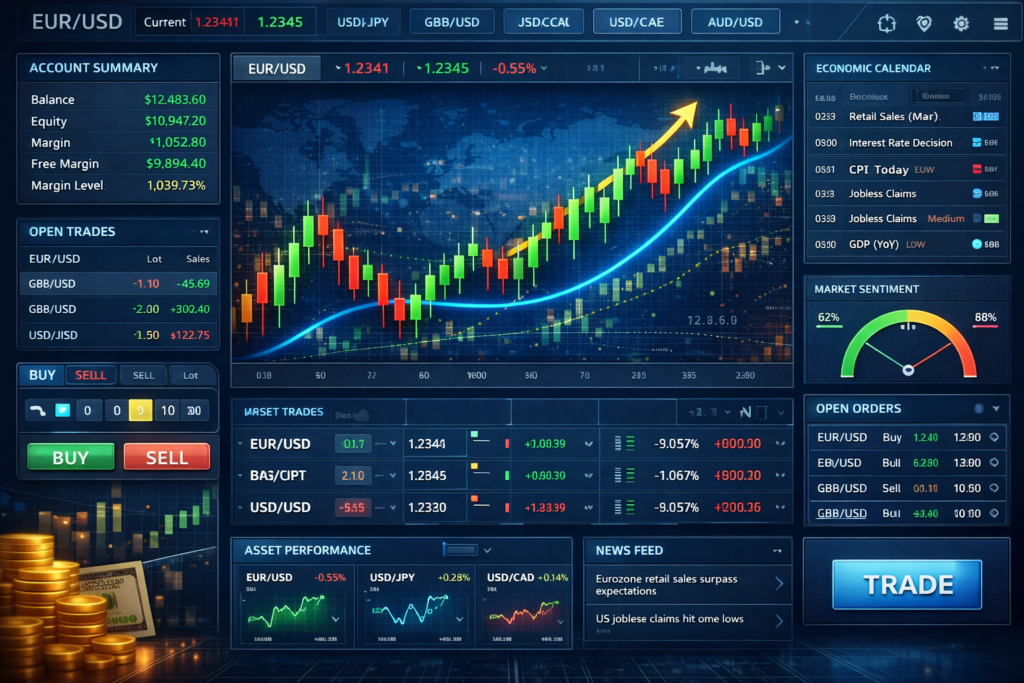
Fig 1.3 Forex trading dashboard displaying live trades and analysis
Final Thoughts
Mastering the forex trading glossary is not just a beginner’s step, it is a continuous process that plays a vital role in every trader’s journey. A well-developed understanding of forex terminology allows you to interpret market movements accurately, manage risk effectively, and execute trades with confidence. This comprehensive forex dictionary serves as the backbone of your trading knowledge, helping you transition from uncertainty to clarity.
As the forex market continues to evolve, staying updated with new terms and concepts becomes even more important. By consistently learning and applying the principles outlined in this guide, you can build a strong foundation that supports long-term success. Ultimately, the more fluent you become in the language of trading, the better equipped you will be to identify opportunities, avoid mistakes, and achieve sustainable profitability in the competitive world of forex trading.