
Forex Multi Timeframe Analysis: Complete Guide to Smarter Forex Trading
The forex market moves across different timeframes simultaneously. A bullish trend on the daily chart may appear bearish on the 15-minute chart, creating confusion for many traders. This is why professional traders rely heavily on forex multi timeframe analysis to understand the bigger market picture before entering trades.
Instead of focusing on a single chart, multi timeframe analysis combines higher and lower timeframe observations to improve trade accuracy and market timing. This method helps traders identify trend direction, confirm setups, and reduce false trading signals.
Professional traders use multi timeframe forex trading because it creates better alignment between market structure and trade execution. It allows traders to follow the dominant trend while using lower timeframes for precise entries.
In today’s competitive forex environment, relying on one chart alone is often not enough. Market behavior changes constantly, and understanding how price reacts across different timeframes gives traders a significant advantage.
Whether you are a beginner or an experienced trader, mastering multi timeframe analysis can improve consistency, confidence, and overall trading performance.
What Is Forex Multi Timeframe Analysis?
Forex multi timeframe analysis is the process of analyzing a currency pair using multiple chart timeframes before entering a trade.
Instead of making decisions from a single chart, traders examine:
- Higher timeframe trend direction
- Medium timeframe market structure
- Lower timeframe entry confirmation
For example:
| Timeframe | Purpose |
|---|---|
| Daily Chart | Identify overall trend |
| 4-Hour Chart | Find setup zones |
| 1-Hour Chart | Confirm entry timing |
This approach creates better market context and helps traders avoid trading against the dominant trend.
Professional multi timeframe forex trading focuses on alignment. When multiple timeframes support the same directional bias, the probability of a successful trade increases significantly.
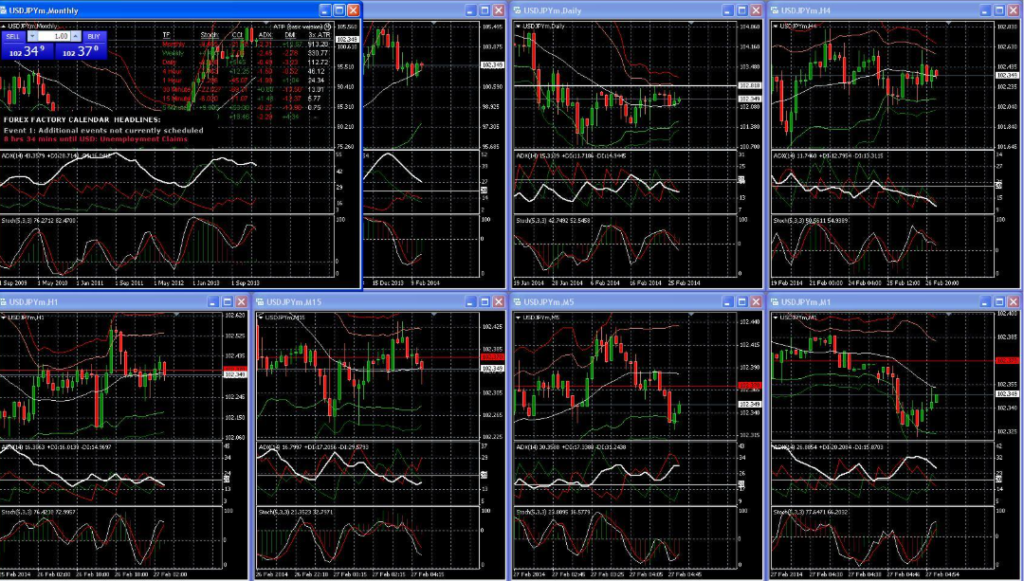
Fig 1.1 forex multi timeframe analysis showing daily 4 hour and 1 hour charts
Why Multi Timeframe Forex Trading Works
Many beginner traders enter trades without understanding the larger market structure. They may see a bullish setup on a lower timeframe while the higher timeframe remains strongly bearish.
This creates poor trade selection and inconsistent results.
The reason forex multi timeframe analysis works so effectively is because markets are interconnected across different timeframes. Large institutional traders often follow higher timeframe trends, while retail traders focus mainly on smaller charts.
By analyzing multiple timeframes, traders gain:
- Better trend clarity
- Stronger entry confirmation
- Improved risk management
- Higher probability setups
- Reduced emotional trading
Professional traders use multi timeframe forex trading because it filters out weak setups and improves market discipline.
How to Perform Forex Multi Timeframe Analysis
Successful forex multi timeframe analysis follows a structured top-down approach.
1. Start with the Higher Timeframe
The higher timeframe determines the dominant market trend.
Most traders use:
- Daily chart for swing trading
- 4-hour chart for day trading
- Weekly chart for long-term analysis
Higher timeframes provide stronger and more reliable market direction because they contain less market noise.
For example, if EUR/USD is clearly bullish on the daily chart, traders usually focus on buying opportunities rather than short positions.
2. Move to the Medium Timeframe
The medium timeframe helps traders identify setup zones and market structure.
Here traders analyze:
- Support and resistance
- Trend continuation areas
- Breakout zones
- Supply and demand levels
This step improves overall market understanding and trade planning.
3. Use the Lower Timeframe for Entry
The lower timeframe provides entry precision.
Professional multi timeframe forex trading uses lower charts to identify:
- Candlestick confirmation
- Momentum shifts
- Breakout confirmation
- Trendline breaks
This improves timing and allows traders to place tighter stop losses with better risk-to-reward ratios.
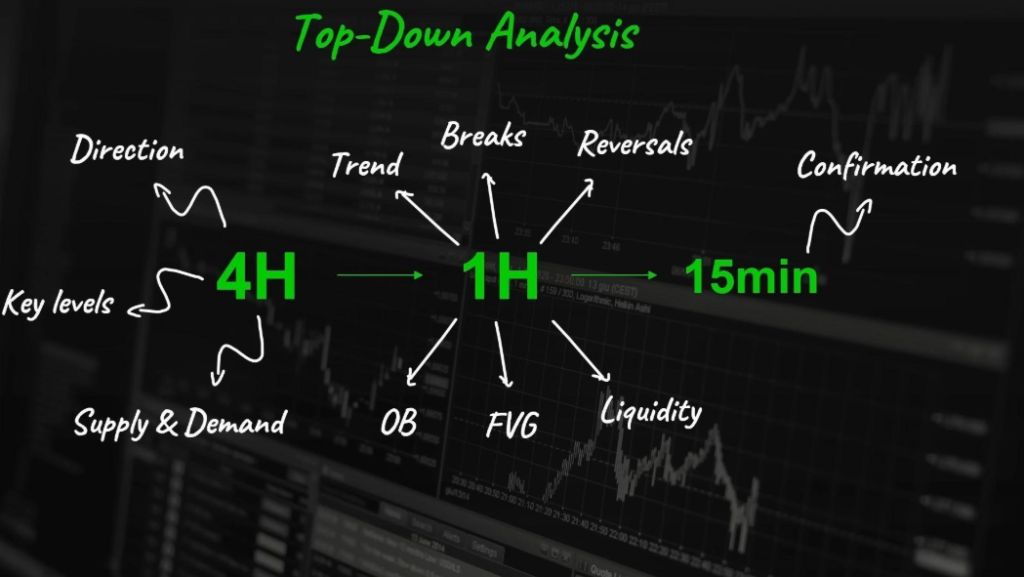
Fig 1.2 multi timeframe forex trading top down analysis infographic
Best Timeframe Combinations for Forex Trading
Different trading styles require different timeframe combinations.
| Trading Style | Higher TF | Medium TF | Entry TF |
|---|---|---|---|
| Scalping | 1-Hour | 15-Minute | 5-Minute |
| Day Trading | 4-Hour | 1-Hour | 15-Minute |
| Swing Trading | Daily | 4-Hour | 1-Hour |
The goal of forex multi timeframe analysis is consistency between trend direction and trade execution.
Benefits of Multi Timeframe Forex Trading
Professional traders prefer multi timeframe forex trading because it improves overall decision-making.
1. Better Trend Confirmation
Higher timeframes reveal the dominant market direction more clearly.
This reduces the chances of trading against strong momentum.
2. Improved Entry Timing
Lower timeframes help traders enter positions more accurately.
Instead of entering randomly, traders wait for confirmation signals.
3. Reduced False Signals
Many lower timeframe setups fail because they ignore higher timeframe context.
Multi timeframe analysis filters weak setups effectively.
4. Stronger Risk Management
Using multiple timeframes allows traders to place smarter stop losses and target more realistic profit levels.
Common Mistakes Traders Make
Although forex multi timeframe analysis is powerful, many traders misuse it.
One common mistake is analyzing too many charts simultaneously. This creates confusion rather than clarity.
Professional traders usually focus on two or three connected timeframes.
Another mistake is ignoring higher timeframe trends. Lower timeframe signals become less reliable when they move against strong higher timeframe momentum.
Some traders also switch timeframes emotionally after entering trades. This creates inconsistency and poor decision-making.
Successful multi timeframe forex trading requires discipline, structure, and patience.
Risk Management in Multi Timeframe Trading
Risk management remains essential regardless of trading strategy.
Professional traders use several principles:
| Risk Management Rule | Benefit |
|---|---|
| Trade with higher timeframe trend | Improves probability |
| Avoid overleveraging | Protects account |
| Use confirmation entries | Reduces false trades |
| Maintain proper risk-reward ratio | Improves consistency |
| Avoid emotional trading | Enhances discipline |
The goal is not to trade constantly but to focus on high-quality setups supported by multiple timeframe confirmation.
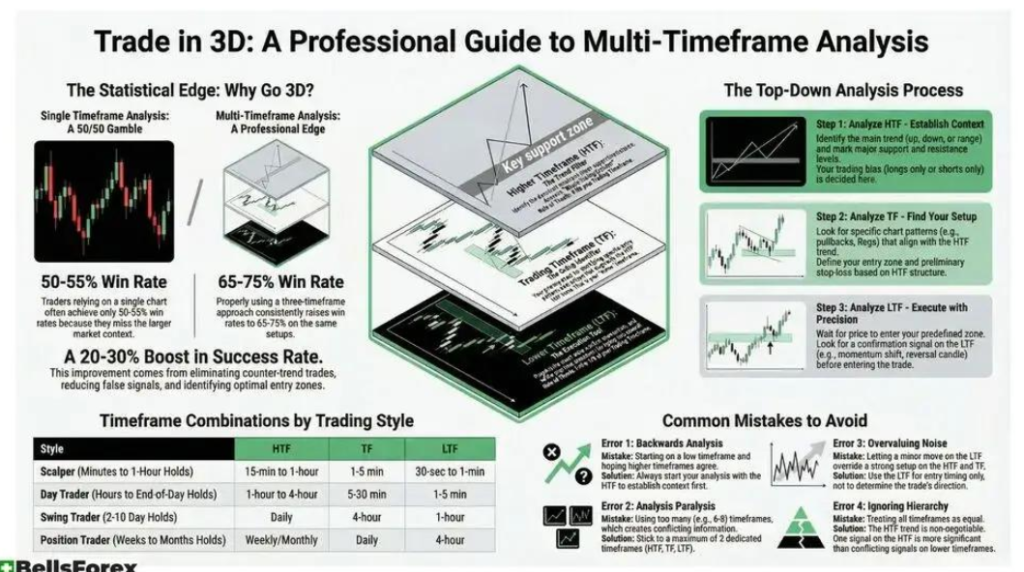
Fig 1.3 forex multi timeframe analysis showing trend confirmation and entry setup
Advanced Multi Timeframe Trading Techniques
Experienced traders often combine forex multi timeframe analysis with advanced technical tools.
Popular combinations include:
- Supply and demand zones
- Fibonacci retracement
- Price action trading
- Trendline analysis
- Moving average confluence
When multiple technical factors align across different timeframes, trading opportunities become significantly stronger.
Institutional traders frequently use this approach because it provides deeper market understanding and improved precision.
FAQs
What is forex multi timeframe analysis?
Why is multi timeframe forex trading important?
Which timeframe is best for forex trading?
How many timeframes should traders use?
Can beginners use forex multi timeframe analysis?
Fig 1.4 professional trader using multi timeframe forex trading analysis on multiple monitors
Conclusion
Mastering forex multi timeframe analysis can significantly improve trading consistency, market understanding, and decision-making. Instead of relying on a single chart, traders gain a broader market perspective by analyzing trends, structure, and entry opportunities across multiple timeframes.
Professional multi timeframe forex trading focuses on alignment. Higher timeframes identify market direction, medium timeframes locate trading zones, and lower timeframes provide precise entries. This layered approach improves trade quality while reducing emotional decision-making and false signals.
However, successful multi timeframe trading requires discipline and patience. Traders must avoid overanalyzing charts and focus on clear, high-probability setups supported by multiple timeframe confirmation.
In today’s highly competitive forex market, understanding how different timeframes interact gives traders a powerful edge. Whether you are a beginner or an experienced trader, mastering multi timeframe analysis can become one of the most valuable skills in your overall trading strategy.