
Forex Mean Reversion Strategy: Complete Guide to Smarter Forex Trading
The forex market constantly moves between expansion and correction phases. Prices rarely move in one direction forever. After strong bullish or bearish momentum, the market often returns toward its average price level. This behavior forms the foundation of the forex mean reversion strategy.
Professional traders use mean reversion techniques to identify overextended market conditions and anticipate price corrections. Instead of chasing aggressive trends, they wait for the market to move too far away from equilibrium before entering reversal trades.
The concept behind mean reversion forex trading is simple. Financial markets tend to revert back to their historical average after excessive movement. This creates trading opportunities when price becomes significantly overbought or oversold.
Unlike emotional trading approaches, mean reversion focuses on probability, market cycles, and statistical behavior. When combined with technical analysis and disciplined risk management, it can become a highly effective trading strategy for both beginners and experienced traders.
In today’s highly volatile forex environment, understanding market reversion behavior gives traders an advantage in identifying low-risk entries and high-probability reversal setups.
What Is a Forex Mean Reversion Strategy?
A forex mean reversion strategy is a trading method based on the assumption that price eventually returns to its average or equilibrium level after moving too far in one direction.
The “mean” refers to the average market price over a specific period. When price deviates excessively from this average, traders anticipate a correction or pullback.
For example:
- If EUR/USD rises aggressively and becomes overbought, traders may expect price to retrace downward.
- If GBP/USD falls sharply into oversold conditions, traders may anticipate bullish recovery.
Professional mean reversion forex traders look for these imbalances and trade the return toward normal market conditions.
Related guides:
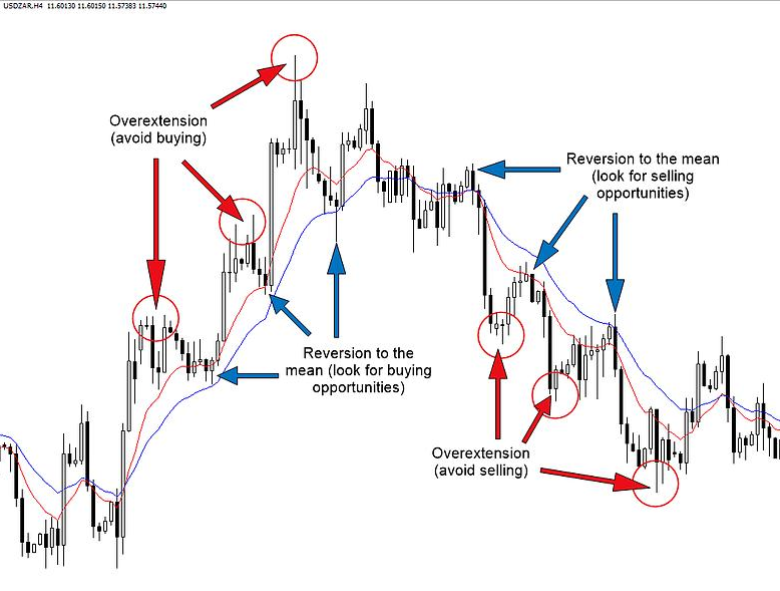
Fig 1.1 forex mean reversion strategy chart showing overbought and oversold reversal zones
Why Mean Reversion Forex Trading Works
Financial markets naturally cycle between expansion and contraction phases. Strong trends eventually slow down as profit-taking, institutional positioning, and market exhaustion occur.
This creates temporary overextensions where price moves too far away from fair value.
Professional traders use forex mean reversion strategy setups because markets often behave statistically rather than randomly.
Several factors contribute to mean reversion behavior:
| Market Factor | Impact |
|---|---|
| Profit-taking | Reduces trend momentum |
| Institutional positioning | Creates corrections |
| Overbought conditions | Increases selling pressure |
| Oversold conditions | Attracts buyers |
| Market equilibrium | Pulls price toward average |
The market does not move in straight lines forever. Understanding this principle helps traders avoid emotional entries during extreme volatility.
How to Identify Mean Reversion Opportunities
Successful mean reversion forex trading requires identifying when price becomes excessively stretched away from its average value.
Professional traders use several technical tools for confirmation.
1. Bollinger Bands
Bollinger Bands are one of the most popular mean reversion indicators.
When price touches or breaks the outer Bollinger Band, it may signal overextended market conditions.
Traders often look for reversal confirmation before entering positions.
2. RSI (Relative Strength Index)
RSI helps traders identify overbought and oversold conditions.
| RSI Level | Market Condition |
|---|---|
| Above 70 | Overbought |
| Below 30 | Oversold |
When RSI reaches extreme levels, the probability of price correction increases.
3. Moving Average Deviation
Many traders use moving averages to measure how far price deviates from its average value.
Large distance between price and moving average often signals possible reversion opportunities.
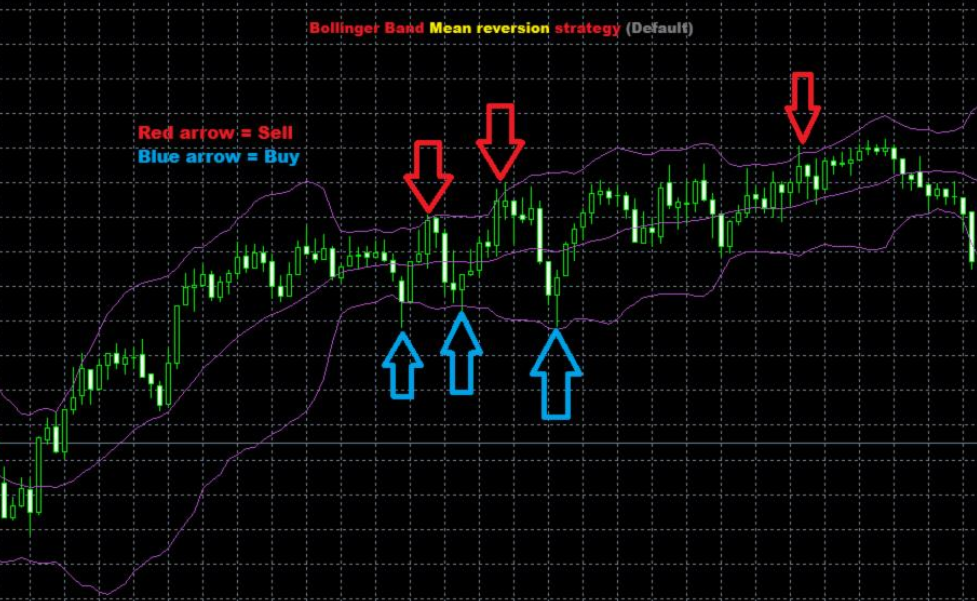
Fig 1.2 mean reversion forex Bollinger Bands trading setup illustration
Best Forex Mean Reversion Strategies
Different market conditions require different approaches.
1. Bollinger Band Reversion Strategy
This strategy focuses on price returning inside Bollinger Bands after extreme movement.
For example:
- Price spikes above upper band
- Market shows rejection candle
- Traders enter short position expecting correction
This is one of the most popular forex mean reversion strategy methods.
2. RSI Reversal Strategy
Traders combine RSI extremes with price action confirmation.
If RSI moves above 70 and bearish rejection candles appear, traders may enter short positions expecting mean reversion.
Similarly, RSI below 30 can signal potential bullish reversals.
3. Range Trading Mean Reversion
Mean reversion works especially well in ranging markets.
Professional traders buy near support and sell near resistance while expecting price to remain within established boundaries.
This form of mean reversion forex trading is commonly used during low-volatility conditions.
Best Market Conditions for Mean Reversion Trading
Not every market environment is suitable for mean reversion.
The strategy performs best during:
- Sideways markets
- Weak trends
- Low-to-moderate volatility
- Range-bound conditions
Strong trending markets can reduce mean reversion effectiveness because momentum may continue longer than expected.
Professional traders avoid aggressive countertrend trading without confirmation.
Risk Management in Mean Reversion Trading
Risk management is critical because overextended markets can remain irrational for extended periods.
Professional traders follow strict rules:
| Risk Management Rule | Benefit |
|---|---|
| Use stop losses | Limits losses |
| Wait for confirmation | Reduces false entries |
| Avoid trading strong trends blindly | Improves accuracy |
| Use proper position sizing | Controls risk |
| Focus on quality setups | Enhances consistency |
One common mistake traders make is assuming every overbought condition guarantees immediate reversal.
Successful forex mean reversion strategy trading requires patience and confirmation.
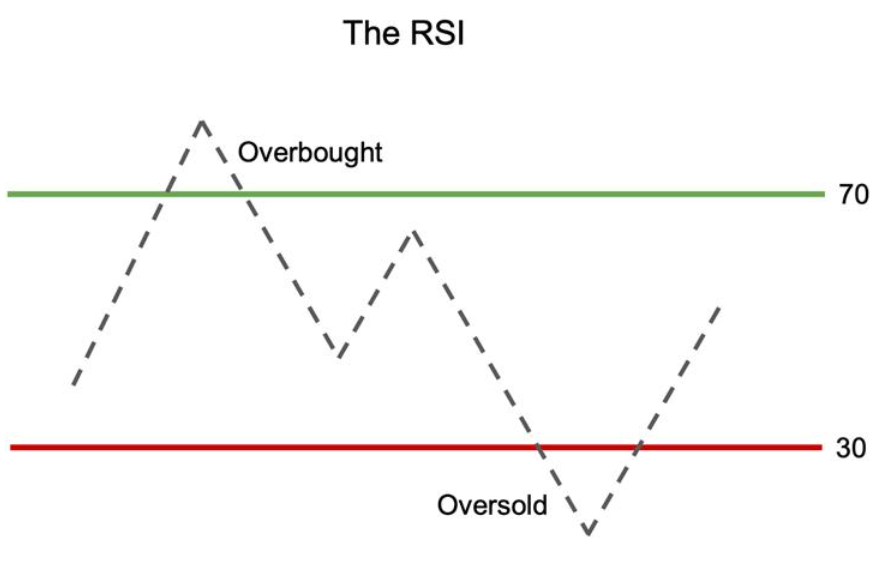
Fig 1.3 RSI overbought and oversold forex mean reversion infographic
Common Mistakes Traders Make
Many traders misunderstand how mean reversion works.
One common mistake is entering trades too early without confirmation. Markets can remain overbought or oversold much longer than expected.
Another issue is using mean reversion during strong trends. Trending markets often continue moving aggressively before correcting.
Some traders also ignore broader market context such as news events, volatility, and institutional momentum.
Professional mean reversion forex traders combine statistical analysis with price action confirmation rather than relying solely on indicators.
Advantages of Forex Mean Reversion Strategy
The popularity of the forex mean reversion strategy comes from its structured and probability-based approach.
Major advantages include:
- Clear entry opportunities
- Better risk-to-reward setups
- Effective range trading
- Improved market timing
- Reduced emotional trading
- Statistical trading logic
Mean reversion trading also helps traders avoid chasing aggressive market momentum emotionally.
FAQs
What is a forex mean reversion strategy?
What is mean reversion forex trading?
Which indicators are best for mean reversion trading?
Does mean reversion work in forex trading?
What market conditions are best for mean reversion?

Fig 1.4 professional trader analyzing forex mean reversion strategy on multiple trading screens
Conclusion
Mastering a professional forex mean reversion strategy helps traders identify overextended market conditions and anticipate high-probability price corrections. Instead of chasing aggressive trends emotionally, traders learn to recognize when price moves too far from equilibrium and becomes vulnerable to reversal.
Successful mean reversion forex trading requires patience, discipline, and strong market understanding. Traders must combine technical indicators, price action confirmation, and proper risk management before entering positions. The most successful traders focus on quality setups rather than reacting emotionally to every market fluctuation.
When used correctly, mean reversion strategies can become highly effective for identifying low-risk entries, improving trade timing, and building a more structured trading approach. In today’s competitive forex market, understanding market reversion behavior provides traders with a valuable statistical edge and greater long-term consistency.