
Day Trading vs Forex Trading: A Complete Expert Comparison Guide
Introduction
The debate around day trading vs forex trading has become one of the most important topics in modern financial markets. Every new trader enters the market with one question: which trading style is more profitable, safer, and suitable for beginners?
Both trading styles offer opportunities, but they operate in completely different environments. Day trading vs forex trading is not just a comparison of markets; it is a comparison of psychology, risk tolerance, strategy, and financial discipline.
This guide from forexmarkettrendss.com provides a detailed, professional breakdown based on market behavior, trading structure, and real-world trading experience to help you make an informed decision.
What is Day Trading?
Day trading refers to the practice of buying and selling financial instruments within the same trading day. Traders close all positions before the market ends to avoid overnight risks.
Unlike long-term investing, day trading focuses on small price movements that occur throughout the day. These movements can happen in stocks, indices, commodities, or cryptocurrencies.
Day trading requires constant attention to charts, price action, and technical indicators. Traders rely heavily on timing, discipline, and emotional control because the market moves quickly and unpredictably.
One of the most important aspects of day trading is liquidity. Highly liquid markets allow traders to enter and exit positions easily without significant price slippage. However, the fast pace also increases emotional pressure, making it unsuitable for traders who cannot handle rapid decision-making.
What is Forex Trading?
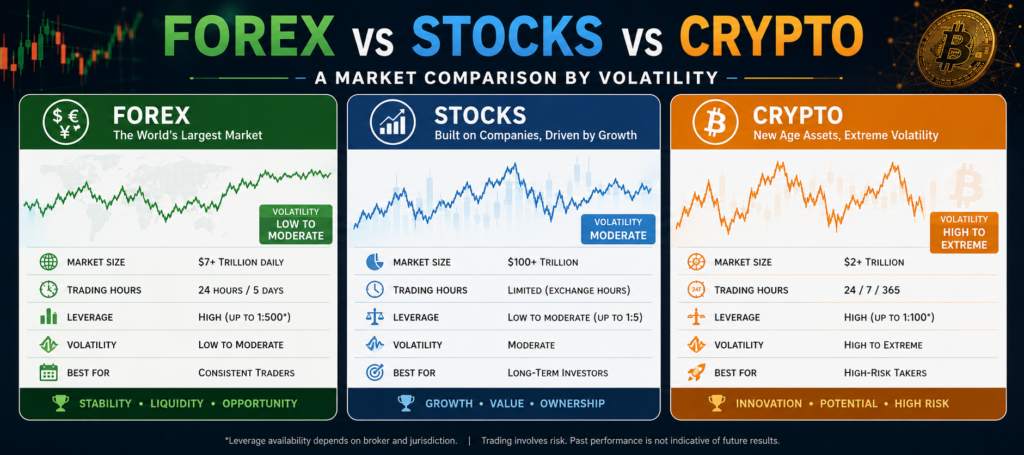
Forex trading refers to the global exchange of currencies such as USD, EUR, GBP, and JPY. It is the largest financial market in the world, operating 24 hours a day, five days a week.
Unlike other markets, forex trading is decentralized. This means it does not operate through a single exchange but through a global network of banks, brokers, and financial institutions.
One of the biggest advantages of forex trading is accessibility. Traders can start with relatively low capital and still participate in large market positions using leverage. However, leverage also increases risk, making proper risk management essential.
Forex trading is influenced by global economic events such as interest rates, inflation data, geopolitical tensions, and central bank decisions. This makes it a highly dynamic and news-sensitive market.
Day Trading vs Forex Trading: Core Differences
The comparison between day trading vs forex trading becomes clearer when we analyze their structural differences.
Day trading is typically restricted to specific market hours depending on the exchange, while forex trading operates almost continuously throughout the week. This makes forex more flexible for traders who cannot dedicate fixed hours to trading.
Another major difference lies in volatility. Day trading often experiences sharp intraday volatility, especially in stocks or crypto markets. Forex markets, on the other hand, are generally more stable but still offer strong price movements during major economic events.
Capital requirements also differ significantly. Day trading usually requires higher capital due to regulatory and brokerage constraints, while forex allows traders to start with smaller amounts.
Both trading styles require strong analytical skills, but forex relies more on macroeconomic analysis, whereas day trading depends heavily on technical charts and intraday price action.
Profitability: Which is More Profitable?
When comparing day trading vs forex trading, profitability depends entirely on strategy, consistency, and discipline rather than the market itself.
Day trading can produce quick profits within hours or even minutes. However, these profits are often inconsistent and depend on market volatility. Traders may experience both high gains and sudden losses in a short period of time.
Forex trading offers more structured opportunities for consistent growth. Because the market operates 24 hours, traders can find multiple setups throughout the day. However, the use of leverage can either amplify profits or increase losses if not managed properly.
In reality, professional traders focus less on “quick profit” and more on sustainable risk-adjusted returns. This is why forex trading is often preferred for long-term consistency, while day trading attracts those seeking fast-paced opportunities.
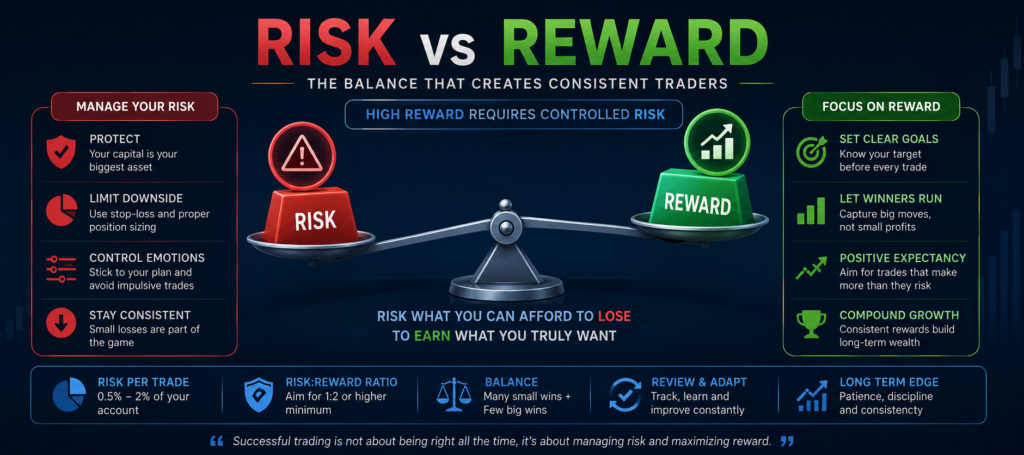
In day trading, the biggest risk comes from emotional decision-making and overtrading. Because trades are executed rapidly, traders may enter positions without proper analysis. High transaction frequency also increases costs and reduces net profitability.
Forex trading carries the additional risk of leverage. While leverage allows traders to control larger positions with smaller capital, it can also magnify losses significantly. Economic news events can also create sudden volatility spikes in currency pairs.
Successful traders always apply strict risk management techniques such as stop-loss orders, position sizing, and capital allocation rules. Without these, both trading styles can become financially dangerous.
Trading Strategies Overview
In day trading vs forex trading, strategies differ significantly based on market structure.
Day trading strategies focus on short-term price movements. Traders often use scalping, breakout trading, and momentum-based entries. These strategies require fast execution and constant monitoring of charts.
Forex trading strategies are more diverse and can include swing trading, trend following, and carry trading. These strategies allow traders to hold positions longer and benefit from macroeconomic trends.
Technical indicators such as moving averages, RSI, and MACD are commonly used in both trading styles. However, forex traders also rely heavily on economic calendars and global financial news.
FAQ's
What is the difference between day trading vs forex trading?
Is forex trading vs day trading difference important for beginners?
Which is more profitable: day trading vs forex trading?
Is forex trading safer than day trading?
Can beginners start with day trading vs forex trading easily?
Final Thoughts
The comparison of day trading vs forex trading clearly shows that both trading styles offer unique advantages and challenges. Day trading is fast-paced, highly active, and requires constant attention to market movements. It is suitable for traders who prefer short-term opportunities and can handle emotional pressure in volatile conditions. On the other hand, forex trading provides a more flexible and globally accessible market environment where traders can operate 24 hours a day and benefit from both short-term and long-term opportunities.
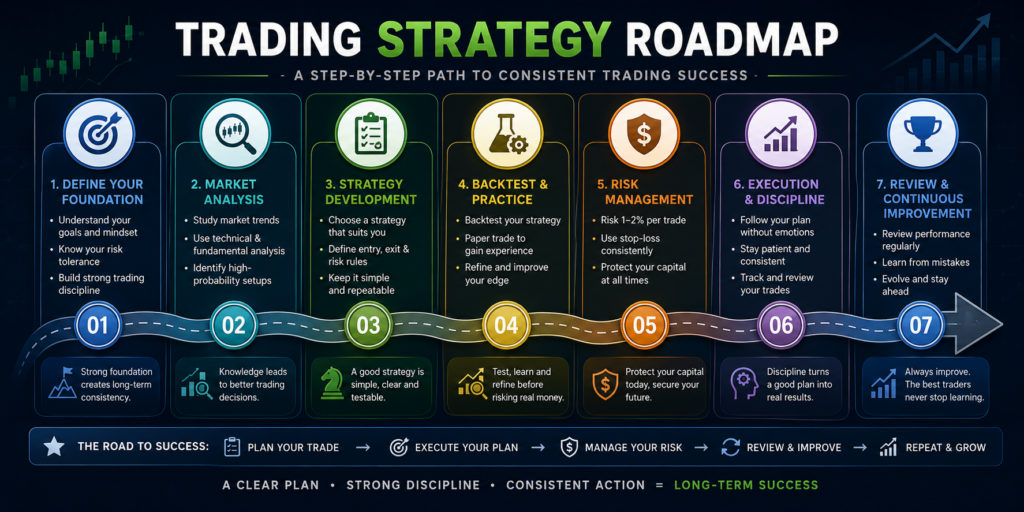
When analyzing forex trading vs day trading, it becomes evident that success is not determined by the market itself but by the trader’s mindset, discipline, and risk management approach. Forex trading is often preferred for its accessibility and liquidity, while day trading attracts those who enjoy high-speed market activity and rapid decision-making.
Ultimately, choosing between day trading vs forex trading depends on your financial goals, capital size, and psychological readiness. Traders who focus on consistent learning, strategy development, and capital protection can succeed in either market. The key is not to chase profits aggressively but to build a sustainable trading system that works over time.