
What Is a Forex Swing Trading Strategy?
A forex swing trading strategy aims to capture a single “swing” in price that unfolds over several days to a few weeks. Rather than chasing tiny intraday moves, swing traders target the meaty middle of a trend leg, where the largest, cleanest gains usually live.
This style suits people who cannot watch charts all day. You analyze the market once or twice a day, place your orders, and let the trade develop. That freedom makes swing trading one of the most popular approaches for part-time and working traders.
The mindset is patient and selective. You wait for high-quality setups, accept fewer trades, and aim for a larger reward on each one. Quality and patience, not constant activity, drive the results.
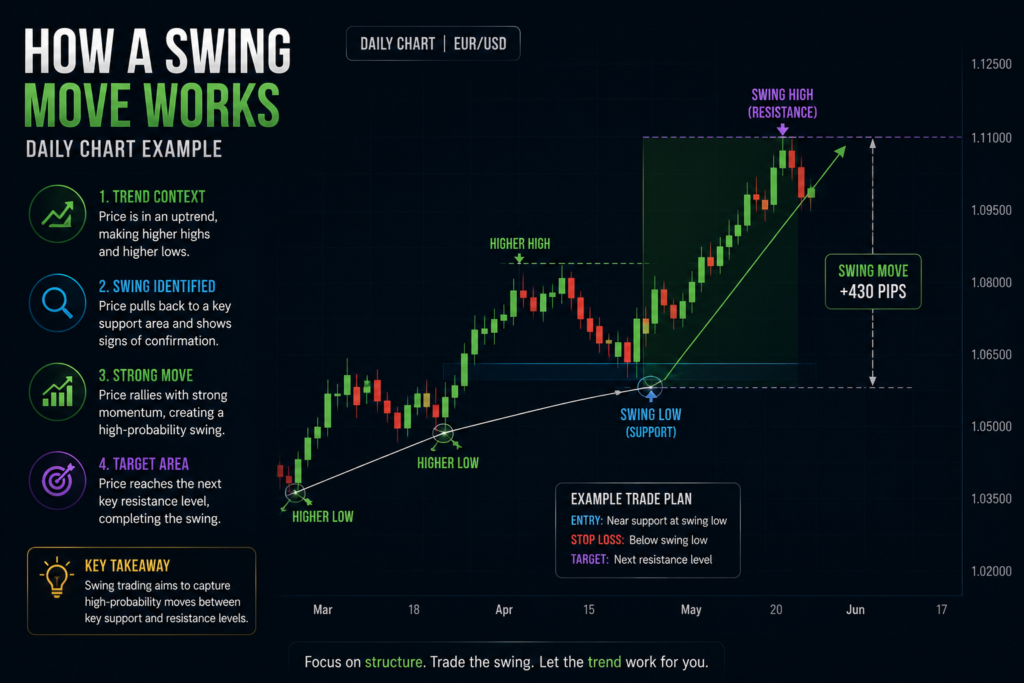
Fig 1.1 Forex swing trading strategy hero image with a daily chart showing a multi-day swing
Why Swing Trading Works So Well
Markets rarely move in straight lines. They surge, pause, pull back, and surge again, creating repeatable swings within a broader trend. Swing trading is built to exploit exactly this rhythm, entering on pullbacks and riding the next push.
Because trades last days rather than seconds, spreads and commissions become a tiny fraction of your potential profit. That changes the math in your favor compared to scalping, where costs dominate. A handful of well-timed swing trades can outperform hundreds of frantic ones.
The higher timeframes also filter out noise. Signals on the 4-hour and daily charts carry more weight, so your decisions rest on clearer, more reliable information. Fewer false signals means calmer, more confident trading.
Building Reliable Swing Trade Setups
Strong swing trade setups combine trend, location, and trigger. First, establish the dominant trend using moving averages or simple structure analysis of higher highs and higher lows. Trading with the trend stacks the odds in your favor.
Next, identify a high-value entry location. The best entries appear when price pulls back into support within an uptrend, or resistance within a downtrend, often near a moving average or a Fibonacci retracement level. You are buying weakness in a strong market, not chasing strength.
Finally, demand a trigger before committing. A bullish reversal candle, a momentum shift on the RSI or MACD, or a break of a minor trend line confirms that buyers are stepping back in. This three-part filter keeps you out of weak, low-probability trades.
A simple swing checklist:
- Confirm the higher-timeframe trend direction first, then trade only with it.
- Wait for a pullback into a clear support or resistance zone for a better entry price.
- Require a candlestick or momentum trigger before placing the order.
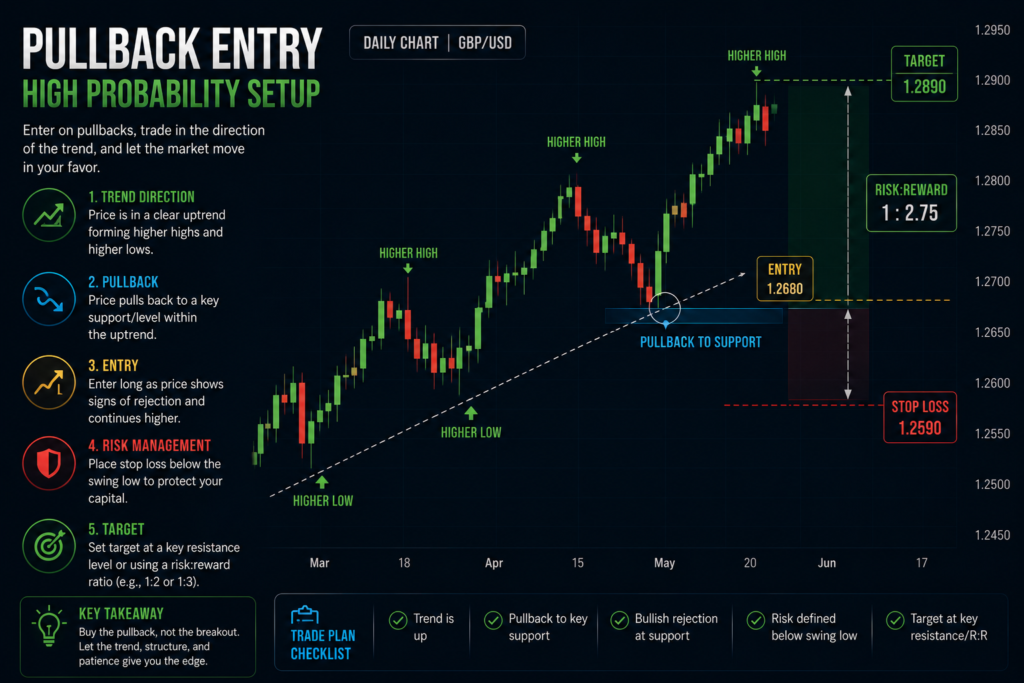
Fig 1.2 Forex swing trading setup showing a pullback entry to support with stop loss and take profit
Best Indicators and Timeframes
Swing traders favor tools that smooth out noise and reveal the bigger picture. The table below maps common indicators to their role and the timeframes where they shine.
| Tool | Primary Role | Best Timeframe |
|---|---|---|
| 50 & 200 EMA | Trend direction | 4h – Daily |
| RSI (14) | Momentum & divergence | 4h – Daily |
| MACD | Trend strength & shifts | Daily |
| Fibonacci retracement | Pullback entry zones | 4h – Daily |
| Support & resistance | Entry, stop, and target levels | Daily – Weekly |
Most swing traders build their analysis on the daily chart for direction and drop to the 4-hour chart for precise entries. This top-down approach keeps you aligned with the dominant trend while timing your entry with care.
Avoid overloading the chart. Two or three complementary indicators paired with clean price levels give a far sharper read than a screen buried in lines.
Using Swing Trading Forex Signals Wisely
Many traders lean on swing trading forex signals to spot opportunities they might otherwise miss. Quality signals can save research time and highlight setups across many pairs at once, which is valuable for busy traders.
That said, signals are a starting point, not a crutch. Always understand the logic behind a call before risking money on it, and confirm it against your own rules. Blindly copying alerts removes the learning that makes you independent and consistent over time.
Use signals to build a watchlist, then apply your own entry, stop, and target discipline. Treated this way, they become a research accelerator rather than a replacement for skill.
Risk Management and Trade Planning
Because swing trades span days, they breathe through larger price swings, so your stop loss must sit at a logical level beyond a swing point — not arbitrarily close. Tight stops in a wide-ranging trade get knocked out by normal noise.
Position sizing keeps that wider stop affordable. Risk a fixed small percentage of your account, often 1% to 2% per trade, and calculate your lot size from the stop distance rather than the other way around. This protects your capital across inevitable losing streaks.
Aim for a reward-to-risk ratio of at least 2:1 so that your winners comfortably outweigh your losers. With that math in place, you can be profitable even with a win rate below 50%, which removes enormous psychological pressure.
Common Swing Trading Mistakes
The most frequent error is impatience — entering before a setup fully forms or exiting a winner far too early out of fear. Swing trading rewards those who let the trade work, so trust your plan once it is in place.
Ignoring the higher-timeframe trend is another costly habit. Counter-trend trades can work, but they demand experience and a clear reason; for most traders, fighting the trend simply lowers the win rate. Finally, moving a stop loss to avoid a loss usually converts a small, planned setback into a damaging one.
Frequently Asked Questions
1. Is a forex swing trading strategy profitable? A forex swing trading strategy can be highly profitable because it targets larger, multi-day price moves while keeping trading costs low relative to profit. Success depends on trading with the trend, entering on quality pullbacks, and maintaining a reward-to-risk ratio of at least 2:1. With disciplined risk management, you can stay profitable even with a win rate under 50%. Patience and selectivity matter far more than the number of trades you take.
2. What is the best timeframe for swing trading forex? Most swing traders use the daily chart to establish trend direction and the 4-hour chart to time precise entries. This top-down approach aligns each trade with the broader market while sharpening the entry point. Higher timeframes also produce cleaner signals with less noise than intraday charts. Choose the combination that fits your schedule, but avoid timeframes below one hour for true swing trading.
3. How do swing trade setups actually work? Solid swing trade setups combine three elements: a clear trend, a high-value entry location, and a confirmation trigger. You first identify the trend, then wait for price to pull back to support or resistance, often near a moving average or Fibonacci level. A reversal candle or momentum shift then confirms buyers or sellers are returning. This filter keeps you out of weak, low-probability trades.
4. Should I use swing trading forex signals? Swing trading forex signals can save research time and surface opportunities across many pairs, which helps busy traders. However, they work best as a starting point rather than a substitute for your own analysis. Always understand the reasoning behind a signal and confirm it against your rules before risking money. Used this way, signals build your watchlist while you keep control of entries, stops, and targets.
5. How is swing trading different from day trading? Swing trading holds positions for several days to weeks, while day trading closes all trades within the same session. Swing trading requires less screen time and tolerates wider price swings, making it ideal for part-time traders. Day trading offers more frequent opportunities but demands constant attention and faster decisions. The right choice depends on your schedule, temperament, and risk tolerance.
6. What is the best risk management for swing trading? Effective swing trading risk management starts with placing your stop loss beyond a logical swing point, then sizing your position so the trade risks only 1% to 2% of your account. Calculating lot size from the stop distance keeps wider stops affordable. Targeting at least a 2:1 reward-to-risk ratio ensures winners outweigh losers. This framework lets you survive losing streaks and stay consistently in the game.
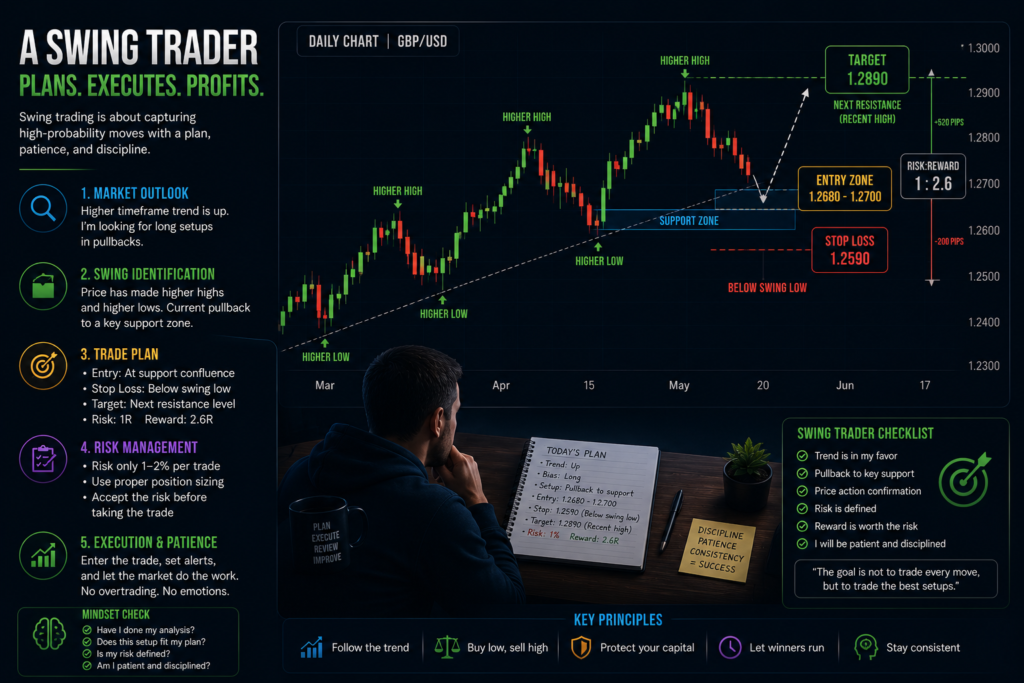
Fig 1.3 Trader reviewing a forex swing trading plan with disciplined risk management
Final Thoughts
The forex swing trading strategy offers a powerful balance of profit potential and lifestyle freedom, making it one of the smartest approaches for traders who cannot, or simply do not want to, stare at charts all day. By targeting multi-day swings within a clear trend, you capture the cleanest, most rewarding portions of a move while keeping trading costs to a minimum. The strategy rewards a patient, top-down process: read the daily chart for direction, refine your entry on the 4-hour chart, and demand a confirmation trigger before committing capital. Strong swing trade setups, disciplined position sizing, and a reward-to-risk ratio of at least 2:1 turn occasional losses into minor setbacks rather than account-threatening events. When used thoughtfully, swing trading forex signals can accelerate your research, but lasting success always rests on your own rules and risk control. Build your plan, test it on a demo account, and scale up only once your results prove consistent — that is how swing trading becomes a calm, dependable path to growth.
Looking for high-quality setups and market analysis to guide your swing trades? Explore daily insights at forexmarkettrendss.com and trade with greater confidence today.