
Introduction
Proprietary trading firms have transformed how skilled traders access capital, and choosing among the best prop firms can define your entire career path. Instead of risking your own savings, you prove your ability on a challenge or evaluation, then trade the firm’s money and keep the lion’s share of the profits. But the industry is crowded, and not every firm treats traders fairly. This guide cuts through the noise to show you what truly separates the top prop trading firms from the rest payout reliability, fair rules, and transparent pricing. We will also highlight the prop trading firms for beginners, explain how evaluations work, and give you a practical framework to compare offers. By the end, you will know exactly what to look for and which red flags should send you walking the other way.
What Is a Prop Firm and How Does It Work?
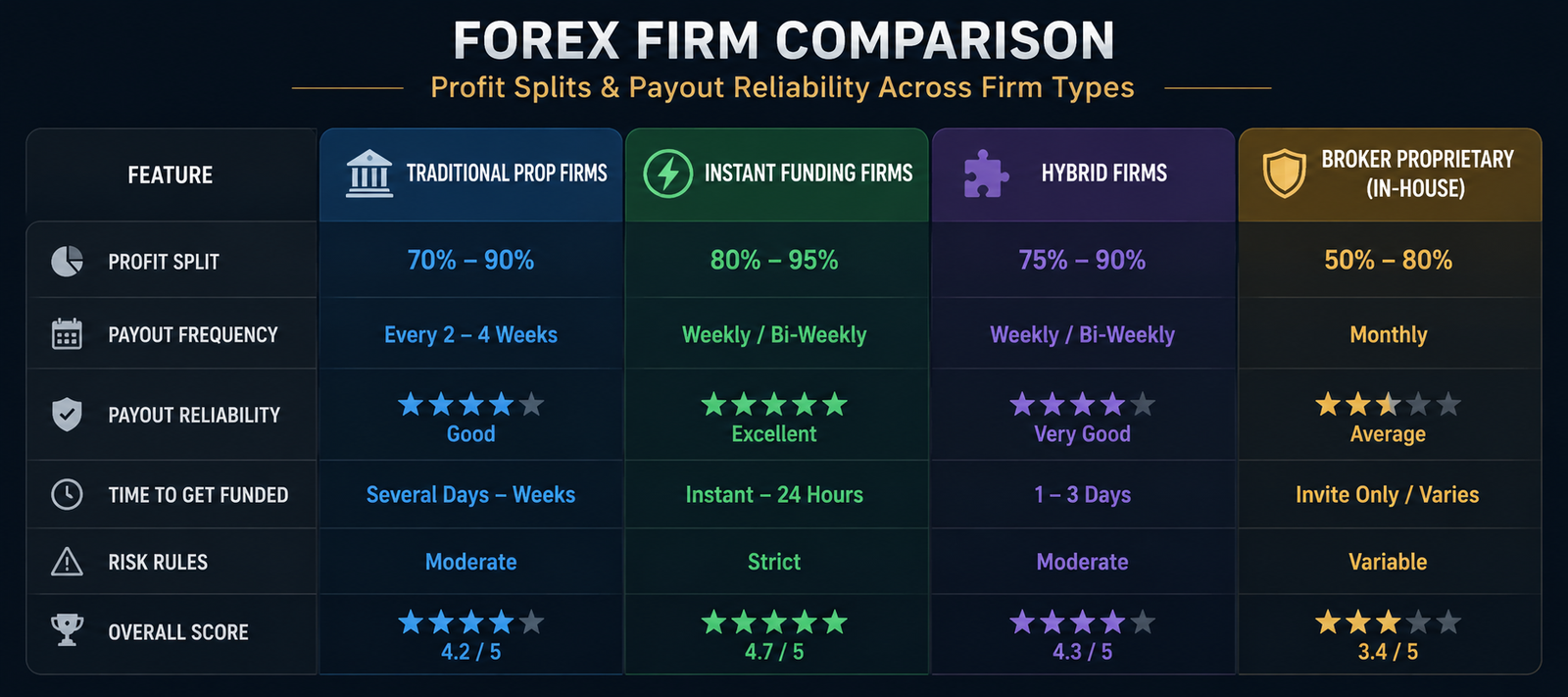
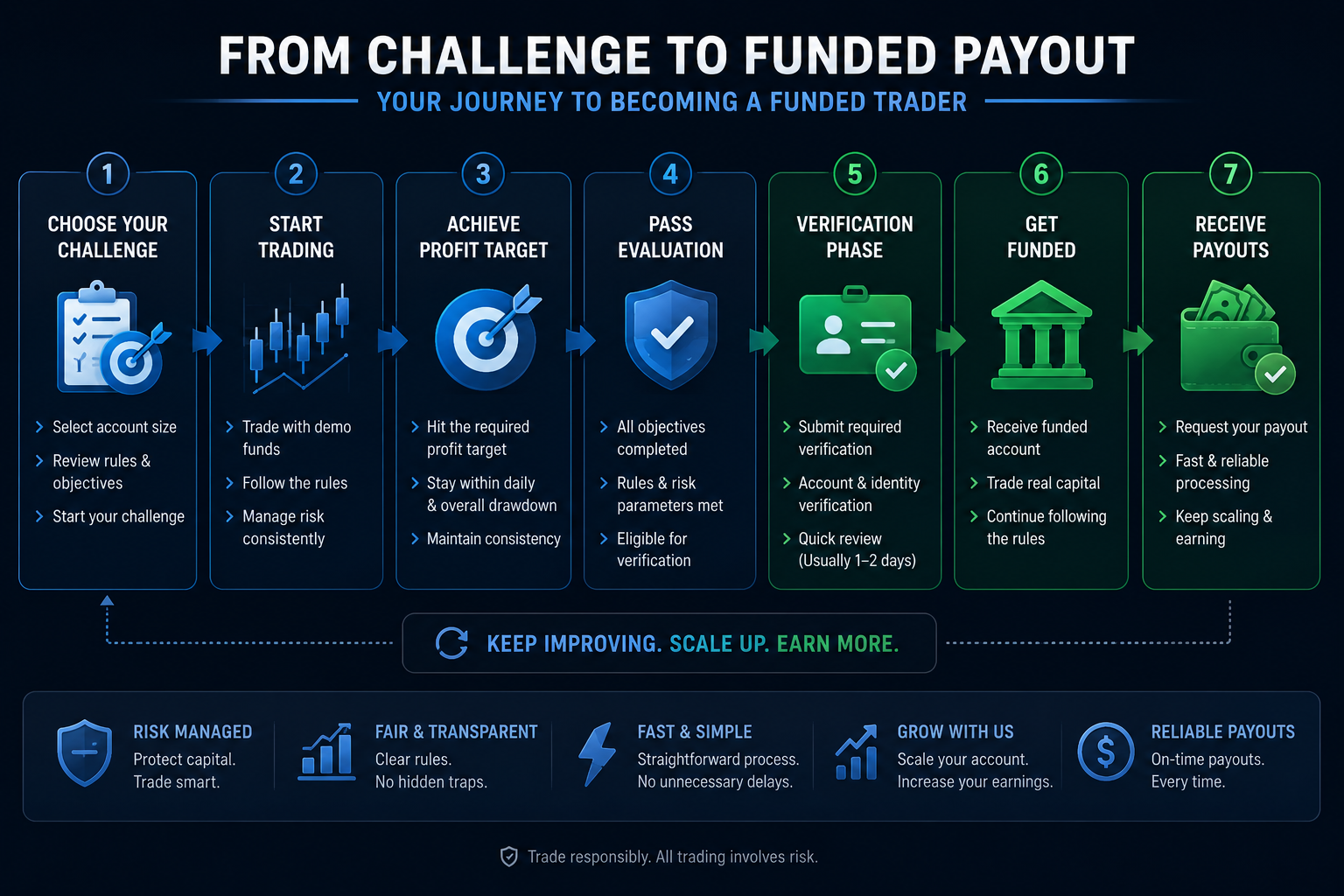
A proprietary trading firm gives traders access to its own capital in exchange for a share of the profits. You typically pay a one-time fee to attempt an evaluation, proving you can hit a profit target without breaching risk limits. Pass it, and you receive a funded account often tens or hundreds of thousands in buying power while keeping anywhere from 70% to 90% of what you earn. The model works because firms profit when traders profit, aligning both sides. It also democratizes trading: a skilled trader with limited savings can suddenly manage serious capital. The trade-off is strict rules. Breach a daily drawdown limit or maximum loss, and the account is gone, which is why understanding the fine print matters as much as picking a name.
What Separates the Best Prop Firms From the Rest
The best prop firms share a handful of non-negotiable qualities. The most important is payout reliability—a firm is only as good as its willingness to actually pay traders on time, every time. Public payout proof and strong independent reviews are your best evidence here. Fair, clearly written rules come next. The clearest firms publish their drawdown calculations, profit targets, and prohibited behaviors in plain language. Hidden “consistency rules” or vague terms that let a firm deny payouts are a serious warning sign. Finally, transparent pricing, responsive support, and a sensible scaling plan that grows your capital as you succeed round out what truly elite firms offer.
Top Prop Trading Firms: What to Look For
When evaluating the top prop trading firms, judge them against consistent criteria rather than marketing claims. Payout track record, rule fairness, and account flexibility matter far more than flashy discounts.
| Evaluation Factor | What “Good” Looks Like | Red Flag |
|---|---|---|
| Profit Split | 80–90% to the trader | Below 70% with no scaling |
| Payout Speed | Reliable, on-schedule withdrawals | Delays or denied payouts |
| Drawdown Rules | Clear, balance-based, well explained | Vague or trailing intraday traps |
| Time Limits | Flexible or none | Tight, pressure-inducing deadlines |
| Reviews | Strong, verifiable, recent | Mostly affiliate-driven praise |
| Support | Fast, human, helpful | Slow or scripted responses |
Prop Trading Firms for Beginners
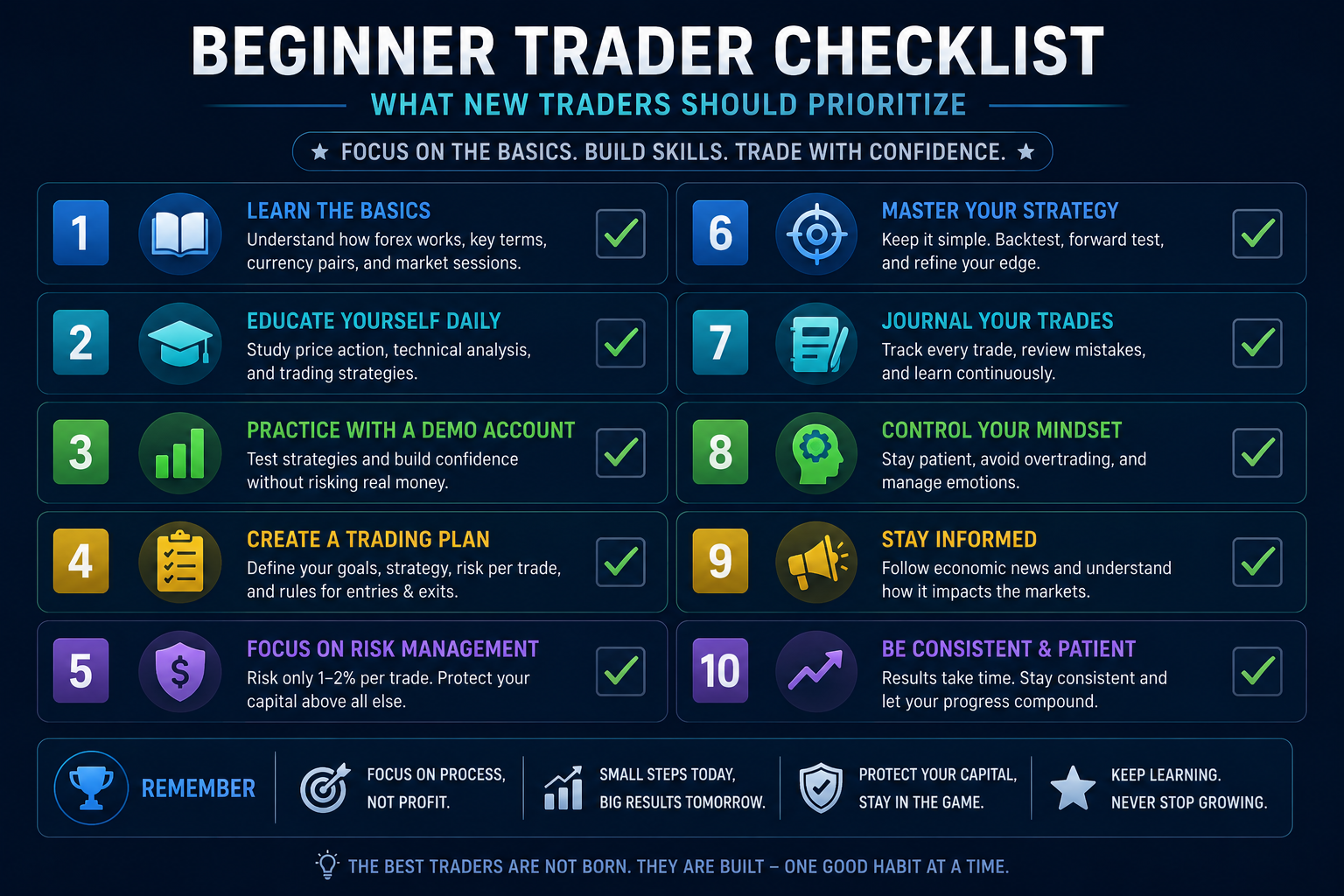
If you are new, the right firm feels supportive rather than punishing. The best prop trading firms for beginners offer smaller, affordable account sizes, generous or no time limits, and clearly explained rules that do not assume prior experience. A relaxed time limit matters enormously early on, because it lets you trade your strategy patiently instead of forcing trades to beat a clock. Beginners should also favor firms with strong educational resources, demo-style evaluations, and responsive support teams. Starting with a modest account keeps your upfront cost low while you learn the firm’s platform and prove your consistency. As your results stabilize, scaling plans let you graduate to larger capital without paying for an expensive challenge each time.
Common Prop Firm Rules You Must Understand
Every funded program lives and dies by its rules. The daily drawdown limit caps how much you can lose in a single day, while the maximum drawdown caps your total loss before the account closes. Many firms also set a profit target you must reach to pass, and some restrict news trading, weekend holding, or certain automated strategies. Misreading any of these is the most common reason traders fail evaluations they were otherwise skilled enough to pass. Before you pay, read the rulebook twice and confirm you understand exactly how drawdown is calculated. The difference between a balance-based and a trailing drawdown can quietly end an account that looked profitable on paper.
What Top Traders and Research Say
Trading the firm’s money does not remove the psychological pressure—it concentrates it. Mark Douglas’s Trading in the Zone is essential reading here, because passing an evaluation demands the probabilistic, disciplined mindset he describes rather than gambling for a quick target. The traders who pass treat rules as guardrails, not obstacles. Academic research reinforces the value of discipline. Barber and Odean’s study “Trading Is Hazardous to Your Wealth” showed that overtrading and overconfidence devastate returns—precisely the behaviors that breach prop-firm risk limits. As Warren Buffett famously advised: “Rule No. 1: never lose money.” In a prop-firm context, protecting your drawdown is literally the rule that keeps your account alive.
Red Flags to Avoid
Be wary of firms with no verifiable payout history, since the entire model rests on getting paid. Vague or shifting rules, especially undisclosed consistency requirements, are designed to deny payouts and should send you elsewhere. Extremely cheap challenges paired with unrealistic profit targets often signal a business that profits from failed evaluations rather than successful traders. Finally, poor reviews about withdrawals—not just about losing trades—are the clearest sign to stay away.
Frequently Asked Questions
What are the best prop firms for 2026?
The best prop firms are those with proven, on-time payouts, fair and clearly written rules, and strong independent reviews. Rather than chasing a single name, judge each firm on payout reliability, profit split, drawdown fairness, and support quality. The industry changes quickly, so always check recent reviews and verified payout proof before paying for a challenge. A firm that pays consistently and explains its rules plainly will serve you far better than one offering only the flashiest discount.
Which are the top prop trading firms for forex?
The top prop trading firms for forex offer high profit splits, flexible or no time limits, MT4/MT5 access, and transparent drawdown calculations. The right choice depends on your strategy—scalpers need fast execution and EA permission, while swing traders need weekend-holding allowances. Compare firms using consistent criteria rather than marketing claims, and prioritize payout track record above all. A firm’s willingness to pay reliably matters more than any single feature on its sales page.
What are the best prop trading firms for beginners?
The best prop trading firms for beginners provide affordable small accounts, generous or no time limits, clear rules, and helpful support. A relaxed deadline is especially valuable early on, letting you trade patiently instead of forcing trades. Look for strong educational resources and sensible scaling plans so you can grow without paying for repeated challenges. Starting small keeps your cost low while you learn the platform and build the consistency funded trading rewards.
How do prop firm evaluations work?
Most firms require you to pass an evaluation by reaching a profit target without breaching daily or maximum drawdown limits. You usually pay a one-time fee, trade a demo-style account under real rules, and earn funding once you pass. Some firms use one step, others two, and a few offer instant funding for a higher price. Read the rulebook carefully, because misunderstanding the drawdown calculation is the most common reason skilled traders fail.
Are prop firms legit or a scam?
Legitimate prop firms exist and pay traders reliably, but the space also attracts bad actors. The difference shows in verifiable payout proof, transparent rules, and strong independent reviews from real funded traders. Avoid firms with vague terms, hidden consistency rules, or complaints about withdrawals rather than losing trades. Doing your homework on payout history is the single best way to separate the best prop firms from the ones to avoid.
How much of the profit do I keep with a prop firm?
Most reputable firms offer profit splits between 70% and 90% in the trader’s favor, with the best programs reaching 90% or scaling toward it as you prove consistency. Remember that a high split only matters if the firm actually pays, so weigh payout reliability alongside the percentage. A dependable 80% beats a promised 90% you can never withdraw.
Final Thoughts
Choosing among the best prop firms is one of the most important decisions a developing trader makes, because the right partner gives you serious capital while the wrong one wastes your money and time. Judge the top prop trading firms by payout reliability, rule fairness, and verifiable reviews, not by whoever shouts loudest or discounts deepest. If you are new, lean toward prop trading firms for beginners that offer affordable accounts, flexible time limits, and genuine support. Master your risk first, treat drawdown limits as sacred, and remember Warren Buffett’s rule about never losing money. Approach funded trading as a disciplined professional, and a prop firm becomes a genuine launchpad rather than an expensive gamble.