
Introduction
Every great trader was once a great reader, and the right forex trading books can compress years of costly trial and error into a few focused months of study. Books offer something fast-moving videos rarely do: depth, nuance, and the hard-won wisdom of traders who survived real markets. Whether you are just learning what a pip is or refining a tested system, the written word remains the most reliable mentor available. This guide curates the forex trading books for beginners that build a rock-solid foundation, alongside the best books on forex trading for strategy, psychology, and risk. We will explain what each teaches, who it suits, and how to read for genuine improvement rather than passive consumption. By the end, you will have a clear reading roadmap that turns pages into profits over time.
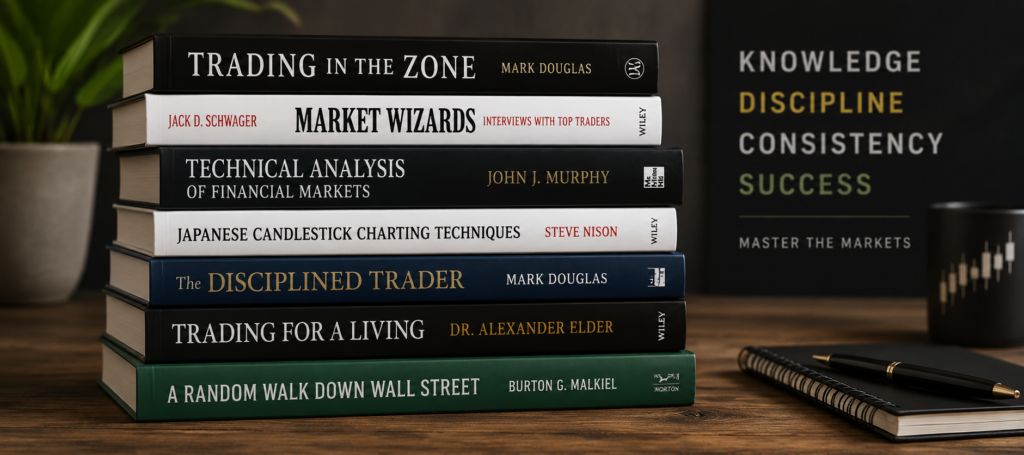
Why Books Still Beat the Algorithm
Social media feeds you fragments—a setup here, a hot take there—while books give you a complete mental model. A well-written forex trading book walks you through a concept from first principles, shows you the exceptions, and explains the psychology behind the rules. That depth is what builds durable understanding rather than fragile imitation.
Books also age well. Markets evolve, but the core truths of risk, discipline, and probability are timeless, which is why traders still read works written decades ago. Investing in a personal trading library is one of the cheapest, highest-return decisions a developing trader can make.
Forex Trading Books for Beginners
If you are starting out, the best forex trading books for beginners prioritize clarity over complexity. They explain how currency pairs work, what moves them, and how to manage risk before you ever place a trade.
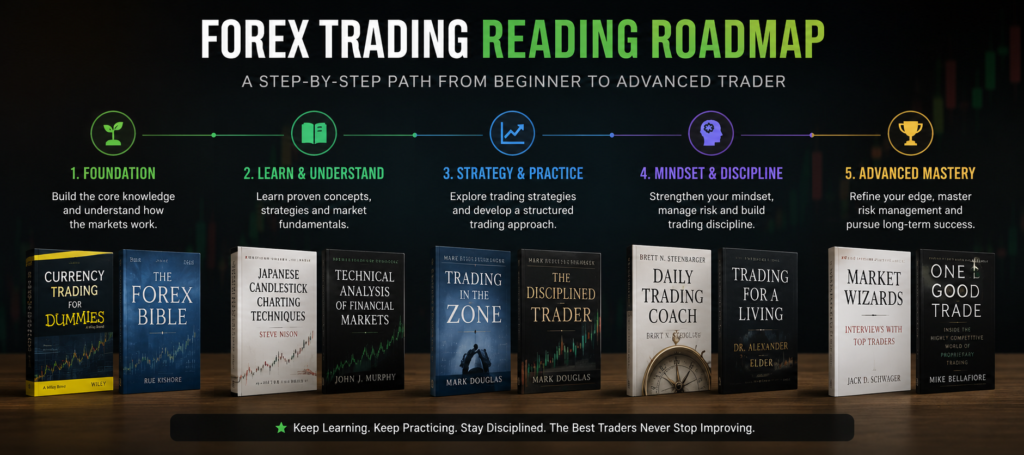
Currency Trading for Dummies by Brian Dolan is a friendly, jargon-light entry point that covers the mechanics of the forex market clearly. For a broader trading foundation, Alexander Elder’s Trading for a Living introduces the three pillars of mind, method, and money management in accessible language. And Steve Nison’s Japanese Candlestick Charting Techniques teaches you to read price action—the visual language every chart speaks—without overwhelming you. Together, these give a newcomer the vocabulary and habits to progress safely.
Building Your Trading Library in Order
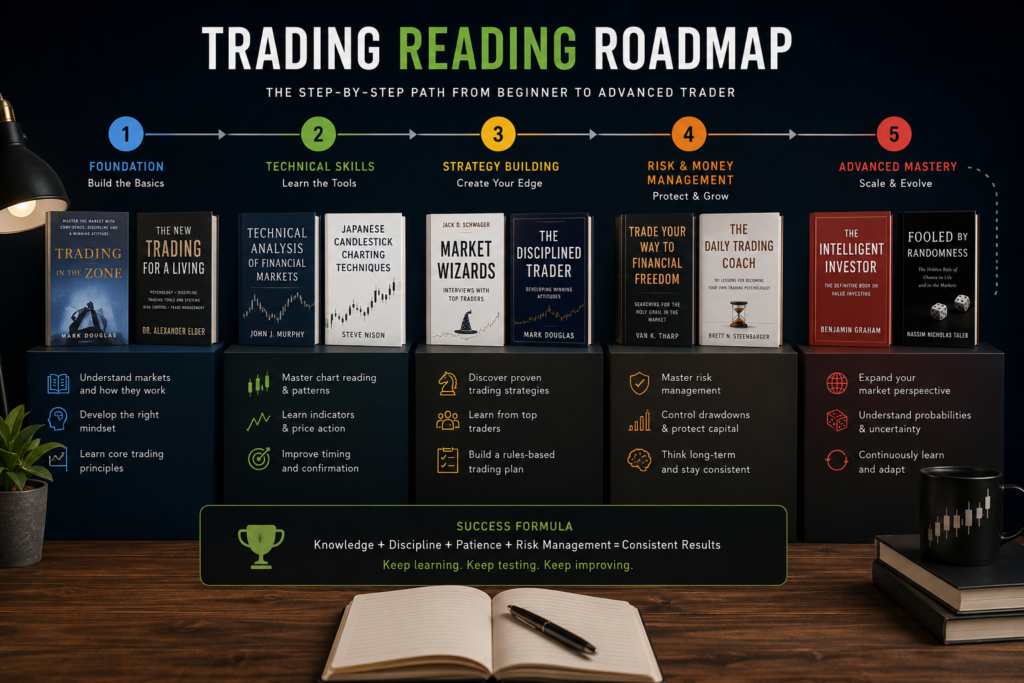
A sensible reading path moves from mechanics to method to mindset. Start with a beginner mechanics book, add a price-action and technical foundation, then layer in strategy and finally psychology. Reading in this order prevents overwhelm and ensures each book builds on the last.
Avoid the temptation to buy twenty titles at once. A focused trader who masters six great books will outperform one who skims forty. Depth, repetition, and application beat sheer volume every time in trading education.
The Psychology Shelf You Cannot Skip
Strategy gets the attention, but psychology decides who keeps their profits. Mark Douglas’s Trading in the Zone is the single most recommended book on the mental game, teaching traders to think in probabilities and accept that any trade can lose. Reading it early prevents years of emotional mistakes.
This emphasis is backed by research. Barber and Odean’s landmark study “Trading Is Hazardous to Your Wealth” found that overconfident, overtrading investors earned the worst returns—a finding that maps directly onto the discipline these books preach. Kahneman and Tversky’s work on loss aversion further explains why traders irrationally hold losers and cut winners, the exact behavior good books train you to resist.
As Jesse Livermore wrote through Lefèvre’s pen: “The big money is made in the waiting.” No indicator teaches patience; the right book does.
How to Actually Read a Trading Book
Reading for improvement is different from reading for entertainment. Move slowly, take notes, and pause to test ideas on charts as you encounter them. A single concept truly absorbed and applied beats ten skimmed and forgotten.
Re-reading matters too. The best traders revisit core titles annually, because experience reveals lessons that were invisible on the first pass. Pair your reading with a demo account so theory becomes muscle memory, and keep a notebook connecting each book’s ideas to your own trades. That active loop is how pages become performance.
Best Books on Forex Trading: The Essential Classics
Once the basics click, the best books on forex trading deepen your edge in strategy, technical reading, and mindset.John Murphy’s Technical Analysis of the Financial Markets is the definitive reference for chart analysis, indicators, and market structure—a book traders return to for years. For pure trading wisdom, Jack Schwager’s Market Wizards series interviews legendary traders and reveals that their methods differ wildly while their discipline is identical. And Edwin Lefèvre’s Reminiscences of a Stock Operator, a thinly veiled biography of Jesse Livermore, remains the most quoted trading book ever written for good reason—its lessons on patience and crowd psychology are eternal.
Book | Author | Best For | Core Lesson |
Currency Trading for Dummies | Brian Dolan | Absolute beginners | Forex mechanics made simple |
Trading for a Living | Alexander Elder | New traders | Mind, method, and money |
Japanese Candlestick Charting | Steve Nison | Chart readers | Reading price action |
Technical Analysis of the Financial Markets | John Murphy | Intermediate | Complete technical framework |
Trading in the Zone | Mark Douglas | All levels | Trading psychology |
Market Wizards | Jack Schwager | All levels | How great traders think |
Frequently Asked Questions
What are the best forex trading books for beginners?
The best forex trading books for beginners are Currency Trading for Dummies, Trading for a Living, and Japanese Candlestick Charting Techniques. They explain market mechanics, risk management, and price reading in clear, approachable language. Start with one, apply its lessons on a demo account, and only move on once the concepts feel natural. Reading slowly and actively matters far more than rushing through titles, because absorbed knowledge builds real skill over time.
What are the best books on forex trading overall?
The best books on forex trading combine strategy and psychology. John Murphy’s Technical Analysis of the Financial Markets covers chart analysis comprehensively, Jack Schwager’s Market Wizards reveals how top traders think, and Mark Douglas’s Trading in the Zone masters the mental game. Together they cover method, mindset, and market reading. Read them in order from mechanics to strategy to psychology, and revisit them annually as your experience reveals deeper lessons.
Can I learn forex from books alone?
Books build the essential foundation, but trading is a practical skill that also requires screen time. The ideal approach pairs forex trading books with a demo account, applying each concept as you learn it. Theory explains why a setup works; practice teaches you to execute it under pressure. Combine reading, journaling, and demo trading, and you will progress far faster than relying on either books or practice alone.
Which trading psychology book should I read first?
Start with Mark Douglas’s Trading in the Zone, widely regarded as the best introduction to trading psychology. It teaches you to think in probabilities, accept losses calmly, and stay disciplined when emotions run high. Reading it early prevents the costly emotional mistakes that sink most beginners. Pair it with practical risk management from your strategy books, and you will protect your capital while your technical skills mature.
Are old forex trading books still relevant?
Yes. While markets and technology change, the core truths of risk, discipline, and crowd psychology are timeless. Classics like Reminiscences of a Stock Operator and Market Wizards remain essential because human behavior in markets barely changes. The specific tools may update, but the lessons on patience and probability endure. That is exactly why experienced traders still recommend decades-old forex trading books to newcomers today.
How many forex trading books should I read?
Quality beats quantity. A focused trader who deeply studies and applies six great forex trading books will outperform someone who skims forty. Read in a logical order—mechanics, then method, then mindset—and revisit core titles as your experience grows. Take notes, test ideas on charts, and connect each book to your own trades. Depth, repetition, and application turn reading into genuine, lasting trading skill.
Final Thoughts
Quality beats quantity. A focused trader who deeply studies and applies six great forex trading books will outperform someone who skims forty. Read in a logical order—mechanics, then method, then mindset—and revisit core titles as your experience grows. Take notes, test ideas on charts, and connect each book to your own trades. Depth, repetition, and application turn reading into genuine, lasting trading skill.