
Introduction
Trading for a living is one of the most searched-for dreams in finance, yet few people understand what it genuinely demands before the income becomes reliable. Replacing a salary with market profits is possible, but it asks for far more than a winning week or a lucky run. It requires capital, a tested edge, ironclad risk control, and the emotional steadiness to perform under pressure month after month. Many aspiring traders underestimate the gap between profitable trading and a stable, full-time income that pays the bills. Some want to know how to make a living day trading, while others weigh the broader full time trader requirements across swing and position styles. In this guide you will learn the real capital and skill thresholds, how to build a professional routine, how to manage income volatility, and the honest mindset shifts that make trading for a living sustainable.
What Trading for a Living Actually Means
Trading for a living means your trading profits reliably cover your living expenses without depending on another income source. That word “reliably” is what separates a hobby from a profession. Anyone can have a green month; doing it consistently enough to pay rent, taxes, and emergencies is a far higher bar.
The honest reality is that markets pay skill, not effort, and the income arrives unevenly. A professional trader may have a flat month followed by an outstanding one, which means budgeting and a cash buffer matter as much as strategy. Understanding the full time trader requirements up front — capital, edge, and emotional control — prevents the common mistake of quitting a job too early. Trading for a living is a business, and like any business it needs runway, systems, and realistic projections before it replaces a steady paycheck.
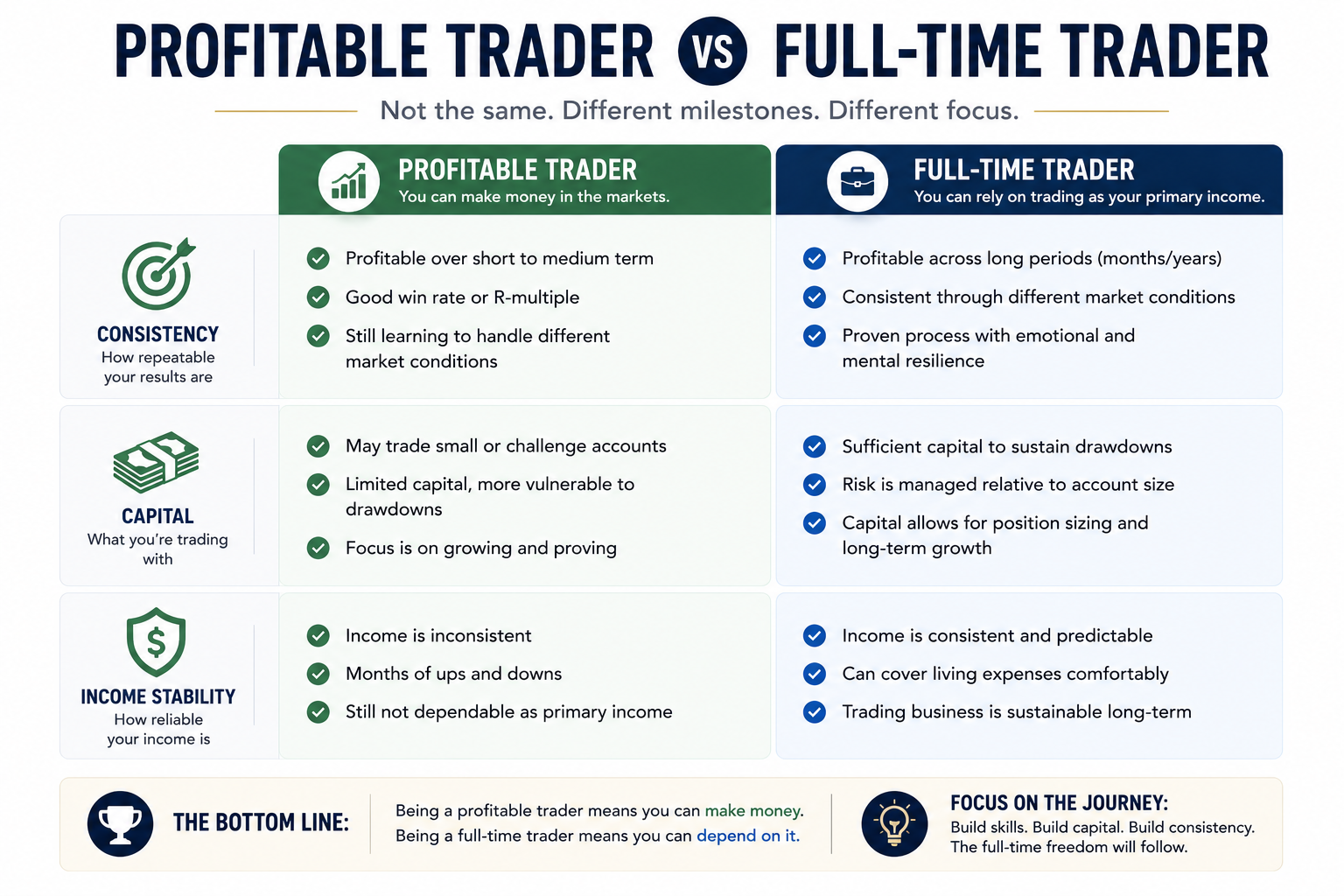
Fig 1.1 Trading for a living comparison
How Much Capital You Really Need
Capital is the foundation, and underestimating it is the most common reason aspiring traders fail. Your account must be large enough that realistic, low-risk returns produce a meaningful income. Risking one to two percent per trade is sustainable; risking ten percent to compensate for a small account is how accounts blow up.
The math is unforgiving but clear. If you can realistically earn a few percent per month on capital, then the income depends directly on account size. A small account simply cannot pay a salary at safe risk levels, which is why many traders bridge the gap with prop firm funding rather than risking life savings. Learning how to make a living day trading therefore starts with either substantial personal capital or access to a funded account, paired with a strict cap on risk per trade.
| Account Approach | Typical Risk per Trade | Income Realism |
|---|---|---|
| Small personal account | 1–2% | Side income at best |
| Substantial personal capital | 1–2% | Full-time income possible |
| Funded / prop firm account | Firm-defined limits | Scales income without personal risk |
The Skills Behind a Sustainable Trading Income
Capital alone is useless without a genuine edge — a strategy that produces positive expectancy over a large sample of trades. Expectancy combines your win rate and your average win-to-loss ratio, and it must be proven across hundreds of trades, not a hopeful handful. This is the core of every serious full time trader requirements checklist.
Beyond the strategy itself, professional traders master three disciplines. Position sizing keeps any single loss small enough to be irrelevant. Drawdown management defines when to reduce size or stop trading during a losing streak. A detailed trading journal turns every trade into data, exposing leaks that intuition would miss. Together these skills convert a promising strategy into a durable income, because markets change and only traders who measure and adapt survive long enough to keep trading for a living.
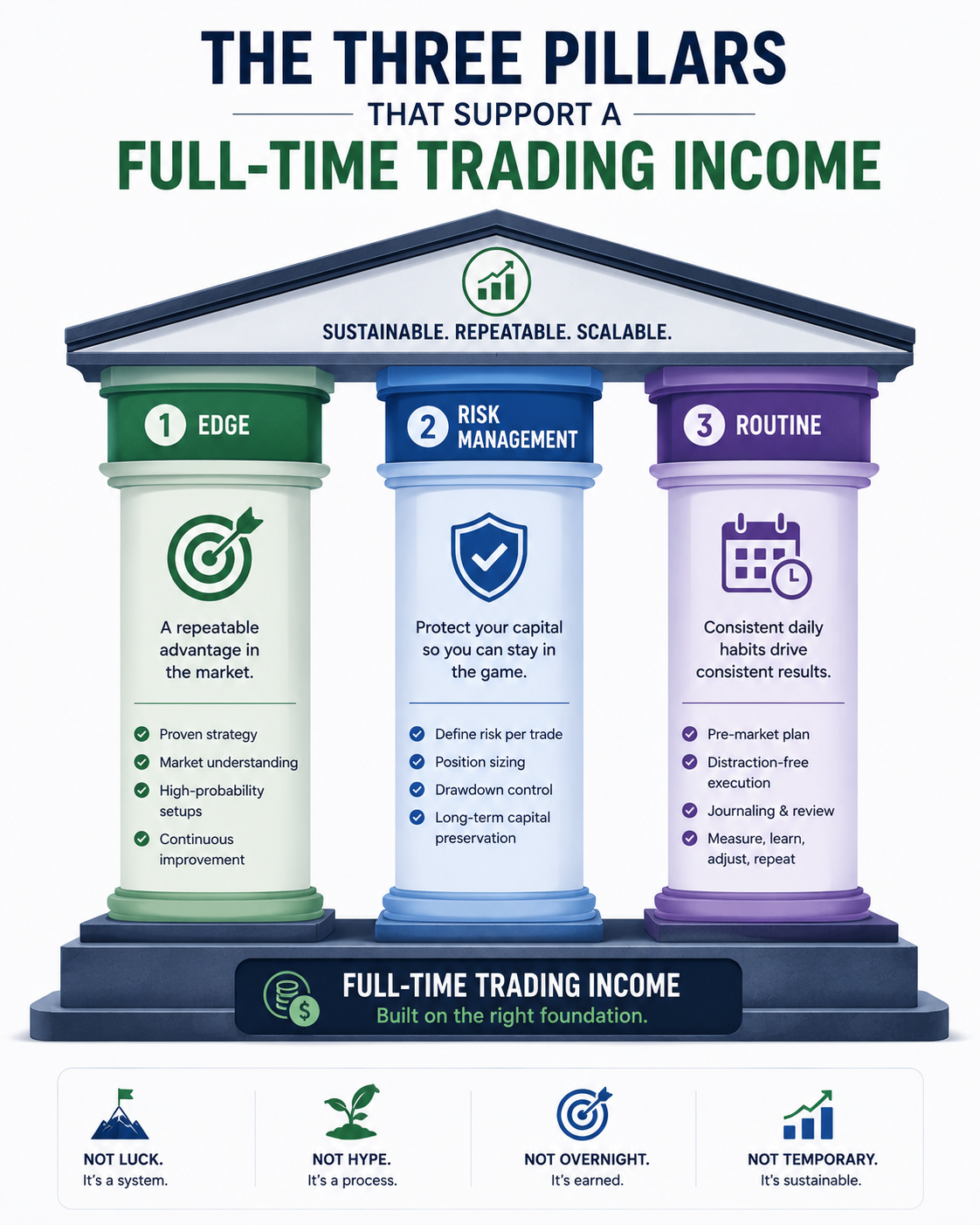
Fig 1.2 Three pillars of trading for a living
Building a Professional Trading Routine
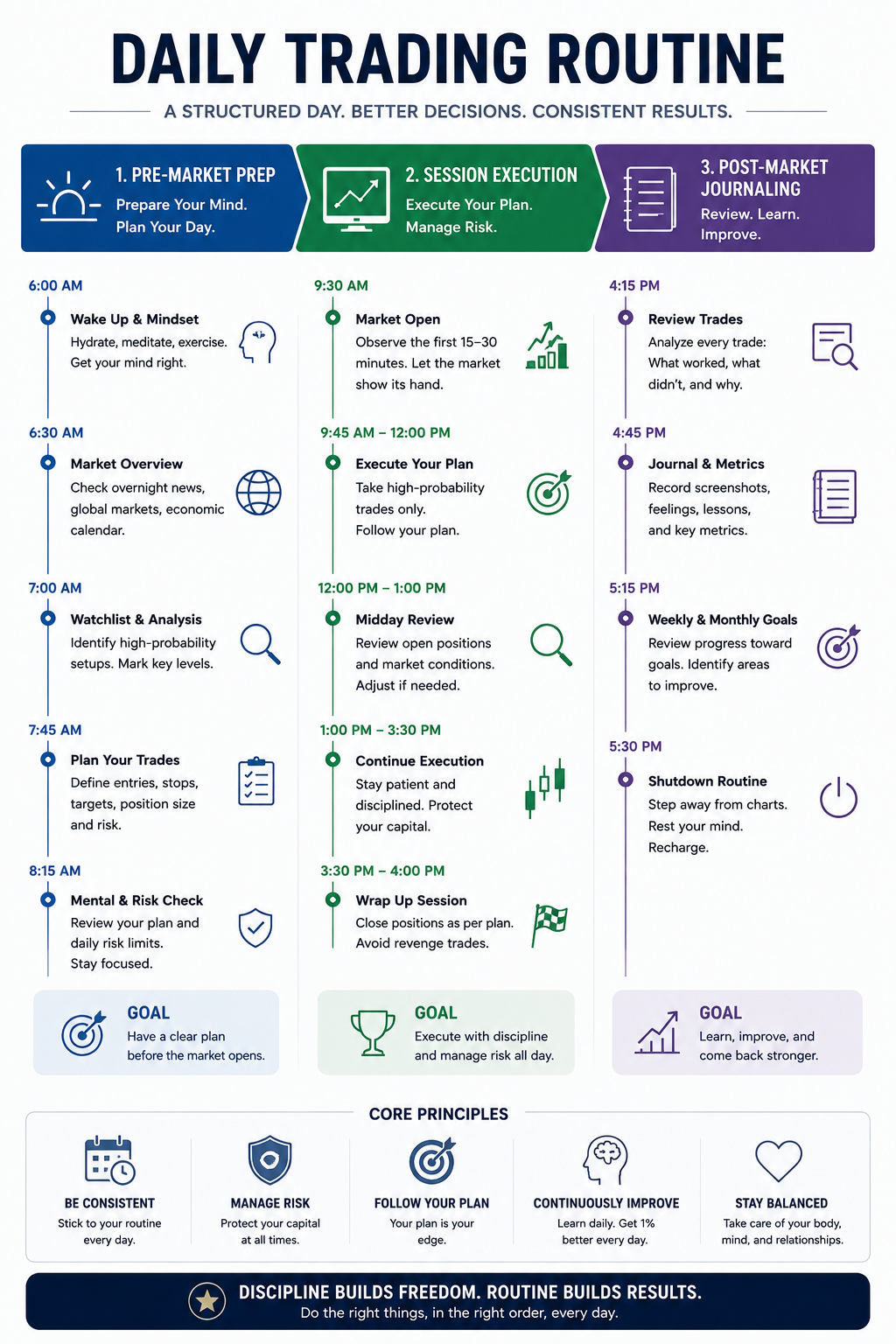
Full-time trading rewards consistency of process far more than bursts of inspiration. A professional routine starts before the session: reviewing the calendar, marking key levels, and defining the day’s plan. During the session, the trader follows the plan rather than reacting to every tick, taking only setups that meet pre-set criteria.
After the close, the work continues. Journaling each trade, grading execution, and noting emotional state builds the feedback loop that drives improvement. This structure is what makes how to make a living day trading realistic rather than a gamble — it replaces impulse with repeatable behaviour. Screen time without structure simply multiplies mistakes, while a disciplined routine compounds small edges into a reliable monthly result. The professionals who last treat trading like a job with fixed hours, defined tasks, and honest performance reviews.
What Top Traders and Research Say
Sound process matters more than any single trade, and the literature agrees. In Trading in the Zone, Mark Douglas argues that consistent income comes from thinking in probabilities and executing flawlessly trade after trade, regardless of the last outcome. Jack Schwager’s Market Wizards reinforces this through interviews where survival and discipline, not prediction, defined the most successful full-time traders.
Academic research keeps expectations honest. The widely cited study by Barber and Odean, “Trading Is Hazardous to Your Wealth,” found that the most active retail traders underperformed largely because of overtrading and costs — a sobering reminder for anyone chasing the full time trader requirements. As Ed Seykota famously said, “Everybody gets what they want out of the markets.” For those serious about trading for a living, that means wanting consistency and capital preservation above the thrill of a big win.
Fig 1.3 Trading for a living daily routine
Managing Income Volatility and Risk
Even profitable full-time traders face the challenge of uneven income, and managing it is a survival skill in itself. A flat or losing month is normal, so a cash buffer covering several months of expenses is essential before going full time. Without it, the pressure to “make money today” forces poor decisions that erode the edge.
Smart traders separate trading capital from living expenses entirely. They withdraw profits on a schedule, keep a personal emergency fund, and treat tax obligations as a fixed cost rather than a surprise. This financial discipline is a core part of the full time trader requirements that beginners overlook. Income volatility never disappears, but a strong buffer and strict separation of accounts let a trader ride out the lean stretches without abandoning the strategy that makes trading for a living possible in the first place.
Frequently Asked Questions
Can you realistically make a living from trading?
Yes, trading for a living is realistic, but only for traders with a proven edge, adequate capital, and strict risk control. The income arrives unevenly, so a cash buffer and disciplined budgeting matter as much as strategy. Most people who attempt it fail because they undercapitalise, overtrade, or quit their job too soon. Those who treat it as a business — measuring expectancy, journaling, and managing drawdowns — can build a sustainable income, though it usually takes years of consistent results to get there.
How much money do I need to trade full time?
The honest answer depends on your expenses and realistic monthly return. Because safe trading risks only one to two percent per trade, a small account cannot produce a full salary without dangerous leverage. Many traders bridge the gap by combining substantial personal capital with a funded prop account. When evaluating how to make a living day trading, work backwards from your monthly costs and a conservative return assumption, then ensure your capital is large enough to generate that income at safe risk levels.
What are the full time trader requirements?
The core full time trader requirements are a tested strategy with positive expectancy, enough capital to earn a living at low risk per trade, disciplined risk management, and a cash buffer covering several months of expenses. Beyond the numbers, you need emotional control, a structured daily routine, and a trading journal to keep improving. Markets evolve, so adaptability is essential. Meeting these requirements before quitting a job is what separates sustainable full-time traders from those who burn out quickly.
Is day trading for a living harder than swing trading?
Both can support trading for a living, but they suit different temperaments. Day trading demands intense focus, fast decisions, and full attention during market hours, which some find stressful. Swing trading requires patience to hold positions over days and the discipline to ignore short-term noise. Neither is objectively easier; the right choice depends on your personality, schedule, and capital. Many full-time traders blend both, using swing trades for core income and selective day trades for additional opportunities.
How long does it take to trade for a living?
Most successful full-time traders spent years building consistency before relying on the income, often trading part-time or on a funded account first. There is no fixed timeline, because it depends on screen time, capital, and how quickly you develop discipline. Anyone serious about the full time trader requirements should expect a long apprenticeship rather than overnight success. Treating the early years as paid education — keeping risk tiny while you learn — is the most reliable route to a durable trading income.
Should I quit my job to trade full time?
Not until your trading is consistently profitable over many months and you have a substantial cash buffer. Quitting too early forces you to trade for income rather than for the best setups, which usually destroys the edge. A safer path is to trade alongside your job, prove consistency, build capital, and only transition once how to make a living day trading is demonstrated by your own track record. Trading for a living rewards patience, and rushing the leap is one of the most common reasons traders fail.
Final Thoughts
Trading for a living is achievable, but it is a profession built on capital, a proven edge, and relentless discipline rather than luck or ambition alone. The traders who succeed treat the markets like a business: they size positions conservatively, measure expectancy over hundreds of trades, follow a structured daily routine, and keep a cash buffer thick enough to survive the inevitable lean months. They understand the real full time trader requirements — enough capital to earn a living at safe risk, a tested strategy, and the emotional steadiness to follow it under pressure. If you want to know how to make a living day trading, start by proving consistency on a demo or funded account, separate your trading capital from your living expenses, and resist the urge to quit a steady income before your track record earns it. Done patiently and professionally, trading can grow from a hopeful side pursuit into a genuine, sustainable career.