
How to Manage Trading Losses: A Complete Guide for Forex Traders
Trading losses are unavoidable. Even the world’s most successful traders experience losing trades. What separates profitable traders from struggling traders is not their ability to avoid losses entirely but their ability to manage them effectively.
Understanding how to manage trading losses is one of the most important skills in forex trading. Without proper loss management, even a profitable strategy can lead to account destruction.
This guide explains practical techniques, risk management principles, and a proven forex loss recovery strategy that can help traders stay consistent and protect their capital.

Why Trading Losses Are Normal in Forex Trading
One of the biggest misconceptions among new traders is believing that successful traders rarely lose money. In reality, losses are an unavoidable part of trading. Even hedge fund managers, institutional traders, and professional forex traders experience losing trades regularly. The difference is that experienced traders understand how to control losses before they become account-damaging events.
Financial markets move based on economic data, central bank decisions, geopolitical events, and investor sentiment. No matter how strong a trading setup appears, there is always uncertainty. This is why learning how to manage trading losses is more important than finding a perfect trading strategy.
Many beginners focus entirely on entry signals while ignoring risk management. As a result, a few bad trades can wipe out weeks or months of profits. Professional traders, on the other hand, prioritize capital preservation. They understand that surviving in the market long enough is what ultimately creates profitability.
Accepting losses as a normal business expense helps traders remain emotionally balanced. Once traders stop viewing losses as personal failures, they become better equipped to make rational decisions and follow a structured forex loss recovery strategy.
The Real Cost of Uncontrolled Trading Losses
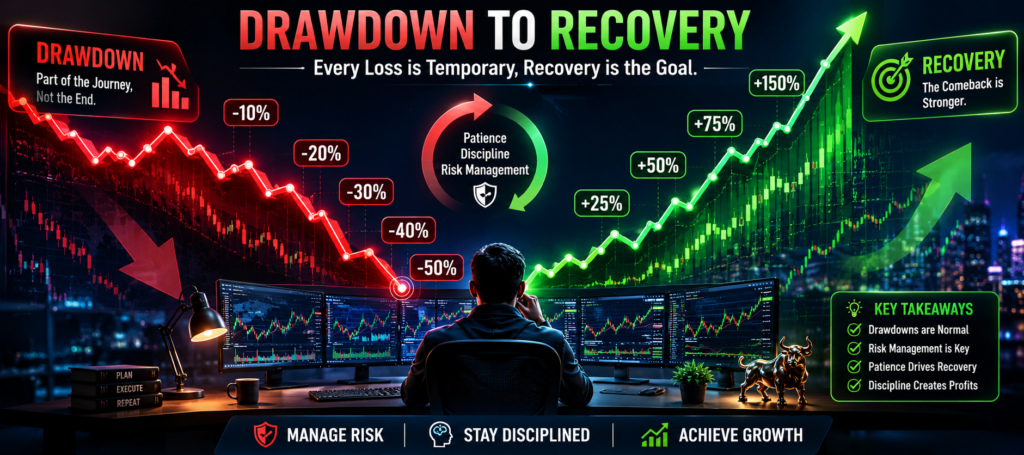
Trading losses become dangerous when they are left unmanaged. A small loss may seem insignificant at first, but repeated mistakes can quickly compound into a substantial drawdown. Many traders underestimate how difficult it becomes to recover from large losses.
For example, if a trader loses 10% of their account, they need approximately 11% to recover. However, a 50% loss requires a 100% return just to break even. This mathematical reality highlights why protecting capital should always take precedence over chasing profits.
Uncontrolled losses often occur because traders increase position sizes, remove stop-loss orders, or attempt to recover money immediately after losing trades. These emotional reactions create a cycle of poor decision-making that can severely damage trading performance.
A professional approach focuses on limiting downside risk. Traders who preserve capital during difficult periods are in a much stronger position to benefit when favorable market conditions return. Effective trading loss management is not about avoiding losses completely; it is about ensuring that no single loss has the power to destroy your account.
How to Manage Trading Losses Effectively
The foundation of successful trading is a robust risk management framework. Learning how to manage trading losses begins with understanding that every trade carries risk. Before entering any position, traders should know exactly how much they are willing to lose if the market moves against them.
Using a stop-loss order is one of the most effective ways to protect trading capital. A stop-loss acts as a predefined exit point, limiting losses before they become unmanageable. Combined with proper position sizing, stop-loss orders create consistency and discipline.
Another critical factor is maintaining a favorable risk-to-reward ratio. Traders who consistently risk $100 to potentially earn $200 or $300 can remain profitable even if they win fewer than half of their trades. This approach reduces pressure and improves long-term sustainability.
Successful traders also avoid making emotional decisions after losses. Instead of increasing trade sizes or searching for quick recovery opportunities, they continue following their trading plan. Consistency is often the difference between professional traders and struggling beginners.
A Proven Forex Loss Recovery Strategy
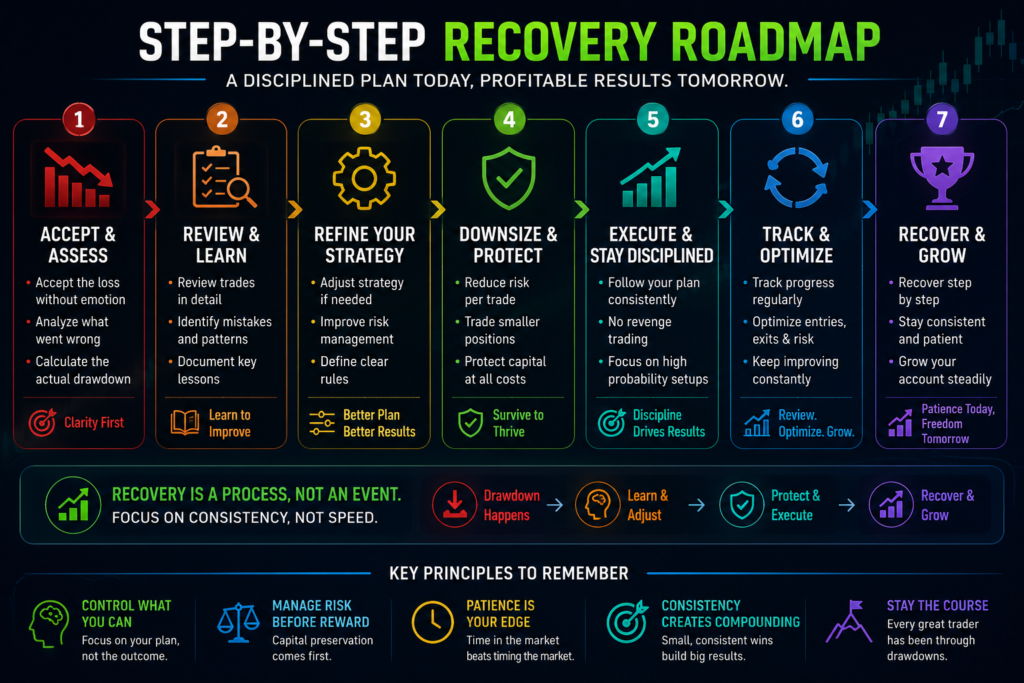
Developing a structured forex loss recovery strategy is essential for traders who experience a drawdown. The goal is not to recover losses quickly but to recover them intelligently. Attempting to win back losses in a short period usually leads to even greater damage.
The first step in any recovery plan is reducing risk exposure. Traders should temporarily lower position sizes and focus only on their highest-quality setups. This helps rebuild confidence while protecting remaining capital.
Next, traders should conduct a thorough review of their recent performance. A trading journal can reveal patterns that contributed to losses. Common issues include entering trades too early, ignoring market conditions, overtrading, or allowing emotions to influence decisions.
Once mistakes have been identified, traders can create corrective actions. The recovery phase should focus on execution quality rather than profit targets. By emphasizing discipline and consistency, traders often find that profits naturally return over time.
A successful forex account recovery process is based on patience. Markets will always provide new opportunities, but preserving capital ensures traders remain available to take advantage of those opportunities when they arise.
The Role of Trading Psychology in Managing Losses
Trading psychology is one of the most overlooked aspects of successful trading. Many traders possess solid technical skills but struggle because emotions interfere with decision-making. Fear, greed, frustration, and overconfidence can all contribute to unnecessary losses.
After a losing trade, it is natural to feel disappointed. However, allowing emotions to dictate future decisions can lead to revenge trading and impulsive behavior. Traders who attempt to recover losses immediately often abandon their strategies and take low-quality setups.
Building emotional resilience requires accepting that losses are part of the trading process. Professional traders evaluate performance over dozens or hundreds of trades rather than focusing on individual outcomes. This long-term perspective reduces emotional pressure and improves consistency.
Maintaining realistic expectations is equally important. Trading is not a get-rich-quick activity. Sustainable success comes from disciplined execution, proper risk management, and continuous improvement. Developing the right mindset can significantly improve both trading performance and overall confidence.
Common Mistakes Traders Make After Losses
Many traders unknowingly make their worst decisions immediately after losing money. One common mistake is increasing position sizes in an attempt to recover losses quickly. While this approach may occasionally work, it usually increases risk and accelerates account drawdowns.
Another frequent error is removing stop-loss orders. Traders often convince themselves that the market will eventually reverse in their favor. Unfortunately, this mindset can transform manageable losses into devastating account damage.
Overtrading is another significant problem. After experiencing losses, traders may begin taking every setup they see, hoping one trade will solve their problems. In reality, overtrading reduces trade quality and increases emotional stress.
The most effective solution is to remain disciplined. Traders should continue following their established risk management rules regardless of recent outcomes. Long-term consistency matters far more than short-term recovery attempts.
Expanded SEO FAQ Section
How can beginners learn how to manage trading losses effectively?
Beginners should focus on risk management, position sizing, and emotional discipline before attempting advanced trading strategies. Using stop-loss orders, maintaining a trading journal, and limiting risk per trade can significantly reduce the impact of losses.
What is the best forex loss recovery strategy after a losing streak?
The most effective forex loss recovery strategy involves reducing risk, reviewing past trades, identifying mistakes, and focusing only on high-probability setups. Traders should avoid increasing position sizes or attempting rapid recovery.
How much of my account should I risk on a single trade?
Most professional traders recommend risking between 1% and 2% of total account equity on any single position. This approach helps protect capital during periods of drawdown.
Why do traders experience consecutive losses?
Consecutive losses can occur because of changing market conditions, poor risk management, emotional trading, or strategy weaknesses. Even profitable systems can experience temporary losing streaks.
Can trading psychology affect trading losses?
Yes. Fear, greed, overconfidence, and frustration are among the leading causes of poor trading decisions. Developing emotional control is essential for long-term trading success.
Conclusion
Successfully learning how to manage trading losses is one of the most valuable skills a forex trader can develop. While losses are inevitable in every trading career, they do not have to prevent long-term profitability. The key is adopting a structured approach that prioritizes risk management, emotional discipline, and capital preservation. Traders who use proper position sizing, maintain realistic expectations, and follow a proven forex loss recovery strategy are better equipped to survive market uncertainty and recover from drawdowns. Instead of chasing losses or relying on emotional decisions, focus on building consistent habits that support sustainable growth. Over time, disciplined execution, strong risk control, and continuous learning will have a far greater impact on trading success than any individual winning trade. The traders who succeed are not those who avoid losses entirely, but those who know how to manage them professionally and turn setbacks into valuable learning opportunities.