
How to Build a Trading Plan for Consistent Forex Success
Introduction
Learning how to build a trading plan is one of the most important steps in becoming a disciplined and profitable trader. In forex markets, uncertainty is constant, and emotional decision-making often leads to losses. A structured plan helps remove guesswork and replaces it with logic, consistency, and strategy.
A well-designed trading plan is not just a document; it is a complete framework that defines how you analyze markets, manage risk, and execute trades. Whether you are a beginner or an experienced trader, building a solid foundation with a forex trading plan template can significantly improve your trading discipline and long-term performance.
What a Trading Plan Really Means in Forex Trading
A trading plan is a written set of rules that guides every trading decision. It ensures that traders follow a consistent process instead of reacting emotionally to market movements.
In forex trading, market conditions change rapidly, and without structure, traders often enter impulsive trades. A proper plan provides clarity on entry conditions, exit strategies, risk exposure, and capital management. It acts as a personal business system that keeps your trading performance measurable and controlled.
Why a Structured Trading Plan Matters for Long-Term Growth
A successful trader is not defined by one winning trade but by consistency over time. A trading plan builds this consistency by removing emotional pressure from decision-making.
When traders operate without structure, they tend to overtrade, increase risk exposure, and chase losses. A clear plan ensures discipline in every situation, whether the market is trending or ranging. It also helps in tracking performance and identifying weaknesses that need improvement.
A strong trading plan also improves psychological stability, which is often overlooked but extremely important in forex trading success.
Defining Trading Goals for Clear Direction
Before executing any strategy, traders must define clear and realistic goals. These goals act as a roadmap for progress and help measure performance effectively.
Good trading goals focus on process rather than profit. For example, maintaining consistency in execution, following risk rules strictly, and improving trade quality are more important than targeting unrealistic monthly returns.
Without clear objectives, even a good strategy can fail because there is no direction or measurable benchmark for improvement.
Choosing the Right Trading Style for Your Personality
Every trader has a different lifestyle, risk tolerance, and time availability. Selecting the right trading style is essential when learning how to build a trading plan because it directly impacts execution and discipline.
Day trading requires quick decisions and constant monitoring of charts. Swing trading focuses on holding positions for several days based on market structure. Scalping involves frequent trades with small profits, while position trading is long-term and based on macro trends.
Choosing the right style ensures that your trading approach aligns with your personality and available time, reducing stress and improving consistency.
Building a Strong Risk Management Framework
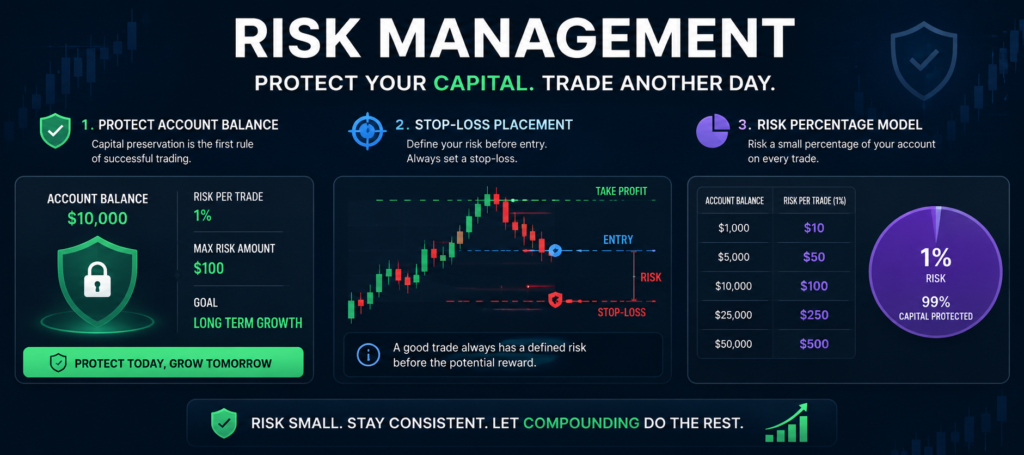
Risk management is the foundation of every profitable trading system. Without it, even accurate predictions can lead to losses.
A strong risk framework defines how much capital is risked per trade, how losses are controlled, and how exposure is managed across multiple positions. Professional traders often risk only a small percentage of their account per trade to ensure long-term survival in volatile markets.
Risk control also includes setting daily and weekly loss limits to avoid emotional overtrading during losing streaks.
Creating Entry and Exit Logic for Trade Execution
A trading plan must clearly define when to enter and exit a trade. Without this structure, traders often enter too early or exit too late, leading to inconsistent results.
Entry logic is based on technical confirmation, market structure, or price action signals. Exit rules define where profits are taken and where losses are cut. These decisions should always be pre-planned, not made during live market pressure.
Having predefined rules removes emotional bias and ensures that every trade follows the same structured process.
Trading Psychology and Discipline Control
Psychology is one of the most overlooked parts of trading. Even the best strategy fails if emotional control is weak.
A strong trading mindset helps traders avoid revenge trading, overconfidence after winning streaks, and panic selling during drawdowns. Discipline ensures that rules are followed consistently, regardless of market behavior.
Developing emotional control is a continuous process and must be part of every trading plan.

Common Mistakes Traders Make Without a Plan
Many traders fail not because of bad strategies but because of lack of structure. One of the most common mistakes is entering trades without predefined rules, which leads to emotional decision-making.
Another frequent issue is ignoring risk management, which can quickly damage trading capital. Traders also often change strategies too frequently without proper analysis, leading to inconsistency.
A proper trading plan eliminates these mistakes by enforcing discipline and structure in every trading action.
Using a Forex Trading Plan Template for Structure
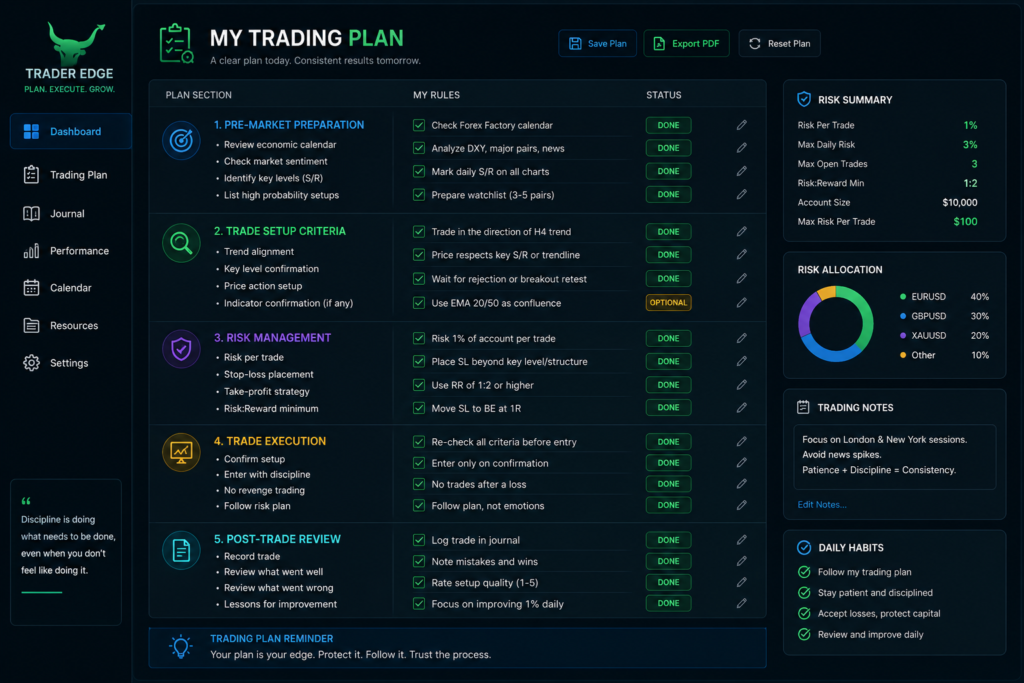
A forex trading plan template provides a ready structure for organizing trading rules. It helps traders clearly define their approach to market analysis, execution, and performance tracking.
A well-designed template includes sections for trading style, currency pair selection, risk parameters, entry criteria, exit rules, and journaling practices. Using a template ensures that no important element is overlooked and helps maintain consistency across all trades.
Templates are especially useful for beginners because they reduce confusion and provide a professional framework to follow.
How to Improve Your Trading Plan Over Time
A trading plan is not static; it evolves with experience. Regular review helps identify weaknesses and refine strategies for better performance.
Weekly and monthly evaluations are essential to understand what is working and what needs adjustment. However, changes should be based on data and consistent results, not short-term emotions or random losses.
Continuous improvement ensures that your trading plan remains effective in changing market conditions.
FAQs on How to Build a Trading Plan
What is the importance of how to build a trading plan in forex trading?
Understanding how to build a trading plan helps traders develop discipline, reduce emotional decisions, and improve consistency in forex trading performance.
What is a forex trading plan template used for?
A forex trading plan template is used to structure trading rules, manage risk, and organize trade execution strategies in a professional format.
Can beginners use a trading plan effectively?
Yes, beginners benefit the most from a trading plan because it helps them avoid emotional mistakes and build disciplined trading habits early.
How often should a trading plan be updated?
A trading plan should be reviewed monthly or quarterly based on trading performance, market changes, and strategy improvement needs.
What is the most important part of a trading plan?
Risk management is considered the most important part because it protects capital and ensures long-term survival in forex markets.
Conclusion
A well-structured trading plan is the foundation of long-term success in forex markets. Learning how to build a trading plan helps traders eliminate emotional decision-making and replace it with a consistent and disciplined approach. From defining goals and selecting trading styles to managing risk and executing trades, every component plays a critical role in performance.
Using a forex trading plan template ensures that traders maintain structure and clarity in their strategy, especially during volatile market conditions. Over time, a strong trading plan becomes more than just a document—it becomes a personal trading system that guides every decision with logic and discipline.
Successful trading is not about predicting the market perfectly; it is about following a structured process consistently. With the right plan, traders can build confidence, improve performance, and achieve sustainable growth in the forex market.