
Introduction
The proprietary trading world has changed fast, and instant forex funding sits right at the center of that shift. Instead of grinding through weeks of evaluation, traders can now pay a fee and trade firm capital almost immediately. That convenience sounds powerful, yet it carries trade-offs that every serious trader must understand. This article explains what instant funding really means, how it differs from a traditional evaluation, and where the hidden costs live. We will compare instant models with one-step and two-step challenges, break down typical rules around drawdown and daily loss, and weigh the genuine pros against the cons. You will also learn a practical framework for choosing the right funded forex account, including the red flags that separate trustworthy firms from risky ones. By the end, you should feel confident deciding whether skip-the-challenge funding fits your trading style and goals.
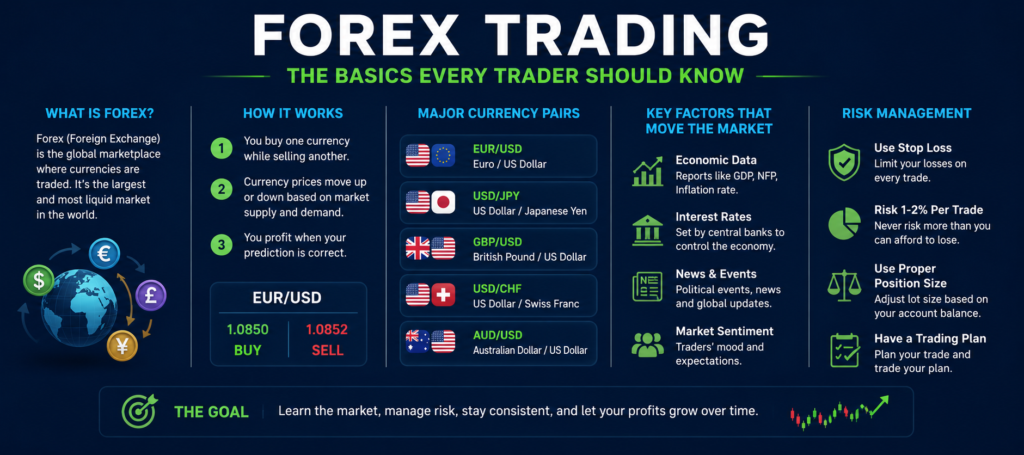
What Instant Forex Funding Actually Means
Instant forex funding describes any model where a trader receives access to firm capital without passing a multi-stage evaluation. You pay an upfront fee, agree to a set of trading rules, and begin trading a funded or simulated-funded account almost right away. The appeal is obvious. There is no waiting period, no profit target to clear before you start earning, and no risk of failing a challenge after weeks of effort.
In practice, “instant” rarely means unlimited freedom. Most firms still attach a structured rulebook to these accounts. The capital you trade is the firm’s, so the firm protects it with drawdown limits, daily loss caps, and payout conditions. The difference is timing. With instant funding, you skip the gatekeeping phase and move straight into the live trading environment where your performance determines your payouts.
It is also worth understanding the instant funded account structure beneath the marketing. Some firms route your trades to a live market, while others operate a simulated environment and pay you from their own revenue based on your measured performance. Neither approach is inherently wrong, but the distinction matters because it shapes how the firm earns money and how sustainable its payouts can be. A trader who understands this difference asks sharper questions before paying any fee.
The label “instant” can also mislead newer traders about what they are buying. You are not buying guaranteed income or a relaxed environment. You are buying immediate access to a tightly governed account and the chance to prove yourself in real conditions. Many firms still apply a short cooling period before your first withdrawal, a minimum number of trading days, or a consistency check that smooths out lucky streaks. None of these conditions contradict the promise of instant access. They simply remind you that the firm protects its capital from the first trade onward. Reading the offer this way, as access rather than as a finished outcome, keeps your expectations grounded and your decisions sharper.
How Instant Funding Differs From Evaluation Challenges
The traditional path to firm capital runs through a forex funded account challenge. In that model, you prove your skill first. You hit a profit target, respect the loss limits, and only then receive a funded account. Instant funding flips that sequence. You pay more upfront, skip the proving phase, and accept that the firm has priced the added risk into your fee.
This shift changes the economics for both sides. With an evaluation, the firm filters out weaker traders before risking any capital, so it can charge a lower entry fee. With instant funding, the firm takes on unproven traders immediately, so it offsets that exposure through higher fees, tighter rules, or a less generous early profit split. Neither side gets something for nothing. The convenience you gain is paid for somewhere in the structure.
Another key difference is psychological. Challenge accounts force discipline before real stakes arrive, which can build good habits. Instant accounts drop you straight into a rule-bound environment, which can expose undisciplined traders quickly. The model does not change market difficulty. It only changes when and how the firm measures your readiness.
There is also a difference in how the two paths handle failure. When you fail a challenge, you usually lose only the evaluation fee, and many firms let you reset and try again at a reduced cost. With instant funding, a rule breach ends a more expensive account, so the financial sting lands harder and faster. This asymmetry rewards traders who have already ironed out their mistakes and penalizes those still learning on the job. It is one reason experienced traders gravitate toward instant access while newer traders often benefit from the slower, cheaper challenge route. The best path is rarely the fastest one. It is the one that matches the stage you are actually at, not the stage you wish you had reached.
Instant Funding vs One-Step vs Two-Step: A Comparison
To see the trade-offs clearly, it helps to compare the three dominant models directly. The table below uses industry-typical ranges rather than specific firm figures, since pricing and rules vary widely. Always confirm exact numbers on a firm’s official site before committing.
| Feature | Instant Forex Funding | 1-Step Challenge | 2-Step Challenge |
|---|---|---|---|
| Time to trade capital | Immediate | Days to weeks | Weeks |
| Upfront fee | Highest | Moderate | Lowest |
| Profit target to start | None | One phase | Two phases |
| Typical early profit split | Often lower at first | Standard | Standard or higher |
| Drawdown rules | Usually strict | Moderate | Moderate |
| Best for | Confident, funded-ready traders | Balanced traders | Patient, fee-sensitive traders |
These are general characteristics of each funding model and vary by provider. Always check a specific firm’s current fee, drawdown, and profit-split terms before choosing.
The pattern is consistent. Speed costs money. The faster you reach capital, the more you generally pay and the tighter the rules tend to be. A forex funded account challenge trades time and effort for a lower fee, while instant funding trades a higher fee for immediate access. Your choice should reflect both your budget and your honest confidence in your edge.

The Fee and Profit-Split Trade-Offs
Every funding model rests on a simple exchange. The firm provides capital and rules, and you provide skill and a fee. With instant funding, that fee is the most visible cost, but it is not the only one. The profit split also shapes your real earnings. A split that looks generous on paper can be undercut by withdrawal conditions, minimum payout thresholds, or waiting periods between payouts.
Higher upfront fees for instant access can make sense for a trader who is genuinely ready, because the time saved has value. For an unproven trader, though, that same fee often becomes a sunk cost when strict rules end the account early. The math only works if your edge is real and repeatable. Paying to skip the challenge does not create skill. It simply removes the filter that would have revealed its absence.
Read the payout terms as carefully as you read the fee. Look at how often you can withdraw, what conditions unlock the first payout, and whether the split improves as you scale. The headline number rarely tells the full story, and the difference between firms often lives in these details rather than in the advertised percentage.
It also helps to run a simple break-even calculation before you commit. If an instant account costs a few hundred dollars and your profit split is sixty percent, you need to earn enough net profit to recover that fee before you see real income. A trader who plans for several payout cycles, rather than one quick withdrawal, sets more realistic targets and trades with less pressure. Pressure to recover a fee fast is exactly what pushes traders to oversize positions and breach drawdown rules. Treating the fee as a longer-term investment in access, rather than a debt you must repay this week, keeps your risk sizing sane and your decisions calm. The traders who survive funded accounts tend to be the ones who never let the cost of entry distort their position sizing.
Typical Rules: Drawdown, Daily Loss, and Scaling
Funded accounts run on rules, and instant accounts are no exception. The three you will encounter most are maximum drawdown, daily loss limits, and scaling plans. Maximum drawdown sets the floor your account balance cannot breach. Cross it, and the account closes. This rule protects the firm’s capital and forces you to manage risk across your entire account, not just a single trade.
Daily loss limits work on a shorter horizon. They cap how much you can lose in a single trading day, which prevents one bad session from spiraling. These limits encourage steady, controlled trading rather than aggressive recovery attempts. Many traders fail not because their strategy is weak but because a single emotional day breaches a daily cap they underestimated.
Scaling plans reward consistency. As you prove reliable performance, the firm may increase your capital and sometimes improve your profit split. Industry-typical scaling rewards traders who show steady results over several months rather than one lucky stretch. Understanding these rules before you start matters far more than the marketing around any instant funded account, because the rules, not the headline, decide whether you keep your account.
Pros and Cons of Instant Funding
The strongest advantage of instant funding is speed. A trader who already has a tested edge can start earning without losing weeks to an evaluation. There is also no risk of failing a challenge through a single off day, which removes one layer of pressure. For experienced traders who know their numbers, this efficiency is genuinely valuable.
The cons are equally real. The higher fee raises the cost of being wrong, and the absence of a proving phase means undisciplined traders reach risk faster than they should. Strict drawdown and daily loss rules can end an account quickly, turning the upfront fee into a loss with little to show for it. The convenience that attracts beginners is often the very thing that hurts them, because it removes the structured practice a challenge would have forced.
If kept to one short list, the honest summary is this:
- Instant funding rewards readiness and punishes unpreparedness, so the model amplifies whatever skill level you already bring to it.
That single truth should guide your decision more than any promotional offer.
How to Approach Choosing the Right Funded Forex Account
Choosing the right funded forex account is less about finding the cheapest entry and more about finding a firm you can trust to pay you fairly. Start with reputation and track record. A firm that has paid traders consistently for years carries more weight than a new brand with aggressive marketing. Search for genuine payout proof, independent trader feedback, and a transparent history rather than polished testimonials alone.
Next, examine rule clarity. The best firms publish their drawdown, daily loss, and payout rules in plain language with no ambiguity. Vague or shifting rules are a warning sign, because unclear terms give the firm room to deny payouts. You should be able to read the rulebook once and understand exactly what ends your account and what unlocks your money.
Finally, weigh the practical fit. Consider the trading platform, the instruments offered, the spreads, and whether the profit split and scaling plan match your goals. A strong firm with a platform you dislike still works against you daily. The right account aligns reputation, clear rules, fair payouts, and a comfortable trading environment, and that alignment matters far more than a small difference in fee.
Account size deserves special thought here. A bigger account magnifies both your potential earnings and the pressure of its drawdown limits, and that pressure is psychological as much as financial. Many traders perform better on a smaller account where a single losing trade feels survivable, then scale up once their process proves reliable. Matching size to your true risk tolerance, rather than to your ambition, protects both your capital and your composure. It is far easier to grow a small funded account through consistent results than to defend a large one you were never emotionally ready to trade.
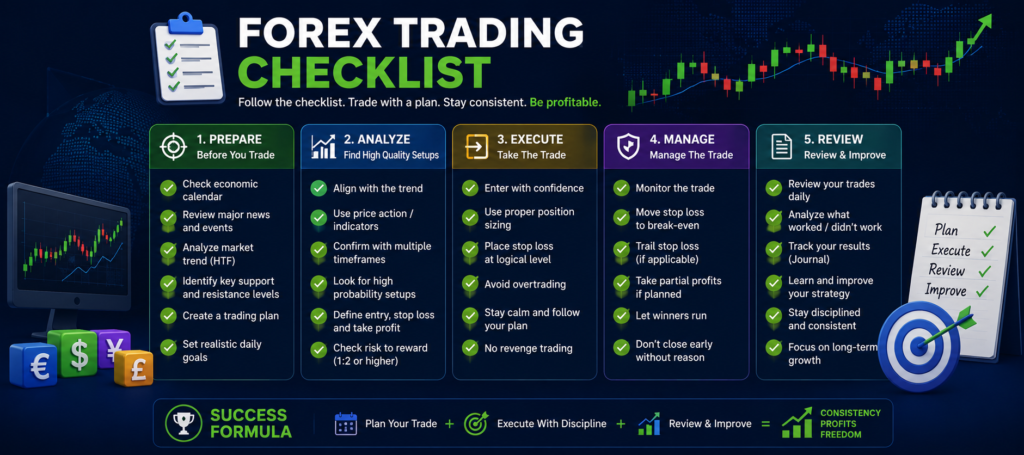
Red Flags and Realistic Expectations
Some warning signs appear again and again. Be cautious of firms that promise effortless profits, advertise unrealistic win rates, or bury their rules in dense fine print. Watch for delayed or denied payouts in trader reviews, sudden rule changes, and pressure tactics that push you to buy quickly. A firm that earns mainly from selling accounts rather than from successful traders has misaligned incentives, and that misalignment eventually shows up in how it treats payouts.
Realistic expectations protect you as much as any rule. Most retail traders do not turn consistent profits, and a funded account does not change that underlying difficulty. The capital is real, but so is the skill required to keep it. Instant funding removes the evaluation, not the market’s challenge. Treat your fee as the cost of access to a disciplined environment, not as a shortcut to guaranteed income.
Approach any funding offer the way you would approach a trade. Verify the facts, read the rules, size your risk, and never commit money you cannot afford to lose. The traders who last are the ones who treat the firm relationship with the same discipline they bring to the charts.
Common Mistakes That End Funded Accounts Early
Most blown accounts share a few familiar causes, and recognizing them early saves both money and frustration. The first is overleveraging in the opening days. Eager to recover the fee and prove their edge, traders size up too fast and breach a daily loss limit they underestimated. The capital may belong to the firm, but the discipline must belong to you. Modest, consistent sizing keeps you in the game long enough for an edge to show.
The second common mistake is ignoring the consistency and minimum-day rules. Some traders hit a target with one outsized trade, then feel cheated when the firm delays a payout because a single day dominated their results. Reading these clauses before you trade, rather than after a flagged withdrawal, prevents that painful surprise. The rules are not hidden traps when you take the time to understand them.
A third pattern is firm-hopping. Frustrated by one rulebook, traders buy account after account chasing the easiest terms, draining money with each purchase. A more reliable path is to learn one firm’s environment deeply, build a repeatable process, and let payouts compound over time. Edge comes from discipline and a tested strategy, not from hunting for a loophole that does not exist.
What Experts and Research Say
Decades of trading wisdom point to the same conclusion: psychology and discipline matter more than any account structure. In his classic book Trading in the Zone, Mark Douglas argues that consistent results come from a disciplined mindset rather than a perfect strategy. That message applies directly to funded trading, where rule-bound environments expose emotional weaknesses fast.
The data reinforces this. The well-known study “Trading Is Hazardous to Your Wealth” by Brad Barber and Terrance Odean found that active individual traders tended to underperform the market, largely due to overtrading and poor timing. Broader research on retail trading consistently shows that only a small share of active traders remain profitable over time. These findings explain why firms can offer funding profitably and why traders should be honest about their own edge.
As trader Paul Tudor Jones put it, “The most important rule of trading is to play great defense.” For anyone weighing instant forex funding, that defensive mindset, respecting drawdown rules and managing risk, is the difference between keeping an account and losing the fee.
Suggested Images

Alt text: How instant to evaluation challenges.
Alt text: Instant forex funding vs forex funded account challenge comparison chart.
Alt text: for choosing The right funded forex account safely.
Alt text: Drawdown and daily loss rules for an instant funded account.
Frequently Asked Questions (FAQs)
Is instant forex funding better than a forex funded account challenge? Neither is universally better. Instant forex funding suits confident traders who want immediate access and can absorb a higher fee, while a forex funded account challenge suits patient, fee-sensitive traders who prefer to prove their edge first. The right choice depends on your budget, your discipline, and your honest confidence in your strategy. Both models still require real skill to keep the account.
Are instant funded accounts real or simulated? It varies by firm. Some route trades to live markets, while others use a simulated environment and pay traders from firm revenue based on measured performance. Neither approach is automatically bad, but you should know which one you are joining. Always check the firm’s official documentation so you understand how it earns money and funds your payouts.
What rules should I expect with instant funding? Most instant funded account programs enforce maximum drawdown limits, daily loss caps, and consistency or scaling rules. These protect the firm’s capital and shape how you trade. Read every rule before paying, because the rulebook, not the marketing, decides whether you keep your account and unlock payouts. Unclear rules are a serious warning sign.
How do I avoid scam prop firms? Focus on reputation, payout history, and rule clarity when choosing the right funded forex account. Look for verifiable payout proof, independent reviews, and transparent terms written in plain language. Avoid firms that promise easy profits, change rules suddenly, or pressure you to buy quickly. A trustworthy firm earns from successful traders, not only from selling accounts.
Can beginners use instant funding? Beginners can, but it is rarely wise. Instant funding drops you into a rule-bound environment without the structured practice an evaluation provides. The higher fee also raises the cost of early mistakes. New traders often benefit more from building discipline first, since paying to skip the challenge does not create the skill the market still demands.
Final Thoughts
Instant forex funding offers a genuine advantage to traders who are already prepared, because it removes the waiting and the risk of failing an evaluation. Yet that same speed magnifies the cost of being unready, since higher fees and strict rules punish undisciplined trading quickly. The model does not make the market easier. It simply changes when the firm measures your readiness and how much you pay for the privilege. Treat it as a tool, not a shortcut. Compare it honestly against one-step and two-step challenges, study the drawdown and payout rules, and prioritize reputation and clarity when choosing the right funded forex account. Approach funding with the same discipline you bring to your trades, and the structure can work in your favor rather than against you.
Disclaimer: This article is for educational purposes only and is not financial advice. Proprietary trading involves fees and real financial risk, and most traders do not achieve consistent profits. Always verify rules, fees, and payout terms on a firm’s official website and consult a qualified professional before making any financial decision.
Ready to trade smarter? Explore more honest guides, firm breakdowns, and market insights at forexmarkettrendss.com and make your next funding decision with confidence.