
Introduction
Every new trader eventually types the same search: who is the forex broker with highest leverage? The dream is simple. Turn a small deposit into a big position, and let the market do the heavy lifting. Some offshore brokers now advertise 1:500, 1:1000, even 1:2000 and beyond. The numbers look thrilling. They also hide a hard truth. Higher leverage cuts both ways, and the broker offering the biggest multiplier is rarely the safest place for your money. This article unpacks what “highest leverage” actually means in practice. We compare aggressive offshore brokers against a conservative, regulated giant like Interactive Brokers, whose forex margin works very differently. By the end, you will understand the numbers, the regulation gap, and how to choose without blowing up your account on day one.
What “Highest Leverage” Really Means in Forex
Leverage is borrowed buying power. When a broker offers 1:500, every dollar in your account controls five hundred dollars in the market. Put up $200 and you can hold a $100,000 position, a standard lot. That is the appeal of the forex broker with highest leverage. A small deposit suddenly moves like a large one.
But leverage does not change the size of the market move. It only changes how much of that move lands on your balance. A 20-pip swing on a standard lot is roughly $200. On a $200 account at 1:500, that single swing can wipe you out. The same swing on a $20,000 account at 1:5 barely registers. Same market, very different outcome.
So “highest leverage” is really a measure of how little margin a broker demands, not how much profit they hand you. The multiplier sets your minimum collateral. It does nothing for your edge, your timing, or your risk control. Traders who confuse the two tend to learn the difference fast, and expensively.
There is also a regulatory angle baked into the number. In the EU, ESMA caps retail forex leverage at 1:30 on major pairs. In the US, the NFA caps it near 1:50. Australia’s ASIC followed with 1:30 in 2021. So when you see 1:500 or 1:2000 advertised, you are almost always looking at a broker operating outside those frameworks. The number itself is a clue about where the firm is licensed, and how much protection sits behind your deposit.
Offshore Brokers Offering 1:500 to 1:2000 and Beyond
The brokers with the loudest leverage claims usually hold licenses in lighter-touch jurisdictions. Think Seychelles, Saint Vincent and the Grenadines, Mauritius, Belize, or Vanuatu. These regulators allow far higher leverage than ESMA, the NFA, or the FCA. That is exactly why aggressive brokers register there.
Names you will run into include Exness, which has advertised “unlimited” leverage on qualifying accounts, plus FBS, RoboForex, XM, and OctaFX, many offering 1:1000 or 1:2000 tiers. The marketing is slick. Low minimum deposits, instant micro accounts, and leverage figures that dwarf anything a regulated broker can legally show.
The trade-off is protection. Offshore entities often sit outside compensation schemes like the UK’s FSCS, which can return up to 85,000 pounds if a regulated broker fails. Dispute resolution can be slow or toothless. Segregation of client funds varies. If something goes wrong, your recourse may be limited to an email address and hope.
That does not make every offshore broker a scam. Many are large, long-running firms with millions of clients and clean payout records. But the due diligence burden shifts to you. Check the actual licensing entity, read withdrawal reviews, and confirm the firm offers negative balance protection. Without it, a violent gap can push your account below zero, and some offshore brokers will pursue you for the difference.
What a “1:500 Leverage Forex Broker” Actually Gives You
A 1 500 leverage forex broker is the sweet spot many active traders gravitate toward. It is aggressive enough to be capital-efficient, yet common enough that even some mid-tier regulated brokers outside the EU, US, and AU caps offer it. So what does 1:500 really buy you?
It buys margin efficiency. At 1:500, the margin to hold one standard lot of EUR/USD is about 0.2% of notional, roughly $200 to $230 depending on the pair and price. That frees up the rest of your balance for other positions or as a buffer against drawdown. For a scalper or intraday trader running tight stops, that flexibility matters.
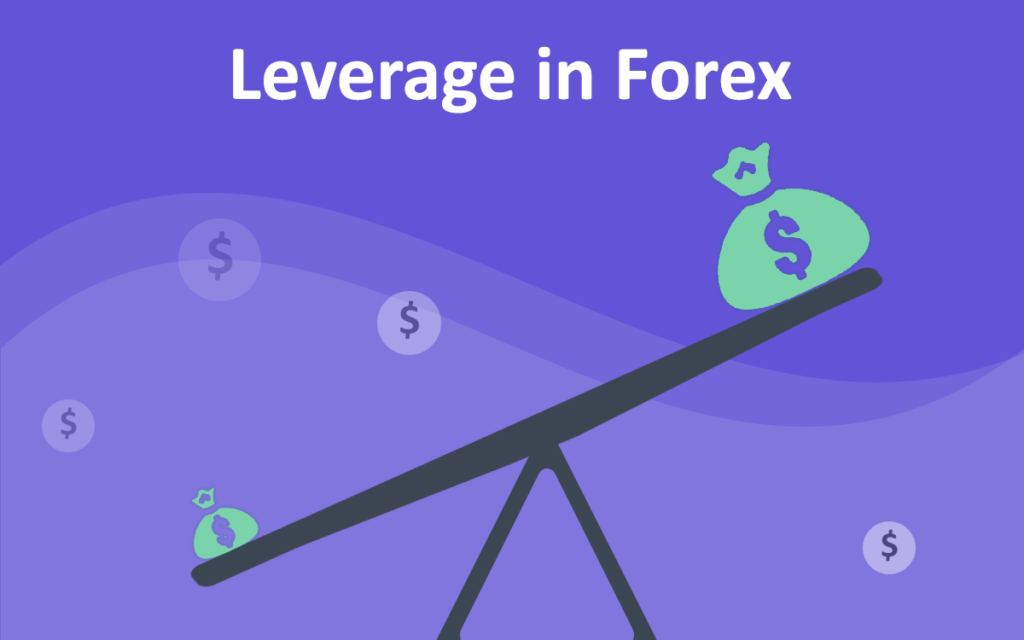
It does not buy a bigger edge. The 1:500 figure is a ceiling, not an instruction. A disciplined trader at a 1:500 broker might still risk only 1% per trade and use a fraction of the available leverage. The smart use of high leverage is to keep most of it unused. Effective leverage, the leverage you actually deploy, is what kills accounts, not the headline number.
Here is the mental model that helps. The broker’s maximum leverage sets the door width. Your position sizing decides how much you walk through it. A 1:500 broker simply gives you a wider door. Whether you sprint through carelessly or step through with control is entirely on you.
How IBKR Forex Leverage Actually Works
Now flip to the other end of the spectrum. Search ibkr forex leverage and you will not find 1:500 anywhere. Interactive Brokers is a US-listed, heavily regulated, multi-asset broker. Its forex offering is built for serious, well-capitalized traders, not for stretching a $50 deposit into a fortune.
IBKR does not advertise a single flashy leverage ratio. Instead it uses tiered, margin-based requirements that scale with position size and currency pair. For retail forex, IBKR’s margin requirements typically translate to effective leverage in the region of roughly 1:30 to about 1:50, in line with the regulatory caps in the jurisdictions where it operates. Larger positions can require progressively more margin, not less. That is the opposite of how offshore “unlimited” leverage marketing works.
Why so conservative? Because IBKR is built around risk management and capital preservation at the firm level. It is regulated by the SEC, FINRA, the FCA, and others. It carries deep compensation and segregation protections. It cannot legally offer EU or US retail clients 1:500, and it would not want to. Its business model rewards long-term, solvent clients, not blown-out accounts.
The honest takeaway: IBKR’s forex leverage is far below 1:500, and that is a feature, not a flaw. You give up margin efficiency and gain regulatory protection, transparent pricing, and a platform trusted by professionals. For a trader prioritizing safety over maximum exposure, that trade is often worth making. Always confirm current margin figures on IBKR’s own margin page, since they update them periodically.
High Leverage vs Conservative Margin: A Direct Comparison
The clearest way to see the trade-off is side by side. The table below contrasts a typical aggressive offshore broker against a regulated conservative broker like IBKR. Figures are illustrative and rounded for teaching, not live quotes.
| Factor | Offshore High-Leverage Broker | Interactive Brokers (IBKR) |
|---|---|---|
| Max retail forex leverage | 1:500 to 1:2000+ | ~1:30 to ~1:50 (margin-based) |
| Margin per standard lot (EUR/USD) | ~$50 to $200 | ~$2,000 to $3,300 |
| Typical regulator | Seychelles, SVG, Belize, Vanuatu | SEC, FINRA, FCA, IIROC |
| Investor compensation scheme | Often none | Yes (SIPC / FSCS by entity) |
| Negative balance protection | Varies, check carefully | Generally yes for retail |
| Minimum deposit | Often $5 to $100 | Higher, professional-oriented |
| Best suited for | High-risk active speculation | Long-term, well-capitalized trading |
| Main risk | Fast account wipeout, weak recourse | Capital tied up, lower exposure |
Read the table as a values statement, not a verdict. The offshore column optimizes for capital efficiency and access. The IBKR column optimizes for safety and recourse. Neither is universally “better.” The right choice depends on whether you are protecting capital or trying to grow a tiny account quickly, and how much regulatory backstop you need to sleep at night.
The Risk Reality Behind Big Leverage Numbers
High leverage compresses time. It speeds up both gains and losses. The danger is that it can turn a normal, survivable market move into a fatal one for an under-margined account. This is the single most important thing a beginner can internalize before chasing the forex broker with highest leverage.
Consider the math plainly. At 1:1000, a 10-pip adverse move on a fully leveraged standard lot can erase your entire margin. Currency pairs routinely move 50 to 100 pips in a session. So a fully leveraged 1:1000 position is not a trade; it is a coin flip with your whole balance riding on it. The leverage did not create the move. It just made sure you could not survive it.
The research backs the caution. A widely cited regulatory study from France’s AMF examined retail forex and CFD traders over several years and found the large majority lost money, with losses growing alongside trading intensity and leverage. The European regulator ESMA cited similar evidence, that 74% to 89% of retail CFD accounts lose money, when it imposed its leverage caps in 2018. Those caps exist precisely because high leverage and poor outcomes are statistically linked.
This is also a theme in the trading literature. In Trading in the Zone, Mark Douglas argues that consistent results come from disciplined risk management and probabilistic thinking, not from maximizing exposure. As the late Paul Tudor Jones put it, “The most important rule is to play great defense, not great offense.” High leverage is pure offense. Without defense behind it, the math is unforgiving.
How to Choose the Right Leverage for You
The best leverage is not the highest number you can find. It is the number that lets you size positions sensibly while keeping most of your buying power in reserve. A practical approach is to ignore the headline ratio and focus on effective leverage, the portion you actually use on any given trade.
Start with risk per trade. Many experienced traders cap risk at 1% to 2% of account equity per position, set by a stop-loss, regardless of the broker’s maximum leverage. Under that rule, a 1:500 account and a 1:50 account can trade almost identically, because the stop, not the leverage cap, governs the loss. The high-leverage broker simply gives you optional headroom you may rarely touch.
Next, weigh protection against efficiency. If your priority is preserving capital and having real recourse, a regulated broker with lower leverage like IBKR is the rational pick. If you are running a small, high-risk speculative account and you accept the trade-offs, a well-reviewed offshore 1 500 leverage forex broker with negative balance protection can be reasonable, provided you never deploy the full ratio.
Finally, verify before you fund. Confirm the licensing entity, check that client funds are segregated, read recent withdrawal reviews, and test the platform with a demo. Leverage is the loudest feature in the marketing, but withdrawal reliability and fund safety are what actually protect your money. Choose the broker you would trust with a successful balance, not just the one that lets you open the biggest position.
FAQs
Which is the forex broker with highest leverage right now?
Several offshore brokers, including firms like Exness, FBS, and RoboForex, advertise leverage from 1:1000 up to 1:2000 or higher, with some marketing “unlimited” tiers. These figures come from lightly regulated jurisdictions. Always confirm the exact licensing entity and check for negative balance protection before funding any high-leverage account.
What does a 1:500 leverage forex broker actually offer?
A 1 500 leverage forex broker lets every $1 of margin control $500 of position, so one standard lot needs only around $200 in margin. It is capital-efficient, but it is a ceiling, not advice. The smart approach is to keep most of that leverage unused and let your stop-loss govern your risk per trade.
Why is IBKR forex leverage so much lower?
IBKR forex leverage is margin-based and conservative, typically working out to roughly 1:30 to 1:50 for retail clients, because Interactive Brokers is regulated by the SEC, FINRA, and the FCA. Those frameworks cap retail leverage and prioritize fund safety. You trade maximum exposure for strong protection and transparent pricing.
Is high leverage worth the risk for beginners?
Usually not. Regulatory studies, including ESMA’s, found that 74% to 89% of retail CFD and forex accounts lose money, and losses rise with leverage. Beginners are better served learning position sizing and risk control first. You can use a high-leverage broker safely, but only by deploying a small fraction of the available leverage.
Are offshore high-leverage brokers safe?
Some are large and reliable; others are not. The key risk is weaker regulation, which can mean no compensation scheme and slow dispute resolution. Confirm client-fund segregation, negative balance protection, and recent withdrawal reviews. Treat the headline leverage number as a marketing hook, not proof of safety.
Final Thoughts
The hunt for the forex broker with highest leverage is really a hunt for capital efficiency, and that comes with a clear trade-off. Offshore brokers can offer 1:500, 1:1000, or more because they sit outside the strict caps of ESMA, the NFA, and the FCA. That flexibility is genuine, but so is the reduced protection behind your deposit. A regulated giant like Interactive Brokers takes the opposite stance, offering far lower, margin-based forex leverage in exchange for serious safeguards and professional-grade reliability. Neither model is wrong. What matters is matching the broker to your goals, your capital, and your tolerance for risk, and never deploying the full leverage just because it is available. The traders who survive treat leverage as a tool to be used sparingly, not a prize to be maximized.