
What Is Forex Risk Management?
Forex risk management is the set of rules and habits that control how much you can lose on any trade, day, or losing streak. It is not a single technique but a complete framework that keeps your account alive long enough for your edge to pay off.
Most traders obsess over entries and ignore risk, which is exactly backward. You cannot control whether a trade wins, but you can fully control how much it costs you when it loses. That control is the real difference between traders who last and those who blow up.
Think of risk management as your trading defense. Strategies generate opportunities, but disciplined risk control protects the capital you need to keep playing the game.
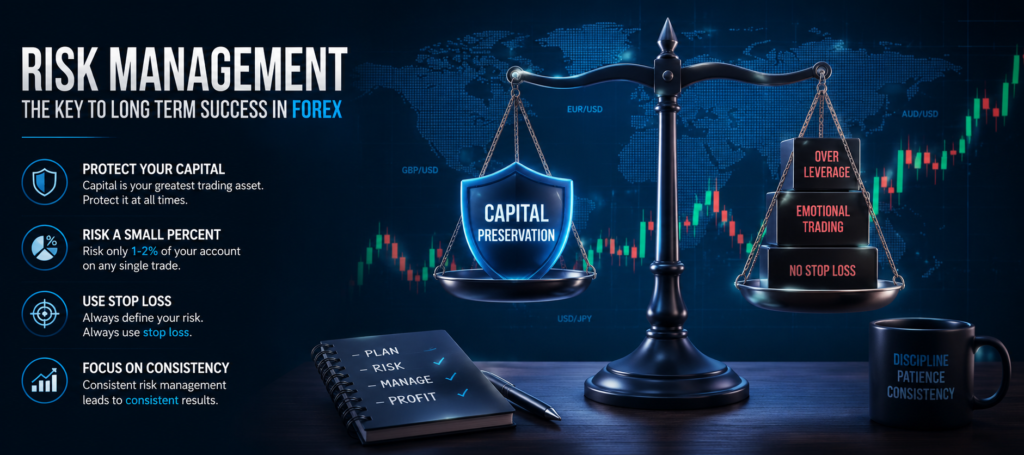
Fig 1.1 Forex risk management hero image showing a trader protecting capital with a stop loss
Why Risk Management Beats a Great Strategy
A profitable strategy with poor risk control still leads to ruin. One oversized trade or a refusal to honor a stop can wipe out months of careful gains in minutes. The market punishes carelessness without warning.
Conversely, a modest strategy paired with strict risk rules can grow an account steadily. Because losses stay small and controlled, a few good winners outweigh many small losers. This is how professionals turn an ordinary edge into a consistent income.
The math is unforgiving on the downside. A 50% loss requires a 100% gain just to break even, so avoiding deep drawdowns matters far more than chasing big wins. Protecting capital is the foundation everything else stands on.
The Core Rule: Risk a Small, Fixed Percentage
The cornerstone of forex risk management is risking only a small, fixed percentage of your account per trade. Most professionals risk between 1% and 2%, ensuring no single loss can seriously damage their capital.
This approach also smooths your emotions. When a loss costs only 1% of your balance, you stay calm and stick to your plan instead of revenge trading. Emotional stability is a direct product of small, controlled risk.
The table below shows how the 1% rule protects an account even through a brutal losing streak, something every trader eventually faces.
| Consecutive Losses | Account Remaining (1% risk) | Account Remaining (5% risk) |
|---|---|---|
| 5 | ~95% | ~77% |
| 10 | ~90% | ~60% |
| 20 | ~82% | ~36% |
The contrast is stark. Risking 5% per trade can halve your account during a normal losing streak, while the 1% trader barely feels it. Small risk is what makes survival possible.
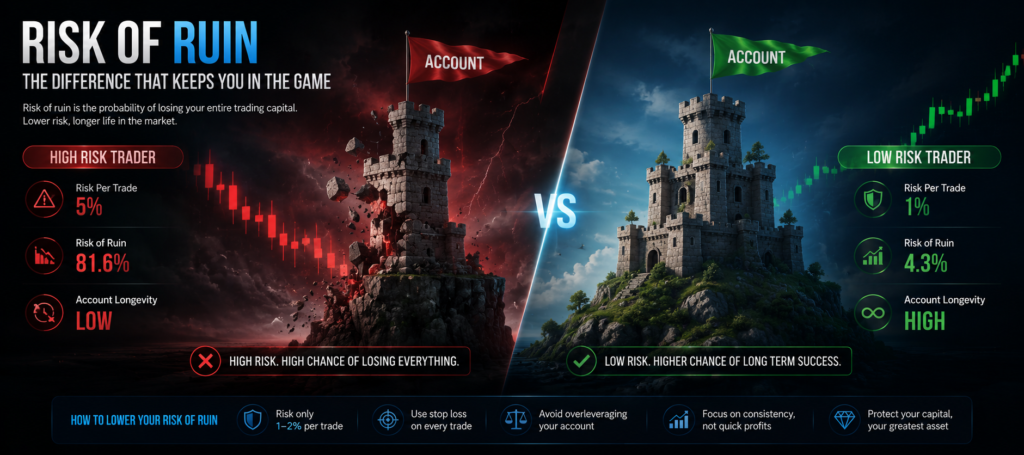
Fig 1.2 Forex risk management chart comparing account survival at 1 percent versus 5 percent risk per trade
Forex Position Sizing Made Simple
Forex position sizing translates your risk percentage into an exact lot size for each trade. The process flips conventional thinking: you decide your stop loss first, then size the position to fit your risk, never the other way around.
The formula is straightforward. Divide the dollar amount you are willing to risk by the stop loss distance in pips and the value per pip. The result is the position size that keeps your loss at your chosen percentage, regardless of how wide the stop is.
This method lets you take both tight and wide stops without ever risking more than planned. A wider stop simply means a smaller position, keeping your dollar risk constant. Mastering this single skill solves most account-blowing problems.
Position sizing in three steps:
- Decide your risk in dollars, for example 1% of your balance.
- Measure your stop loss distance in pips based on the chart, not convenience.
- Calculate lot size so the pip risk equals your dollar risk.
Building a Stop Loss Strategy
A sound stop loss strategy forex traders rely on places the stop at a level that invalidates the trade idea, not at an arbitrary distance. If price reaches it, your reason for entering no longer holds, so exiting is logical rather than emotional.
Logical stop placement sits beyond a recent swing high or low, a support or resistance level, or a volatility-based buffer. This gives the trade room to breathe while protecting you when you are genuinely wrong. Stops placed too tight get knocked out by normal noise.
Never widen a stop once the trade is live. Moving it to avoid a loss converts a small, planned setback into a potentially account-threatening one. Discipline at this moment defines your long-term results.
Reward, Drawdown, and Discipline
Risk management also means demanding enough reward for the risk you take. Targeting a reward-to-risk ratio of at least 2:1 means winners cover multiple losers, so you can be profitable even with a sub-50% win rate. This removes enormous pressure to be right every time.
Managing drawdown protects both capital and mindset. Setting a daily or weekly loss limit forces you to step away before a bad day spirals into a disaster. The market will still be there tomorrow, but only if your account survives today.
Ultimately, discipline ties everything together. The best rules are worthless if you abandon them after a few wins or losses. Consistency, not occasional brilliance, builds lasting trading success.
Common Risk Management Mistakes
The deadliest mistake is risking too much per trade, often driven by a desire to recover losses quickly. This single habit destroys more accounts than any bad strategy ever could. Keep risk small no matter how confident you feel.
Trading without a stop loss is equally dangerous, exposing you to unlimited downside on a single surprise move. Overusing leverage compounds the problem by magnifying both gains and losses. Finally, ignoring your daily loss limit during an emotional streak can undo weeks of disciplined work in a single session.
Frequently Asked Questions
1. What is the best risk per trade in forex? Most professionals practicing strong forex risk management risk between 1% and 2% of their account per trade. This keeps any single loss small enough that a normal losing streak barely dents the account. Risking more, such as 5% or 10%, exposes you to severe drawdowns that are mathematically hard to recover from. Beginners should lean toward 1% until their strategy proves consistent.
2. How do I calculate forex position sizing? Forex position sizing starts by deciding your dollar risk, usually a small percentage of your balance. You then measure your stop loss distance in pips and the value per pip for the pair. Dividing your dollar risk by the pip risk gives the correct lot size. This ensures your loss stays at your chosen percentage no matter how wide or tight the stop is.
3. Where should I place my stop loss? A solid stop loss strategy forex traders use places the stop where the trade idea is invalidated, such as beyond a swing high or low or a key support and resistance level. This gives the trade room to breathe while protecting you when you are wrong. Avoid arbitrary tight stops that get knocked out by normal noise. Never widen a stop once the trade is live.
4. What reward-to-risk ratio should I aim for? Aim for a reward-to-risk ratio of at least 2:1, meaning your target profit is twice your risk. With this ratio, your winners cover multiple losers, so you can stay profitable even with a win rate below 50%. Higher ratios like 3:1 give you even more cushion. This math removes the pressure to win every trade and supports long-term consistency.
5. Why is risk management more important than strategy? Risk management protects the capital your strategy needs to work over time. Even a profitable strategy can blow up an account through one oversized trade or a missing stop loss. By contrast, strict risk control lets a modest edge grow steadily because losses stay small and controlled. Survival comes first; profits follow only if you stay in the game.
6. How can I avoid blowing my trading account? Avoid blowing your account by risking a small fixed percentage per trade, always using a logical stop loss, and limiting leverage. Set a daily or weekly loss limit and stop trading once you hit it. Never increase risk to recover losses quickly, as this is the fastest route to ruin. Disciplined, repeatable habits protect your capital far better than any single winning trade.
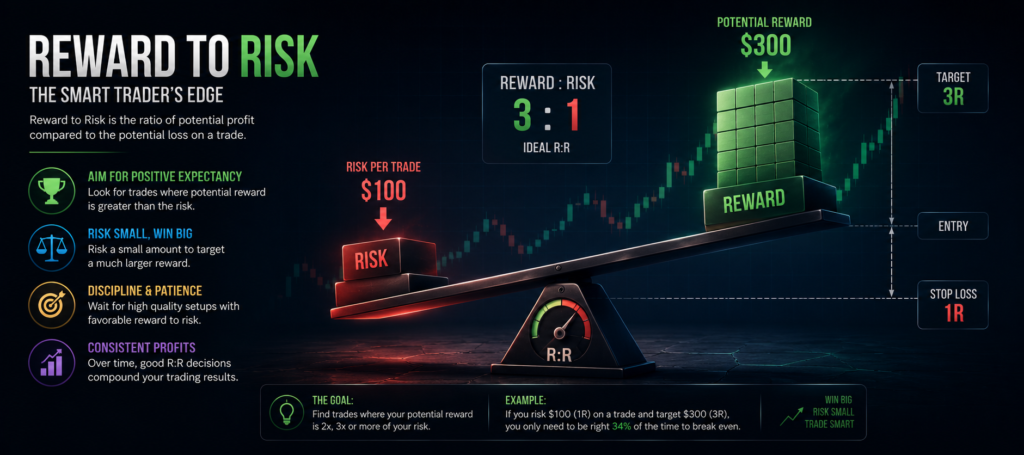
Fig 1.3 Forex risk management reward-to-risk ratio example showing 1:2 and 1:3 setups
Final Thoughts
If you remember only one lesson from your entire trading journey, let it be this: forex risk management is the skill that determines whether you survive long enough to succeed. Strategies, indicators, and signals generate opportunities, but disciplined risk control is what protects the capital you need to keep trading through inevitable losing streaks. The framework is simple yet powerful — risk a small, fixed percentage on every trade, let smart forex position sizing translate that risk into the right lot size, and build a logical stop loss strategy forex professionals trust to exit when your trade idea is proven wrong. Add a reward-to-risk ratio of at least 2:1, a firm daily loss limit, and the discipline to honor your rules even after wins or losses, and you create a defense the market cannot easily break. Treat capital preservation as your first job and profit as the natural reward of consistency. Master these habits, and you transform trading from a gamble into a durable, repeatable craft.