
In a prop industry crowded with broadly similar offers, FTUK has built a recognisable name and a loyal following among traders looking for a flexible, accessible route to funded trading. This FTUK review examines in detail how the FTUK prop firm model works, what distinguishes its evaluation and faster funding routes, how its payouts and scaling are structured, and which kind of trader genuinely benefits from its approach. Rather than simply repeating the firm’s marketing claims, the goal is to give you a practical framework for judging whether it fits your strategy, your risk tolerance, and your goals. By the end you should be able to commit your evaluation fee, or decline, with full clarity about exactly what you are buying and the rules that will decide whether your strategy survives.

Fig 1.1 FTUK review graphic
What Is the FTUK Prop Firm?
The FTUK prop firm is a proprietary trading company that provides traders with access to simulated capital and a share of the profits they generate, in exchange for demonstrating consistent, rule-abiding performance. Like its peers, it sells evaluations: a trader pays an upfront fee to attempt a challenge, and on passing receives a funded simulated account where profits are shared. The model rests on the same logic as the wider industry, that genuine trading skill is rare, so the evaluation acts as a filter to identify the minority of traders worth backing with larger size.
FTUK has historically been associated with a flexible structure, including routes that aim to get capable traders to funding relatively quickly and account models designed to reward consistency over time. Its branding has leaned into accessibility and trader-friendly positioning, which has helped it stand out in a saturated market. As always, what matters beneath the branding is the fine print: the drawdown method, the daily loss rules, the payout frequency, and the scaling milestones, all of which determine whether a profitable strategy actually survives the rulebook.
It must be stated plainly, as for every firm in this sector, that prices, profit splits, drawdown figures, account models, and promotions change frequently and the industry has seen firms revise terms or restructure. Any specific number you read, including in this review, should be confirmed on the official website before committing. This FTUK review focuses on durable structure and the questions that matter rather than figures that may have shifted by the time you read it.
How the Funding Routes Work
FTUK’s model has centred on getting traders to a funded account through a performance-based evaluation, with structures designed to reward consistent profitability and progressively grow the account. The trader demonstrates the ability to hit a target while respecting a maximum drawdown and daily loss limit, and on meeting the criteria moves to a funded simulated account. The firm has also been known for routes oriented toward rewarding steady performance with scaling, where capital and earning potential grow as consistency is proven over time.
The two rules that decide most outcomes, here as everywhere, are the maximum drawdown and the daily loss limit, and understanding exactly how each is calculated is the most important preparation a candidate can do. A trailing drawdown, where the threshold rises as the account grows, is stricter than a static one and can end an account that a static rule would have tolerated, so a strategy comfortable under one method may fail under the other. Reading precisely which method FTUK applies to the specific account model you choose is non-negotiable before you trade a single position.
Whatever the current route names and structures, the practical preparation is identical: map your tested strategy’s typical and worst-case drawdown and your trade frequency, then confirm they sit comfortably within the firm’s limits with room to spare, ideally by trading the exact rules on a free demo first. A strategy that scrapes against the drawdown limit is a coin flip you will eventually lose, regardless of how attractive the funding route appears.
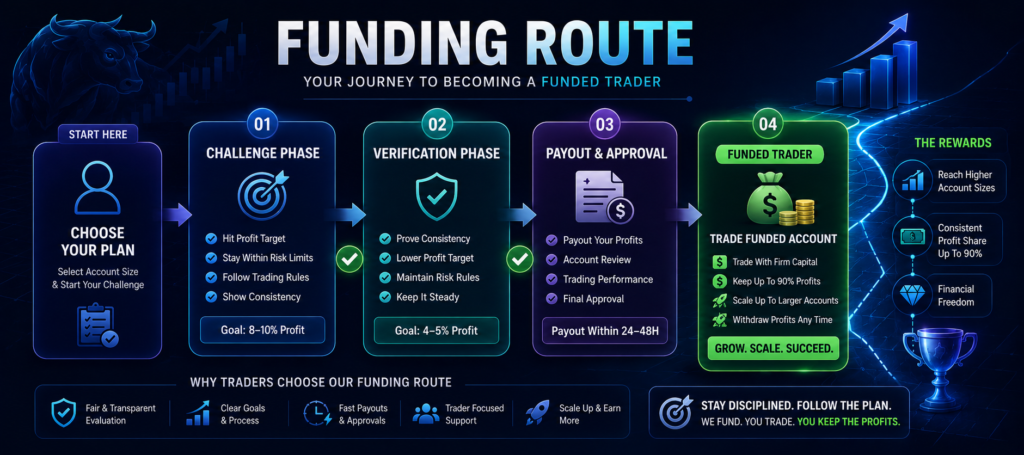
Fig 1.2 FTUK prop firm funding route
Payouts, Scaling, and Costs
Payout reliability is the single most important quality in any prop firm, because a generous split is worthless if withdrawals are slow, contested, or hedged with obstacles. For FTUK, the questions that matter are how frequently you can request a payout, how quickly it is processed, what methods are supported, and whether minimum thresholds or consistency rules apply. A firm that pays a slightly lower split but pays it promptly and predictably is a better business partner than one advertising a higher split with friction at the cash-out stage.
The profit split is the percentage of generated profits you keep, competitive across the modern industry, and scaling plans that grow your capital or split reward sustained consistency. The cost is the evaluation fee, the trader’s capped downside, which should be treated as risk capital you can afford to lose entirely, since a meaningful share of candidates do not pass and the fee is generally non-refundable. Discounts periodically lower the entry cost, and applying a current one to a model that fits your strategy is sensible, but the fee should never outweigh rule fairness and payout reliability in your decision.
| Factor | What to Check | Why It Matters |
|---|---|---|
| Drawdown method | Static vs trailing | Decides strategy compatibility |
| Daily loss limit | How it is calculated | The most common breach point |
| Profit split | Percentage and scaling | Determines real take-home |
| Payout reliability | Frequency, speed, track record | The core measure of trust |
| Cost | Evaluation fee and discounts | Your capped, non-refundable downside |
What Top Traders and Research Say
The realistic frame for any prop firm decision is that consistent retail profitability is rare. The well-known study “Do Day Traders Rationally Learn About Their Ability?” by Brad Barber, Yi-Tsung Lee, Yu-Jane Liu, and Terrance Odean found that the large majority of active retail traders underperform and few sustain profitability, which is precisely why a prop evaluation is genuinely difficult. A funded account is not a lottery ticket; it is a structure that pays the minority who bring a real, repeatable edge and the discipline to protect the account.
The wisdom of experienced traders points squarely at discipline. Mark Douglas, in Trading in the Zone, argued that consistent profitability flows from risk discipline and emotional neutrality rather than prediction, a framework directly applicable to passing and keeping a funded account where rule adherence is everything. And Paul Tudor Jones captured the priority for any funded trader when he said, “Don’t focus on making money; focus on protecting what you have.” On a funded account, protecting against a drawdown breach is exactly how you keep the opportunity alive long enough to profit from it.
Pros, Cons, and Who It Suits
The strengths of FTUK lie in its accessible positioning and consistency-rewarding structure: routes designed to get capable traders to funding, scaling that grows earning potential over time, and competitive profit splits that can reward disciplined performance. For a prepared trader with a tested strategy, the firm offers a credible path to trading larger size, and a current discount can sharpen the value on the evaluation route.
The weaknesses are those common to the prop sector and worth stating honestly. The rules, especially trailing drawdowns and daily limits, can end a funded account quickly, the evaluation fee is real and non-refundable on failure, and the firm, like others in a volatile industry, can revise terms, so current conditions must be verified directly. This firm suits the disciplined, well-prepared trader who treats the fee as risk capital and matches the account model to a proven edge; it suits poorly the beginner hoping accessible branding can substitute for genuine skill.
Frequently Asked Questions
Is FTUK legit?
FTUK is an established name in the retail prop industry with a visible profile and following. As with any firm, “legit” is best judged by current independent reviews, evidence of recent payouts, and the firm’s published terms rather than branding. Because this sector is volatile and firms have revised conditions over time, verify the live rules and recent withdrawal track record on the official website before committing, and weigh the firm’s standing by how reliably it has paid real traders recently rather than by its marketing reach or reputation alone.
How does the FTUK prop firm model work?
The FTUK prop firm sells a performance-based evaluation: you pay a fee, demonstrate you can hit a profit target while respecting a maximum drawdown and daily loss limit, and on passing receive a funded simulated account where profits are shared. The firm has leaned toward rewarding consistency with scaling, growing capital and earning potential over time. As with all firms, the specific route names and figures change, so confirm the current account models, rules, and drawdown method on the official site before purchasing.
What are the main rules to watch?
The two decisive rules are the maximum drawdown and the daily loss limit, and how each is calculated determines whether your strategy survives. A trailing drawdown that rises as the account grows is stricter than a static one and can end an account that a static rule would tolerate. Before trading, map your strategy’s typical and worst-case drawdown and confirm it sits comfortably within the limits with room to spare, ideally by replicating the exact rules on a free demo first. Most failures come from breaching these two limits.
How reliable are FTUK's payouts?
Payout reliability is the most important quality in any prop firm and should be assessed through recent independent trader feedback rather than advertised figures. The questions that matter are how often you can withdraw, how quickly payouts are processed, and whether minimum thresholds or consistency rules apply. Because reputations in this sector can change, prioritise current evidence of prompt, predictable payments to real traders, and treat a marginally higher advertised split as far less important than a demonstrated, recent track record of paying on time.
Is FTUK good for beginners?
FTUK’s accessible positioning can make it look beginner-friendly, but the evaluation fee is lost on failure, and most beginners lack the tested edge needed to pass consistently. A more sensible path is to build and prove a strategy on a personal demo or small live account under realistic rules first, then approach a prop firm once the edge is genuine and the fee is comfortably affordable as risk capital. Friendly branding and accessible routes do not substitute for a proven, disciplined approach to risk and strategy.
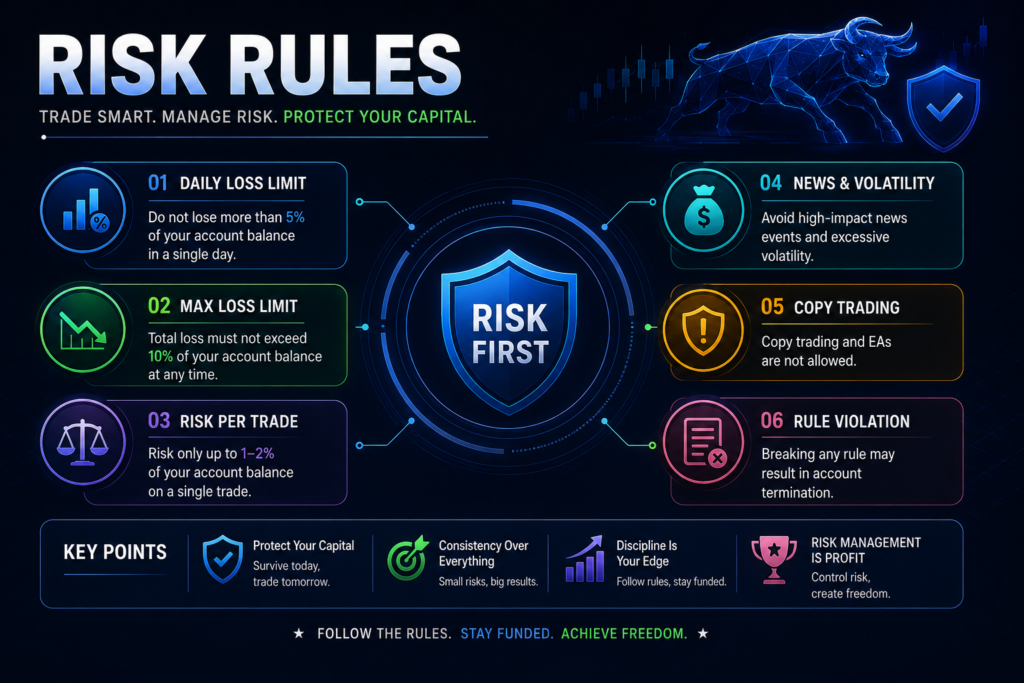
Fig 1.3 FTUK review infographic summarizing drawdown
Final Thoughts
This FTUK review comes down to fit and preparation rather than a blanket verdict. As an FTUK prop firm, its accessible positioning, consistency-rewarding scaling, and competitive splits make it a credible route to funded trading for a disciplined trader who matches the account model to a tested strategy, and a current discount can sharpen the value on the evaluation route. But the realities of the prop sector apply in full: the rules, especially trailing drawdowns and daily limits, are unforgiving, the evaluation fee is real and lost on failure, terms change, and the structure rewards only the minority who bring a genuine edge and the discipline to protect the account. The research from Barber, Lee, Liu, and Odean is a sober reminder that consistent retail profitability is rare, while Douglas and Jones point squarely at risk discipline as the deciding factor on a funded account where one breach ends everything. Before committing, confirm the current rules and payout record on the official site, prepare under the exact limits, and treat the fee as risk capital.
Related guides: