
Introduction
If you have spent any time around modern trading, you have heard the question what is a prop firm more times than you can count, yet clear answers are surprisingly rare. A proprietary trading firm, or prop firm, gives skilled traders access to the firm’s capital in exchange for a share of the profits, removing the single biggest barrier most retail traders face. The model has exploded in popularity, but it is also widely misunderstood, with myths about easy money and hidden traps clouding the picture. Many beginners want to know how does prop firm work before risking an evaluation fee, while others simply need a straight prop firm definition trading can rely on. In this guide you will learn exactly what a prop firm is, how the funding and profit-split models operate, the rules that govern funded accounts, the pros and cons, and how to choose a reputable firm.
What Is a Prop Firm, Exactly?
A prop firm is a company that trades with its own capital and partners with external traders, providing them funded accounts in exchange for a share of the profits. The straightforward prop firm definition trading beginners need is this: you prove your skill, the firm supplies the money, and you split the gains. The trader never risks the firm’s full balance personally; instead they pay an evaluation fee for the chance to manage a much larger account.
This model exists because talent and capital rarely sit in the same place. Plenty of skilled traders have small accounts, while firms have capital but need reliable traders to deploy it. A prop firm bridges that gap. Understanding what is a prop firm starts with recognising that it is a partnership built on shared incentives — the firm profits when its traders profit, so both sides benefit from disciplined, consistent performance.
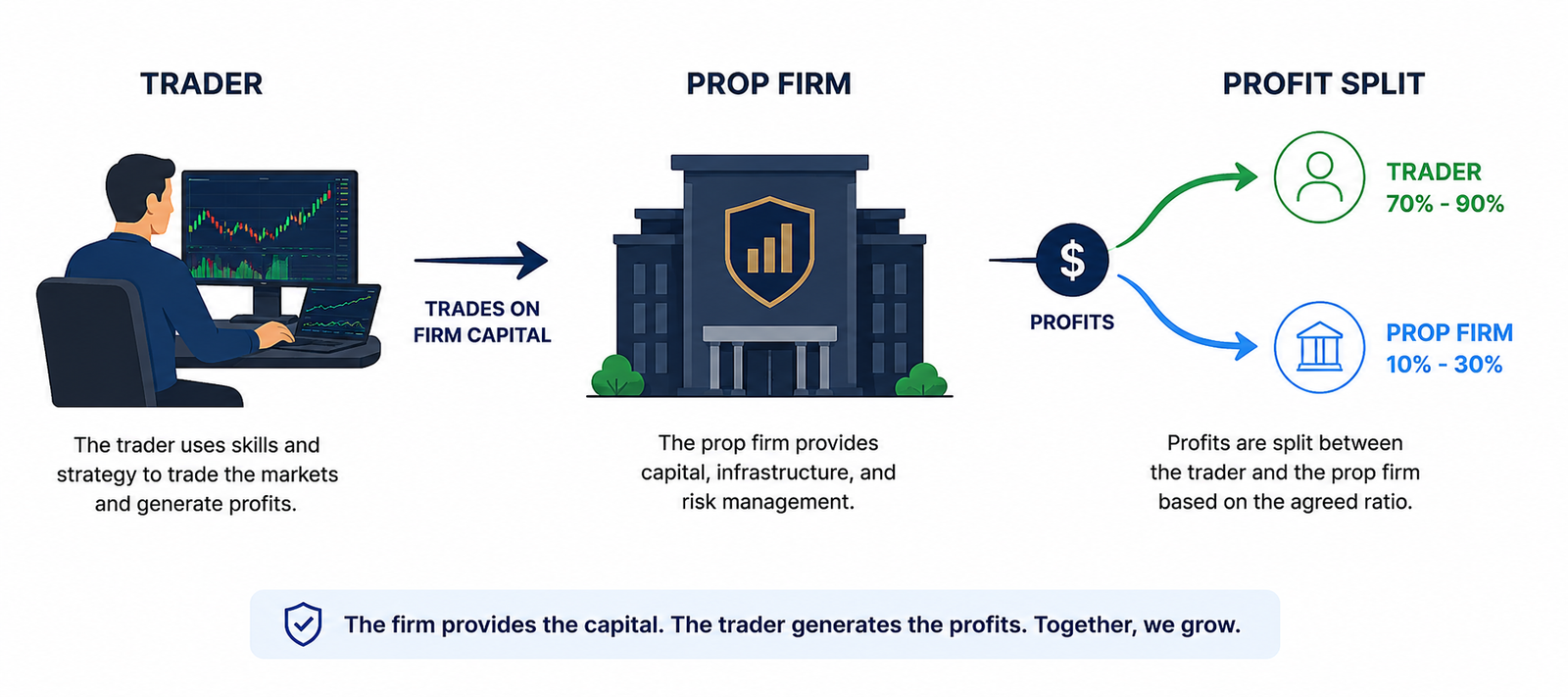
Fig 1.1 What is a prop firm diagram
How Does a Prop Firm Work?
Answering how does prop firm work means following the journey from sign-up to payout. Most firms begin with an evaluation, a paid challenge where you must hit a profit target while respecting drawdown limits. Pass it, and the firm grants a funded account. Some firms skip this with instant funding, handing over a live account immediately for a higher fee.
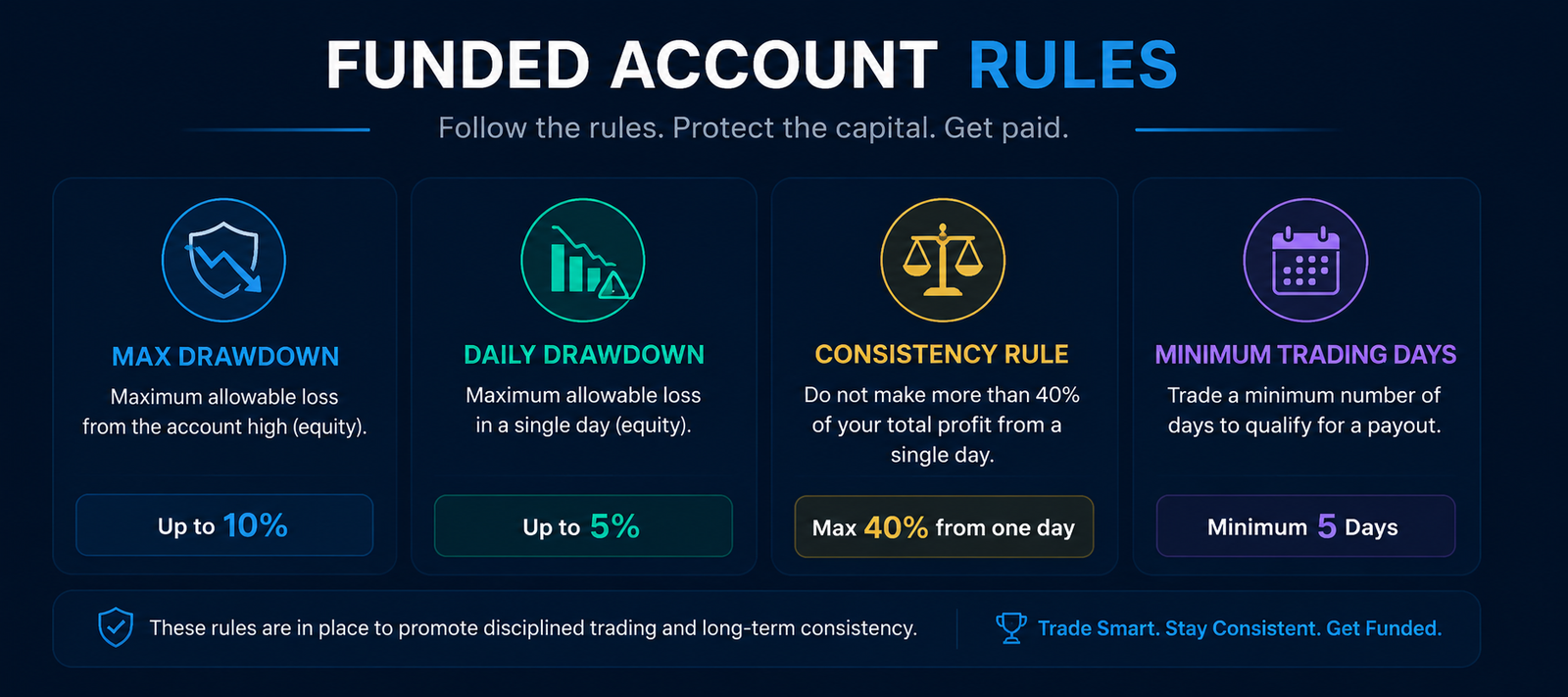
Once funded, you trade the firm’s capital under a defined rulebook. Profits are split according to a fixed percentage, with the trader typically keeping the larger share. The firm makes money in two ways: from evaluation fees paid by traders who attempt the challenge, and from its cut of the profits generated by successful funded traders. This dual model is why reputable firms genuinely want traders to pass — a consistent funded trader is a long-term revenue partner, not a one-time fee.
| Stage | What Happens | Trader Pays / Earns |
|---|---|---|
| Evaluation | Hit profit target within drawdown rules | Pays evaluation fee |
| Funded account | Trade firm capital under rulebook | Earns majority profit split |
| Payout | Withdraw profits on schedule | Receives funds, fee often refunded |
The Rules That Govern Funded Accounts
Every prop firm enforces rules designed to protect its capital, and understanding them is central to grasping what is a prop firm. The two most important are the maximum drawdown, which caps total losses, and the daily drawdown, which caps losses in a single day. Breach either and the account is usually terminated.
Beyond drawdown, firms apply consistency rules so a single oversized trade cannot dominate your profit, minimum trading-day requirements, and sometimes restrictions on news trading or holding positions over the weekend. These rules are not arbitrary obstacles; they filter for traders who protect capital rather than gamble. Anyone asking how does prop firm work must read the rulebook before paying, because a strategy that thrives on your own chart can quietly violate a rule you never noticed.
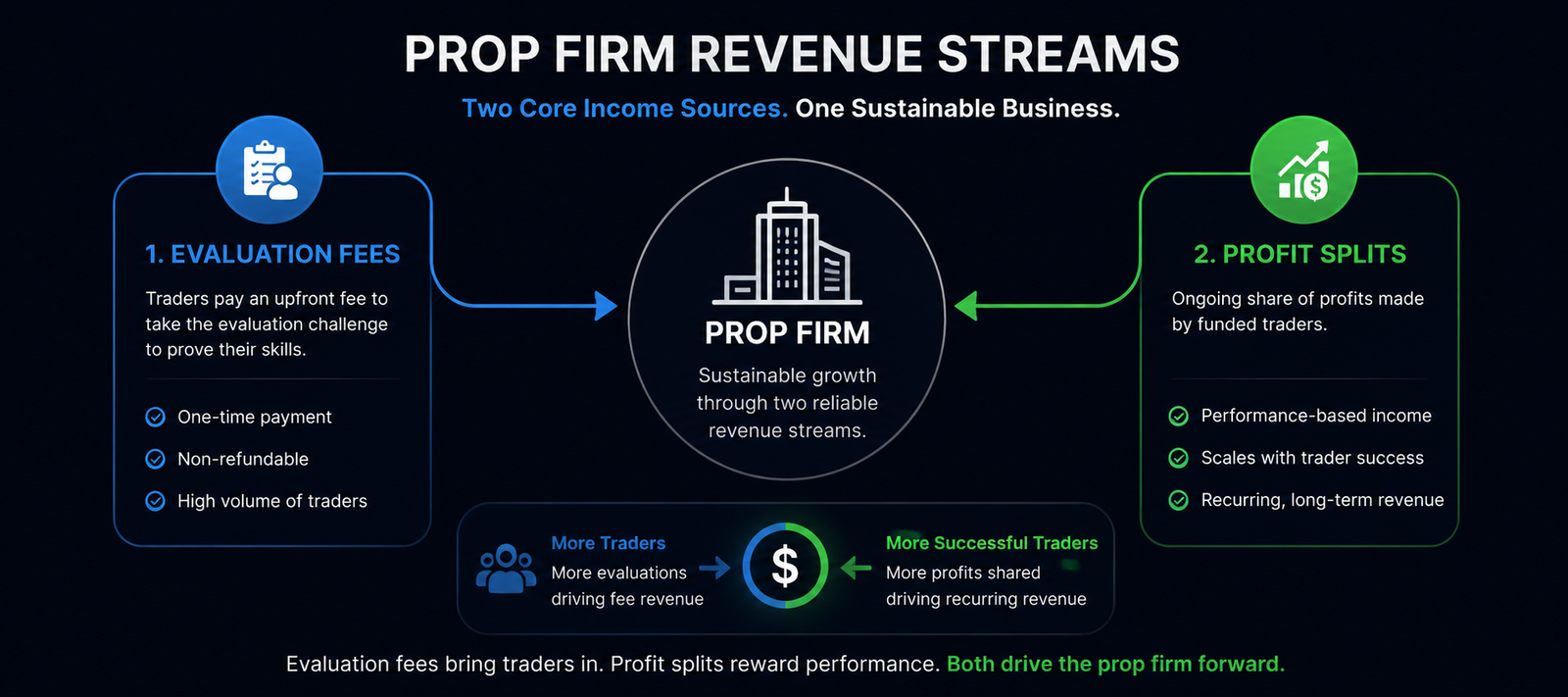
Fig 1.2 Prop firm rules graphic showing maximum drawdown
How Prop Firms Make Money
A common misconception is that prop firms profit only when traders fail. The truth is more nuanced, and understanding it sharpens any prop firm definition trading beginners rely on. Firms earn from two streams: evaluation fees and their share of funded-trader profits. A healthy, reputable firm depends heavily on the second stream, because a stable of profitable traders is a renewable, growing source of income.
This is why the firm-trader relationship is genuinely aligned at well-run companies. The firm wants you to pass, trade consistently, and scale your account, because every dollar you make returns a slice to them. Firms that rely purely on failed-challenge fees tend to set impossible rules and develop poor payout reputations. Knowing what is a prop firm therefore includes knowing how it earns, so you can separate sustainable partners from short-term fee mills.
What Top Traders and Research Say
Sound risk management matters more than any single trade, and the literature agrees. In Trading in the Zone, Mark Douglas argues that consistent traders protect capital relentlessly and think in probabilities — exactly the behaviour prop firm rules are built to reward. Jack Schwager’s Market Wizards reinforces the same lesson through interviews where survival, not prediction, defined the greats.
Academic work keeps expectations grounded. The widely cited study by Barber and Odean, “Trading Is Hazardous to Your Wealth,” found that the most active retail traders underperformed largely because of overtrading and costs. For anyone exploring what is a prop firm, the implication is clear: the evaluation rewards patience and discipline, not frantic activity. As George Soros observed, “It’s not whether you’re right or wrong, but how much you make when right.” A prop firm’s drawdown rules exist precisely to enforce that asymmetry between small losses and larger, controlled gains.
Fig 1.3 How prop firms make money infographic
Pros and Cons of Trading With a Prop Firm
Prop firms offer real advantages, but they are not a free lunch, and an honest prop firm definition trading must cover both sides. The biggest benefit is leverage of talent: a skilled trader with a small personal balance can manage a large account and keep most of the profit without risking life savings. The structure also enforces discipline, since drawdown rules push traders toward responsible risk.
The drawbacks are equally real. Evaluation fees add up if you fail repeatedly, rules can clash with certain strategies, and not every firm pays reliably. Some traders also feel pressure performing under another company’s rulebook. Weighing these honestly is part of understanding what is a prop firm — it is a powerful tool for consistent traders and a costly distraction for those still searching for an edge.
Frequently Asked Questions
What is a prop firm in simple terms?
A prop firm is a company that lets skilled traders use its capital in exchange for a share of the profits. The simplest prop firm definition trading beginners need is a partnership: you prove your ability through an evaluation or pay for instant funding, the firm provides the money, and you split the gains. You never risk the firm’s full balance personally. This model exists because talent and capital rarely sit together, so the firm supplies what a skilled trader with a small account lacks.
How does a prop firm work day to day?
Day to day, you trade the firm’s funded account exactly as you would your own, but under a defined rulebook. Answering how does prop firm work in practice means respecting the maximum and daily drawdown limits, meeting any consistency and minimum-trading-day rules, and following your strategy. Profits accumulate and are split according to a fixed percentage, with the trader keeping the larger share. You withdraw earnings on a schedule, and as long as you stay within the rules, the account continues.
How do prop firms make money?
Prop firms earn from two sources: evaluation fees paid by traders attempting the challenge, and their share of the profits generated by funded traders. Reputable firms depend mainly on the second stream, because consistent funded traders are a renewable income source. This is why well-run firms genuinely want you to pass. Understanding what is a prop firm includes recognising that firms relying purely on failed-challenge fees tend to set unrealistic rules and earn poor payout reputations.
Are prop firms legit?
Many prop firms are legitimate and pay reliably, but the industry also contains weaker operators, so reputation matters enormously. Before paying, check verified payout proof, read the rulebook in full, and research independent reviews. A trustworthy firm publishes clear rules, honours withdrawals, and earns from trader success rather than failure alone. The prop firm definition trading beginners should adopt includes due diligence, because choosing a reputable firm is just as important as passing the evaluation itself.
Is a prop firm worth it for beginners?
A prop firm can be worth it once a beginner has built a consistent, tested strategy, because it removes the capital ceiling without risking personal savings. However, paying repeated evaluation fees before you are consistent simply transfers risk to you. The smartest approach is to prove your edge on a demo account first, then attempt a low-cost challenge. Understanding what is a prop firm and how its rules work before paying prevents the common beginner mistake of funding hope rather than skill.
What is the difference between a prop firm and a broker?
A broker gives you access to the market using your own money, while a prop firm provides its capital for you to trade in exchange for a profit split. With a broker, all gains and losses are yours; with a prop firm, you trade under a rulebook and share profits. This distinction is central to any clear prop firm definition trading explanation. Many traders use both — a broker for personal capital and a prop firm to scale beyond what their own balance allows.
Final Thoughts
So, what is a prop firm? At its core, it is a partnership that solves the oldest problem in retail trading: skilled traders rarely have enough capital, and firms with capital need reliable traders to deploy it. By passing an evaluation or paying for instant funding, you gain access to a large account, keep the majority of the profits, and never risk your personal savings on the firm’s full balance. The model works because incentives align — reputable firms earn most of their income from successful traders, so they genuinely want you to pass and scale. Understanding how does prop firm work means respecting the rulebook, especially the drawdown limits that filter for disciplined, capital-protecting traders. Used wisely by someone with a proven edge, a prop firm is one of the most powerful tools in modern trading. Approached carelessly, it becomes an expensive series of failed challenges. Learn the model, choose a reputable firm, and let funding amplify a strategy you have already proven.