
Introduction
Currency markets move on data, sentiment, and timing, so traders increasingly lean on technology to read the noise. Forex forecast software is one of the most searched tools in this space, promising clearer signals and faster decisions. But what does it actually do, and can any program truly predict the next move? This guide answers that honestly. You will learn how these platforms work, the technical, AI, sentiment, and statistical models behind them, and the main categories on the market today. We cover what good software should offer, including backtesting, alerts, and accuracy expectations. We also explain how forecasting tools apply methods like Fibonacci-based trend analysis, why infrastructure matters for running tools around the clock, and the hard limits every trader must accept. By the end, you will choose tools with realistic expectations and a risk-first mindset.
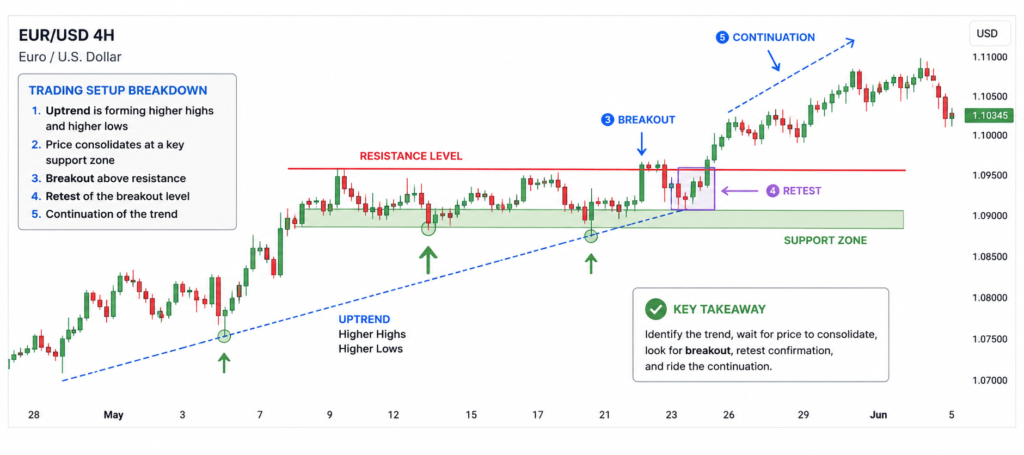
What Forex Forecast Software Actually Is
Forex forecast software is any program that analyzes currency market data and produces a projection of likely future price direction, probability, or trading signals. It does not read the future. Instead, it processes historical and live data, applies models, and outputs an informed estimate. Think of it as a high-speed analyst that never sleeps.
These tools range from simple charting add-ons to advanced platforms powered by artificial intelligence. Some draw trend lines and flag patterns. Others run statistical regressions or feed thousands of variables into neural networks. The common thread is automation. The software handles the heavy computation, while the trader interprets the output and decides whether to act.
It helps to separate two ideas. Analysis tells you what is happening now. Forecasting estimates what might happen next. Good software does both, but the forecast is always a probability, never a promise. Treating it as certainty is the fastest way to lose money. The smartest users treat forecasts as one input among several, alongside their own judgment and a strict risk plan.
How Forex Forecast Software Works
Most forecasting platforms follow a similar pipeline. First, they ingest data. This includes price history, volume, volatility, interest rate moves, and sometimes news headlines or social sentiment. Clean, deep data is the foundation. Garbage inputs produce garbage forecasts.
Next, the software applies one or more models. Technical models study price and volume patterns, support and resistance, and momentum indicators. Statistical models use methods like regression, moving averages, and time-series techniques such as ARIMA or GARCH to estimate trend and volatility. Sentiment models scan news, central bank language, and trader positioning to gauge mood. AI and machine learning models train on past data to recognize complex, nonlinear relationships that humans miss.
After modeling, the tool generates output. This might be a directional bias, a probability score, a price target, or a ready-to-trade signal with entry, stop, and target levels. Many platforms then push alerts by email, app, or directly into a trading terminal.
The best systems also loop back. They compare past forecasts against real outcomes and adjust. This feedback cycle, common in machine learning tools, is what separates a static indicator from an adaptive forecaster. Still, even adaptive models face a moving target, because currency markets shift with every economic and political surprise.
The Main Categories of Forecasting Tools
Not all forecasting software does the same job. Understanding the categories helps you match a tool to your trading style.
Charting and analysis platforms form the foundation. Tools like MetaTrader, TradingView, and similar terminals offer indicators, drawing tools, and pattern recognition. They support your own analysis rather than predicting for you. Most traders start here.
AI and machine learning predictors sit at the advanced end. These platforms train models on vast datasets to output probability-based forecasts. They can spot subtle relationships across many currency pairs at once, though they demand trust in a process you cannot fully see.
Signal services deliver specific trade ideas. A provider or algorithm sends entry, stop, and target levels. Quality varies widely, so verified track records matter more than marketing.
Economic-data forecasters focus on fundamentals. They model how interest rates, inflation prints, and employment data may move a currency. These suit longer-horizon and macro traders.
Neural-network tools are a specialized subset of AI predictors. They mimic how the brain links signals, layering data to find patterns. They can be powerful but also opaque, and they can overfit if poorly trained.
Here is a simplified comparison. Pricing is illustrative and approximate only, and it changes often.
| Tool Type | Core Approach | Typical Strength | Best Suited For | Approx. Price (illustrative) |
|---|---|---|---|---|
| Charting and analysis platforms | Technical indicators, manual pattern tools | Flexibility and control | Traders who do their own analysis | Free to ~30/mo |
| AI / ML predictors | Trained models, probability output | Pattern depth across pairs | Tech-comfortable, data-driven traders | ~40 to 200+/mo |
| Signal services | Algorithmic or expert trade calls | Ready-made trade ideas | Beginners and time-poor traders | ~30 to 150/mo |
| Economic-data forecasters | Macro and fundamental modeling | Longer-horizon context | Swing and position traders | ~20 to 100/mo |
| Neural-network tools | Layered nonlinear learning | Complex relationship detection | Advanced and quant traders | Varies widely |
Always verify current pricing and features directly with each provider before committing.
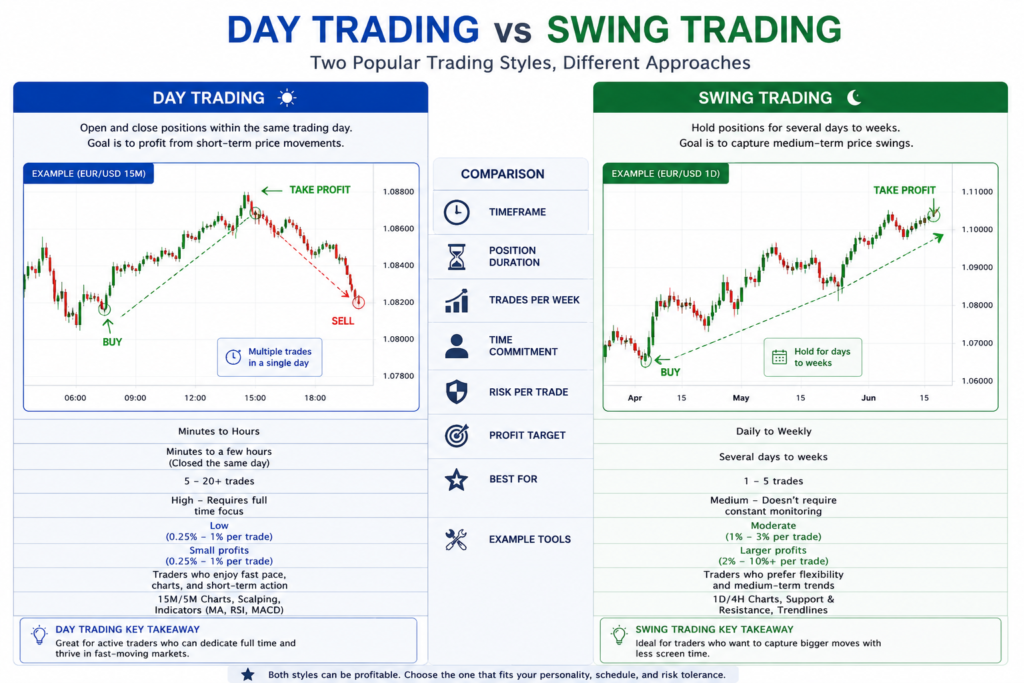
What Good Forex Forecast Software Should Offer
Quality matters more than flashy promises. Strong software shares several traits.
Realistic accuracy expectations come first. No honest tool claims to be right every time. A consistent edge above coin-flip odds, applied with proper risk control, is what creates value over many trades. Be suspicious of any platform advertising near-perfect win rates.
Backtesting is essential. The software should let you test its logic against historical data so you can see how a strategy would have performed. Forward testing on a demo account adds another safety layer before you risk real capital.
Useful alerts keep you informed without chaining you to a screen. Look for customizable notifications across app, email, and platform. Integration matters too. Software that connects cleanly to your broker or terminal, often through MetaTrader or an API, reduces friction and errors.
Transparency rounds out the list. The best providers explain their general methodology, publish verifiable results, and avoid hype. If a company hides how it works while promising guaranteed riches, treat that as a warning sign rather than an invitation.
How Tools Use Fibonacci and Trend Methods
Many platforms build forecasts on classic technical methods, and Fibonacci is one of the most popular. The concept of trend based fibonacci numbers meaning forex refers to using Fibonacci ratios, derived from the famous number sequence, to project where a trend may pause, reverse, or extend. Traders watch levels like 38.2 percent, 50 percent, and 61.8 percent for retracements, plus extensions beyond 100 percent for targets.
Forecast software automates this. It identifies a recent swing high and swing low, then plots the Fibonacci levels along the prevailing trend. Because the calculation depends on the trend direction, the term trend based fibonacci numbers meaning forex simply describes anchoring those ratios to the dominant move rather than to random points. The software updates these levels as price evolves, flagging when a pair approaches a key zone.
These levels are not magic. They work partly because so many traders watch them, creating self-fulfilling reactions, and partly because they map to natural rhythms of advance and pullback. A good tool combines Fibonacci with confirmation, such as momentum or volume, rather than trading the level blindly. Used this way, Fibonacci analysis becomes a structured framework for entries, stops, and targets, not a crystal ball.
Why Infrastructure Matters for 24/5 Trading
Forex runs nearly around the clock, five days a week, across global sessions. If your software needs to monitor markets or run automated strategies while you sleep, your computer and internet must never blink. This is where hosting comes in, and the conversation around forex virtual private server trends 2025 has shaped how serious traders run their tools.
A virtual private server, or VPS, is a remote machine hosted in a data center, often near broker servers, that runs your trading software continuously. The growing interest in forex virtual private server trends 2025 reflects three priorities: low latency for faster execution, high uptime so automated tools never stop, and security against local outages. For anyone running signal bots, AI predictors, or MetaTrader expert advisors, a VPS removes the risk of a home power cut or dropped connection wrecking an open trade.
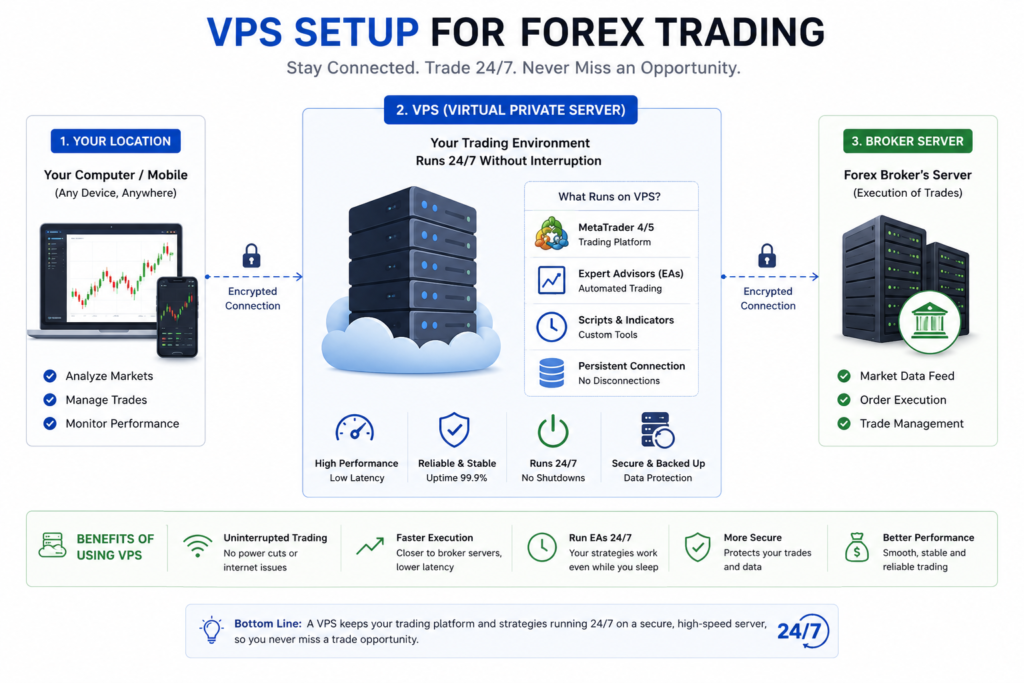
The trend has leaned toward providers offering specialized forex hosting with one-click platform installs and proximity to major liquidity hubs. That said, a VPS amplifies whatever strategy you run. It does not improve a flawed system. Pair reliable infrastructure with sound logic and disciplined risk, and the hosting becomes a genuine advantage rather than just another expense.
The Hard Truth: No Software Predicts the Future
This section matters most. No program, however advanced, can reliably predict currency prices with certainty. Markets are driven by countless human decisions, surprise news, and events no model has seen. Treating forecast output as fact is dangerous.
Decades of research support caution. Academic studies have repeatedly shown how difficult short-horizon exchange rate forecasting is, with simple benchmarks often beating complex models out of sample. The lesson is humility. A forecast is a weighted guess based on the past, and the past does not repeat exactly.
Overfitting is a common trap. A model can look brilliant on historical data yet fail live because it learned noise rather than signal. This is why backtesting alone is not enough, and why forward testing and out-of-sample checks matter so much.
The right mindset reframes the goal. Forecast software does not need to be right every time. It needs to give you a small, repeatable edge that, combined with strict risk management, produces positive results over many trades. Anyone promising guaranteed profits is selling a story, not a tool.
How to Choose, Free vs Paid, and Manage Risk
Choosing software starts with your needs. Define your style, timeframe, and skill level first. A beginner may want a clean charting platform and a reputable signal service. An advanced trader may invest in AI or neural-network tools with deep customization. Match the tool to the job rather than chasing the most expensive option.
Free tools are a smart starting point. Many charting platforms, demo accounts, and economic calendars cost nothing and teach core skills. Paid tools justify their cost only when they add real value: verified accuracy, better data, automation, or time savings. Always test a paid platform on a free trial or demo before committing real money.
Check the essentials before you buy. Look for transparent methodology, verifiable results, solid backtesting, reliable alerts, broker integration, and responsive support. Read independent reviews, and be wary of pressure tactics and unrealistic claims.
Risk management is non-negotiable, and no software replaces it. Use stop-loss orders on every trade. Risk only a small, fixed percentage of your account per position, commonly one to two percent. Diversify across setups rather than betting everything on one signal. The best forecast tool in the world cannot save an account with no risk plan. Discipline, not prediction, is the real edge.
What Top Traders and Research Say
Serious practitioners stress process over prophecy. In Building Winning Algorithmic Trading Systems, trader and author Kevin Davey argues that robust testing and realistic expectations matter far more than any single clever indicator, and that most systems fail from over-optimization rather than bad ideas.
Research reinforces the difficulty of forecasting currencies. The landmark work by Richard Meese and Kenneth Rogoff in 1983 found that a simple random walk often forecast exchange rates as well as, or better than, sophisticated economic models over short horizons. That finding still humbles modelers today and explains why edge, not certainty, is the realistic goal.
The trader Ed Seykota captured the mindset bluntly: “Win or lose, everybody gets what they want out of the market.”
Frequently Asked Questions
Is forex forecast software accurate?
No software is accurate all the time. Quality forex forecast software aims for a consistent edge above random odds, not perfection. Accuracy varies by market conditions, model quality, and the pairs traded. The realistic goal is a repeatable advantage applied with strict risk control, never guaranteed wins. Treat every forecast as a probability, then confirm it with your own analysis before acting.
Can free forex forecasting tools be useful?
Yes. Free charting platforms, demo accounts, and economic calendars teach essential skills at no cost. They suit beginners and anyone testing a strategy. Paid tools earn their price only when they add verified value, such as automation, deeper data, or stronger pattern detection. Start free, learn the fundamentals, then upgrade if a paid platform clearly improves your process and saves meaningful time.
What does trend based fibonacci numbers meaning forex involve?
The phrase trend based fibonacci numbers meaning forex describes anchoring Fibonacci ratios to the dominant trend, using swing highs and lows. Software plots levels like 38.2, 50, and 61.8 percent to flag likely pause or reversal zones. These levels guide entries, stops, and targets, but work best with confirmation from momentum or volume rather than being traded in isolation.
Do I need a VPS to run forecasting software?
Not always, but it helps for automation. The interest in forex virtual private server trends 2025 reflects demand for low latency, high uptime, and security. A VPS keeps bots and expert advisors running even if your home connection fails. If you trade manually during set hours, you may not need one. If you automate around the clock, a VPS protects your strategy.
Can forecast software guarantee profits?
No. Any tool promising guaranteed profits is a red flag. Markets are shaped by unpredictable news and human behavior that no model fully captures. Software provides informed estimates, not certainty. Long-term success comes from combining a small statistical edge with disciplined risk management, including stop-losses and modest position sizing on every trade.
Final Thoughts
Forex forecast software can sharpen your decisions, automate tedious analysis, and surface patterns you might otherwise miss. Used wisely, it becomes a genuine ally. But it is a tool, not a fortune-teller. The real winners pair good software with realistic expectations, thorough backtesting, reliable infrastructure, and ironclad risk management. They treat forecasts as probabilities and let discipline, not prediction, drive results. Whether you choose a simple charting platform, an AI predictor, or a full signal service, match the tool to your goals and always test before you commit real capital. For more honest guides, tool breakdowns, and trading insights, explore the latest articles at forexmarkettrendss.com and keep building skills that outlast any single piece of software.