
Introduction
The dollar-yen pair opens the new trading week under a familiar tug-of-war, and this usd/jpy technical analysis june 22 2026 breaks down exactly where the chart sits and what it means for the days ahead. Price action through the previous week left USD/JPY consolidating in the high-150s region, caught between a resilient US dollar and persistent intervention chatter from Tokyo. Traders returning to their desks this Monday face a market that is technically stretched yet fundamentally supported by a wide rate differential. In the sections below, we map the trend structure, weigh the Bank of Japan policy backdrop, and lay out concrete support and resistance levels in a clean reference table. We also walk through momentum readings, both bullish and bearish scenarios, and a practical trading plan. By the end, you will have a structured, evidence-based view of how the pair could trade into the back half of June.
Market Structure and Trend Overview
USD/JPY enters June 22, 2026 maintaining the broad uptrend that has defined the pair for much of the cycle, with price holding above its longer-term moving averages on the daily chart. On the higher timeframes, the structure remains a series of higher highs and higher lows, the textbook signature of a bullish market that John Murphy describes at length in Technical Analysis of the Financial Markets. The pair spent the previous week digesting gains made earlier in the month, carving out a tight consolidation in the high-150s after probing toward the psychologically charged 160 region. That kind of sideways drift after an extended advance is classic bull-flag behavior, though it can equally resolve into a deeper pullback if momentum fades.
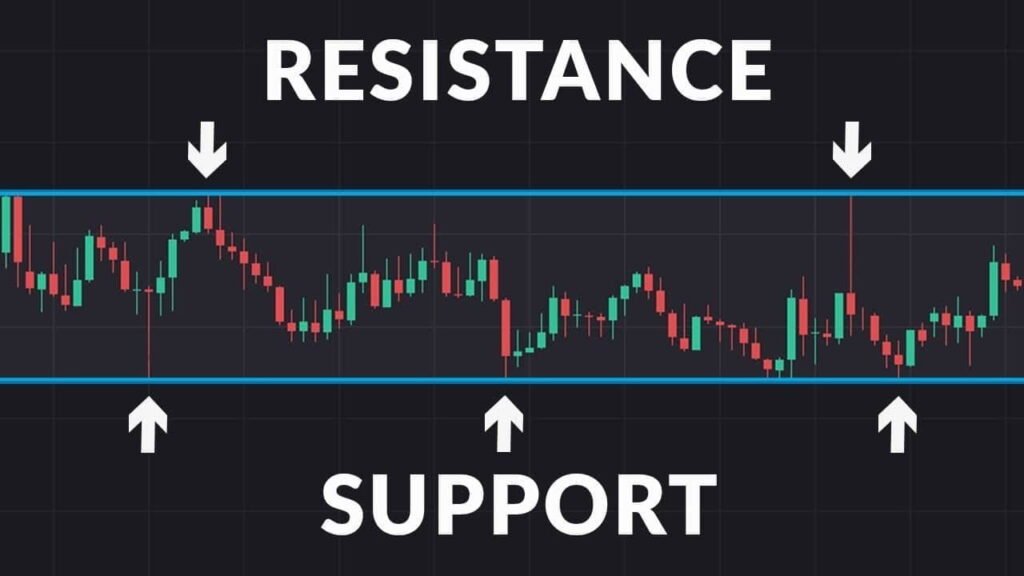
Zooming into the four-hour chart, the picture is more nuanced. Short-term price action has flattened into a range, with sellers consistently capping rallies near the upper boundary and dip-buyers stepping in around the lower edge. This compression typically precedes an expansion in volatility, and the direction of the eventual break will set the tone for the rest of the week. For now, the usdjpy forecast june 22 2026 leans constructively bullish on the higher timeframe while acknowledging that the immediate, intraday bias is neutral until the consolidation resolves.
It is worth remembering that market structure on dollar-yen carries an extra layer of complexity compared with most major pairs. The pair does not trade purely on technicals; it sits at the intersection of US monetary policy, Japanese policy, and global risk appetite. As a result, clean technical breaks can be abruptly reversed by a single headline. Traders should treat the structure as a framework rather than a guarantee, and weight their conviction according to how the fundamental backdrop aligns with the chart.
Bank of Japan Intervention Risk and Policy Backdrop
No serious dollar yen outlook june 22 2026 can ignore the looming presence of the Bank of Japan and the Ministry of Finance. As USD/JPY pushes into the high-150s and tests the approaches to 160, the risk of official intervention rises sharply. Japanese authorities have a well-documented history of stepping into the market to slow what they describe as excessive and disorderly moves, and the closer price trades to round-number psychological levels, the more elevated that risk becomes. Verbal intervention typically comes first, with officials warning that they are watching currency moves with a high sense of urgency, and these comments alone can trigger sharp, fast retracements.
The policy backdrop adds another dimension. The Bank of Japan has spent recent years cautiously normalizing policy after an extraordinarily long period of ultra-accommodation, gradually moving away from negative rates and loosening its grip on the yield curve. Even so, Japanese policy rates remain low in absolute and relative terms, which keeps structural downward pressure on the yen. Any hint that the BOJ is preparing to tighten more decisively, or that it is uncomfortable with yen weakness, can spark abrupt yen strength and a sharp drop in USD/JPY.
For the technical trader, the practical implication is straightforward: respect the intervention zone. Rallies toward 160 may look technically attractive, but they also sit in the area where the risk-reward of chasing longs deteriorates rapidly. A surprise intervention can erase dozens of pips in minutes, gapping through stop orders and inflicting outsized losses on overleveraged positions. The wise approach is to size positions conservatively near these levels and to keep a close eye on the headlines, because in dollar-yen, policy and price are inseparable.
The US-Japan Rate Differential
The single most important fundamental driver underpinning the long-term USD/JPY uptrend is the interest rate differential between the United States and Japan. When US yields sit well above Japanese yields, holding dollars and borrowing yen becomes attractive, fueling the carry trade and supporting USD/JPY. This dynamic has been the engine behind the pair’s multi-year strength, and as of late June 2026 it remains broadly intact, even if the gap has narrowed somewhat from its widest extremes as both central banks adjust their stances.
The Federal Reserve’s policy path is therefore central to the usdjpy forecast june 22 2026. If incoming US data keeps the Fed patient and yields firm, the differential stays wide and the dollar retains its yield advantage, supporting higher USD/JPY. Conversely, signs that the US economy is cooling, or clearer signals that the Fed is leaning toward cuts, would compress the spread and remove a key pillar of dollar-yen strength. Treasury yields, particularly the 10-year, often track tightly with USD/JPY, and traders who watch both will frequently spot early warnings of a turn in the pair before it appears cleanly on the chart.
On the Japanese side, the gradual normalization of BOJ policy works in the opposite direction. As Japanese yields edge higher, the carry advantage of being short yen erodes at the margin, and the structural tailwind for USD/JPY weakens. The interplay between these two forces is what makes dollar-yen such a sensitive barometer of global rate expectations. For the week ahead, the technical levels outlined below should be read against this fundamental backdrop: a widening differential favors the bullish scenario, while any convergence tilts the odds toward the bears.
Key Support, Resistance and Pivot Levels
Turning to the chart itself, the following table summarizes the key technical levels that frame the usd/jpy technical analysis june 22 2026. These zones are drawn from recent swing highs and lows, round-number psychology, and standard pivot calculations, and they should be treated as reaction areas rather than precise lines. Price tends to respect zones, not exact prices, so allow a small buffer around each level when planning entries and exits.
| Level Type | Price Zone | Significance / Bias |
|---|---|---|
| Major Resistance | 160.00 – 160.50 | Psychological barrier and intervention zone; strong selling expected |
| Resistance 2 | 158.80 – 159.20 | Recent swing high; first cap on rallies |
| Daily Pivot | 157.50 | Intraday balance point; bias flips around here |
| Support 1 | 156.20 – 156.50 | Lower edge of current range; dip-buying area |
| Support 2 | 154.80 – 155.00 | Round number and prior consolidation base |
| Major Support | 153.00 – 153.50 | Confluence with rising 50-day average; trend pivot |
The structure suggests USD/JPY is currently boxed between roughly 156.20 support and 158.80 resistance, with the 157.50 pivot acting as the intraday fulcrum. A daily close above 159.20 would open the door toward the 160 handle and the intervention zone, while a decisive break below 156.20 would shift the short-term bias bearish and put the 154.80–155.00 area into focus. The 153.00 region carries the most weight on the downside, as it aligns with the rising 50-day moving average and would represent a meaningful test of the broader uptrend if reached.
Moving Averages and Momentum: RSI and MACD
Momentum and trend-following indicators add depth to the level-based view. On the daily chart, USD/JPY trades above both its 50-day and 200-day moving averages, with the shorter average comfortably above the longer one in a bullish alignment. This golden-cross configuration has remained intact through the recent consolidation, reinforcing the constructive higher-timeframe bias of the dollar yen outlook june 22 2026. The 50-day average, currently rising through the low-153s, doubles as dynamic support and is a level trend-followers will watch closely on any deeper pullback.
The Relative Strength Index offers a useful gauge of whether the move is stretched. On the daily timeframe, RSI sits in the upper half of its range but has cooled from overbought territory during the sideways phase, relieving some of the pressure that built up during the prior advance. This kind of consolidation in momentum, where price moves sideways while RSI resets lower, is often healthy and can lay the groundwork for the next leg higher rather than signaling exhaustion. On the four-hour chart, RSI hovers near the midline, consistent with the neutral, range-bound condition described earlier.
The MACD adds a forward-looking perspective. On the daily chart, the MACD line and signal line have converged during the consolidation, with the histogram flattening near the zero region, a reflection of fading directional momentum. A bullish crossover with the histogram turning positive would corroborate an upside break, while a bearish crossover beneath the signal line would warn that downside risk is building. The academic case for taking these signals seriously is supported by the landmark study by Lo, Mamaysky and Wang (2000), Foundations of Technical Analysis, which found that several technical patterns carry genuine, statistically detectable information. As one of the most quoted maxims in trading reminds us, “the trend is your friend,” and for now the dominant daily trend still points up.
The Bullish Scenario
The bullish case for USD/JPY rests on the continuation of the established uptrend and a stable or widening rate differential. In this scenario, dip-buyers defend the 156.20–156.50 support zone, price reclaims the 157.50 pivot, and momentum indicators flip back in favor of the bulls with a fresh MACD crossover. A daily close above the 158.80–159.20 resistance band would confirm the breakout from consolidation and signal that buyers have regained control, projecting a move toward the 160.00 psychological level.
What would fuel such a move? Firm US economic data that keeps the Federal Reserve patient, steady or rising Treasury yields, and a constructive global risk environment that encourages carry-trade flows would all support the advance. From a purely technical standpoint, the bull-flag interpretation of the recent range argues for an upside resolution that measures roughly the size of the prior impulse leg, which would carry price into the 160s. Traders favoring this view might look to enter on a confirmed close above resistance or on a clean retest of broken resistance turned support.
The critical caveat, however, is the 160 intervention zone. Even in a strongly bullish technical scenario, the upside near that level is capped by the very real threat of official action. A bullish trader should therefore plan to take partial profits as price approaches 160 rather than expecting a smooth, uninterrupted run higher. The smart bullish play in this environment is to ride the trend while it lasts but to respect the ceiling that Japanese authorities have effectively placed over the market.
The Bearish Scenario
The bearish scenario centers on a failure of support and a shift in the fundamental backdrop. If USD/JPY loses the 156.20 support zone on a daily closing basis, the short-term structure breaks, and the pair would likely accelerate toward the 154.80–155.00 area. A further breakdown beneath that round number would expose the major support confluence at 153.00–153.50, where the rising 50-day moving average waits. A daily close below 153.00 would be a genuine warning sign for the broader uptrend and could embolden sellers to target deeper levels.
Several catalysts could drive this outcome. Soft US data, a dovish shift in Fed expectations, or a slide in Treasury yields would all compress the rate differential and undermine the carry trade. The most violent bearish trigger, however, would be direct intervention by Japanese authorities, which can produce sharp, multi-figure drops in a matter of minutes. A surprise hawkish signal from the Bank of Japan, or escalating verbal warnings near the 160 zone, could likewise spark aggressive yen buying and rapid USD/JPY downside.
For the bearish trader, the cleanest setups come from failed rallies near resistance or from a confirmed breakdown of range support. Selling blindly into a strong uptrend is dangerous, so patience matters: waiting for the chart to confirm a structural break, rather than anticipating it, keeps the bearish trade aligned with the weight of evidence. As Kathy Lien emphasizes in Day Trading and Swing Trading the Currency Market, understanding the fundamental drivers behind a pair is essential to reading when a technical break is likely to stick.
Trading Plan and Levels to Watch
A disciplined trading plan ties the analysis together. For the week of June 22, 2026, the most important levels to watch are the 156.20 support and the 158.80–159.20 resistance band that define the current range, with the 157.50 pivot serving as the intraday tiebreaker. Above the range lies the 160 intervention zone; below it sit the 154.80 and 153.00 support shelves. The core question for the usdjpy forecast june 22 2026 is simply which side of the range gives way first.
A practical approach can be summarized as follows:
- Bullish trigger: a daily close above 159.20 targets 160.00, with disciplined profit-taking into the intervention zone and stops below the breakout level.
- Bearish trigger: a daily close below 156.20 targets 154.80, then 153.00, with stops above the broken support.
- Neutral stance: while price stays between 156.20 and 158.80, favor range tactics, buying near support and selling near resistance with tight risk control.
Risk management deserves special emphasis on dollar-yen because of the intervention overhang. Position sizing should be conservative near the 160 zone, where gap risk is highest, and traders should avoid placing stops at obvious round numbers where liquidity sweeps are common. Keeping a portion of the day available to monitor headlines is prudent, since a single official comment can override the cleanest chart setup. Above all, no single technical level should be treated as a certainty; the plan exists to keep losses small when the market does the unexpected.
What Analysts and Research Say
The broader analyst community tends to frame USD/JPY through the lens of the rate differential and intervention risk, the same two forces highlighted throughout this usd/jpy technical analysis june 22 2026. Research desks generally agree that as long as the US-Japan yield gap remains wide, the path of least resistance for the pair is sideways to higher, but most also caution that the upside is increasingly capped by the threat of official action near 160. This creates the asymmetric setup that many strategists describe, where rallies face a hard ceiling while pullbacks can be cushioned by the carry advantage.
On the academic side, the foundational work of Lo, Mamaysky and Wang (2000) in Foundations of Technical Analysis lends empirical credibility to the systematic use of chart patterns and indicators, finding that technical analysis can add genuine, measurable information to price data. This supports the discipline of trading defined levels and confirmed signals rather than reacting to noise. Classic practitioner texts reinforce the same message: John Murphy’s Technical Analysis of the Financial Markets remains a standard reference for trend and structure analysis, while Kathy Lien’s Day Trading and Swing Trading the Currency Market bridges the gap between FX fundamentals and technical execution.
Synthesizing these perspectives, the consensus-style view is one of cautious, structurally bullish neutrality: the uptrend deserves respect, the levels deserve discipline, and the intervention risk deserves humility. Traders who combine a clear read of the rate differential with patient, level-based execution stand the best chance of navigating the pair through what is likely to remain a headline-sensitive week.
Frequently Asked Questions
What is the overall bias for USD/JPY on June 22, 2026?
The higher-timeframe bias in this usd/jpy technical analysis june 22 2026 is cautiously bullish, with price holding above its 50-day and 200-day moving averages in a clear uptrend. The short-term, intraday picture is more neutral, as the pair consolidates within a defined range. A break above resistance would confirm renewed upside, while a loss of support would shift the near-term bias bearish. Overall, the trend favors the bulls but with important caveats around intervention.
What are the most important USD/JPY levels to watch this week?
The key range is bounded by roughly 156.20 support and 158.80–159.20 resistance, with 157.50 acting as the daily pivot. Above the range, the 160.00 area is both a psychological barrier and an intervention zone. On the downside, 154.80 and 153.00 are the major support shelves. These levels form the backbone of the usdjpy forecast june 22 2026 and define where the next decisive move is likely to originate.
How does Bank of Japan intervention affect the dollar yen outlook?
Intervention is the single biggest wildcard in the dollar yen outlook june 22 2026. As USD/JPY approaches 160, Japanese authorities may step in to slow the move, first with verbal warnings and then potentially with direct action. Such intervention can cause sharp, fast drops that gap through stop orders. Traders should size positions conservatively near 160 and watch the headlines closely, because policy can override the cleanest technical setup.
Why does the US-Japan rate differential matter so much?
The interest rate gap between the US and Japan is the core fundamental driver of USD/JPY. A wide differential makes holding dollars and borrowing yen attractive, fueling the carry trade and supporting the pair. If US yields stay firm, the bullish case strengthens; if the gap narrows through Fed cuts or BOJ tightening, the structural support for higher USD/JPY weakens, tilting the balance toward the bears.
Do the momentum indicators support the bullish or bearish case?
On the daily chart, the moving average alignment is bullish, RSI has cooled from overbought without breaking down, and MACD has flattened during consolidation. This mixed-but-constructive reading favors a continuation of the uptrend if a bullish MACD crossover develops. A bearish crossover and a break of support, by contrast, would warn that downside momentum is building. The indicators currently lean modestly bullish but await confirmation.
Is this USD/JPY analysis financial advice?
No. This article is educational technical analysis based on established market knowledge and recent structure, not a recommendation to buy or sell. All levels and scenarios are presented as analytical frameworks, not guarantees. Currency trading involves substantial risk of loss, and past patterns do not guarantee future results. Always conduct your own research and consider consulting a licensed financial professional before trading.
Final Thoughts
USD/JPY heads into the week of June 22, 2026 with a higher-timeframe uptrend intact but boxed inside a tight consolidation that is waiting to resolve. The technical structure favors the bulls as long as price holds above its rising moving averages, yet the upside is hemmed in by the 160 intervention zone, and the downside is anchored by the wide rate differential that keeps the carry trade alive. The cleanest approach is to trade the levels with discipline: respect 156.20 support and 158.80–159.20 resistance, let the chart confirm the break before committing, and keep risk small near the headline-sensitive 160 region. Momentum is constructive but not stretched, and the fundamental backdrop remains the deciding factor. Combine patient execution with a close eye on the Fed and the Bank of Japan, and you will be positioned to react rather than guess.