
Introduction
Day trading looks thrilling from the outside fast charts, quick profits, and the freedom to work from anywhere. The reality is more disciplined and far more rewarding when you learn it properly. This day trading for beginners guide strips away the hype and gives you a clear, honest roadmap built on the habits real traders use. You will learn what day trading actually involves, the day trading strategies for beginners that hold up in live markets, and a practical, step-by-step path showing how to start day trading without blowing up your account. We will also cover risk management, the psychology that quietly decides who wins, and the tools you genuinely need. By the end, you will understand not just the mechanics but the mindset that turns a curious beginner into a consistent trader.
What Is Day Trading, Really?
Day trading means opening and closing positions within the same trading day, never holding overnight. You profit from short-term price moves in stocks, forex, futures, or crypto, capturing small gains many times rather than waiting weeks for a big swing. Because positions close before the session ends, you avoid overnight risk—but you also need to be present, focused, and fast.
The appeal is obvious: tight control, no surprise gaps while you sleep, and the chance to compound small wins. The catch is equally real. Day trading demands screen time, emotional control, and a tested edge. It is a skill, not a lottery ticket, and treating it like the latter is the fastest way to lose money.
How to Start Day Trading: The Step-by-Step Path
Learning how to start day trading is less about secret setups and more about building a foundation in the right order. Rushing straight to live trades with real money is the classic beginner mistake.
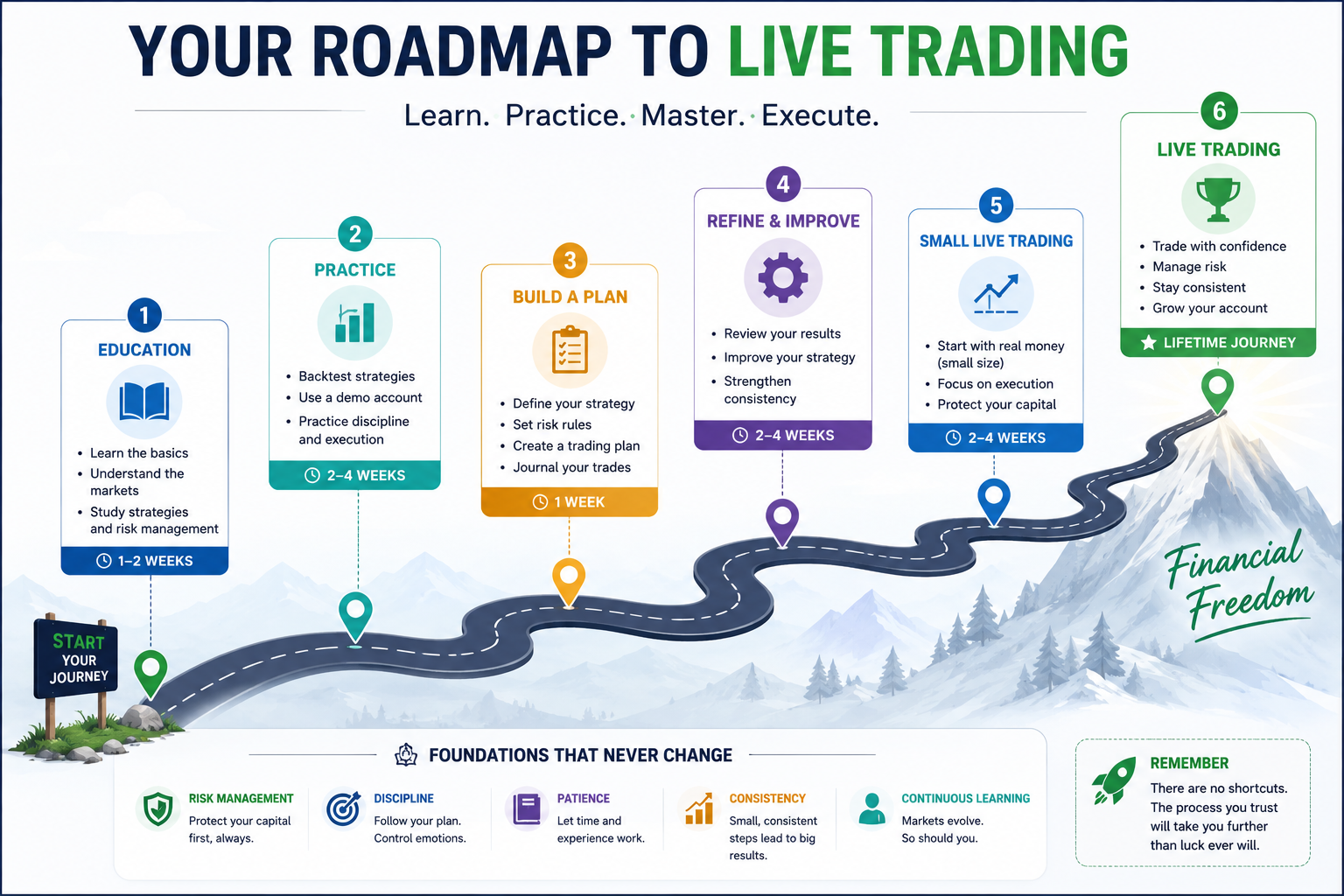
First, educate yourself on market basics—how orders work, what spreads and slippage are, and how leverage magnifies both gains and losses. Next, choose one market and one or two strategies rather than scattering your focus. Then open a demo account and trade it as if the money were real, keeping a journal of every decision. Only after you show consistency on demo should you fund a small live account and scale slowly. This patient sequence protects your capital while your skills mature.
Day Trading Strategies for Beginners
The best day trading strategies for beginners are simple, rule-based, and repeatable. Complexity is the enemy early on.
Breakout Trading
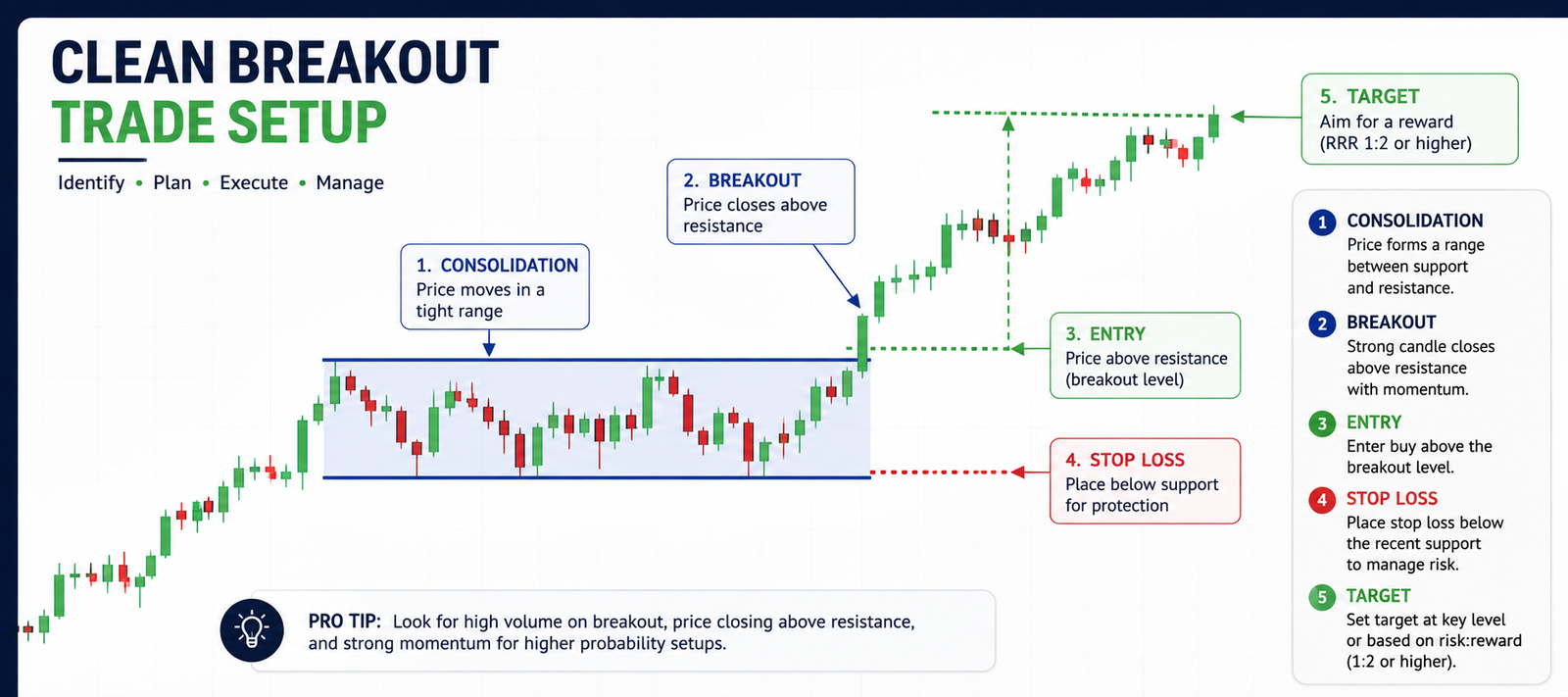
You identify a clear level—a prior high, a session range, or a chart pattern—and enter when price breaks through it on strong volume. Breakouts work because they capture the moment new momentum enters the market. Your stop sits just back inside the range, giving you a defined risk and a clean exit if the move fails.
Pullback Trading
Instead of chasing, you wait for price to retrace within an established trend, then enter as it resumes. This offers a better entry price and a tighter stop. Pullback trading suits patient beginners because it rewards waiting for the market to come to you rather than forcing trades.
VWAP and Moving Average Bounces
The Volume Weighted Average Price and simple moving averages act as dynamic support and resistance. Many beginners trade bounces off these lines in trending markets, using them as a visual guide for direction and entry. They keep decisions objective, which is exactly what a new trader needs.
Risk Management: Your Real Edge
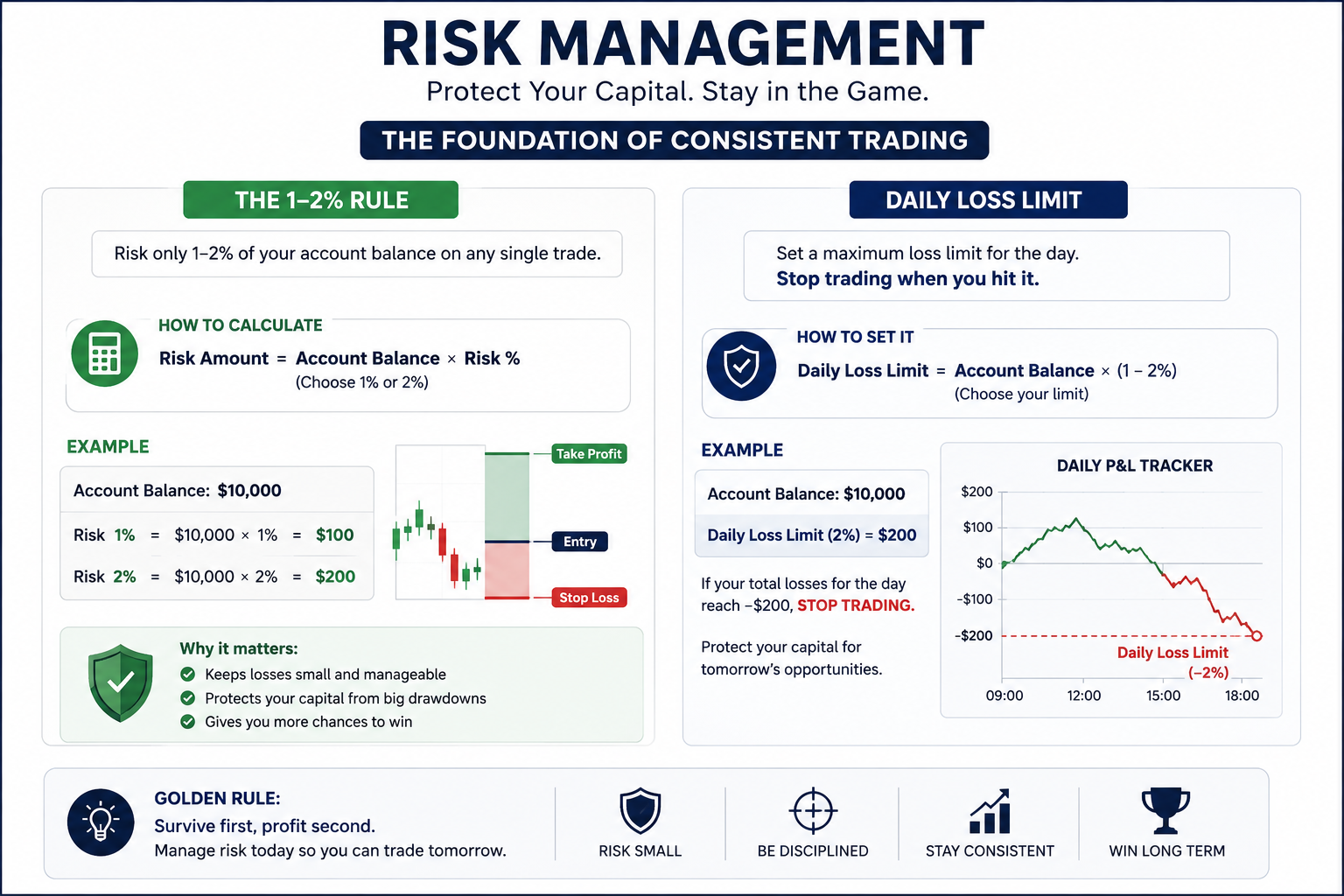
No strategy survives without disciplined risk control, and this is where most beginners quietly fail. The rule professionals repeat is simple: never risk more than one to two percent of your account on a single trade. That way a losing streak bruises you but never ends you.
Position sizing flows from your stop. Decide where the trade is wrong, measure that distance, and size the position so the loss stays within your limit. Pair this with a sensible risk-reward ratio—aiming to make at least one and a half to two times what you risk—and your math can stay positive even with a modest win rate.
| Account Size | Risk Per Trade (1%) | Risk Per Trade (2%) | Daily Loss Limit |
|---|---|---|---|
| $1,000 | $10 | $20 | $30 |
| $5,000 | $50 | $100 | $150 |
| $25,000 | $250 | $500 | $750 |
| $50,000 | $500 | $1,000 | $1,500 |
What Top Traders and Research Say
Markets test your emotions before they test your strategy. Fear makes you cut winners early; greed makes you hold losers too long. Mark Douglas captured this perfectly in Trading in the Zone, a book every beginner should read—it argues that consistent results come from thinking in probabilities, not certainties, and accepting that any single trade can lose.
Research backs this up. Barber and Odean’s famous study “Trading Is Hazardous to Your Wealth” found that the most active retail traders earned the worst returns, largely because overtrading and overconfidence eroded their gains. The lesson is humbling and freeing at once: doing less, but doing it with discipline, often beats frantic activity.
As Paul Tudor Jones reminds traders: “The most important rule is to play great defense, not great offense.” Protect your capital first, and profits follow.
Tools and Setup You Actually Need
You do not need six monitors and expensive software to begin. A reliable broker with low fees, a stable charting platform, and a quiet space to focus will carry you far. Start with a clean chart showing price, volume, and one or two indicators—adding more usually adds confusion, not clarity.
A trading journal, however, is non-negotiable. Recording your entries, exits, reasoning, and emotions turns random experience into structured learning. Over weeks, patterns emerge: the setups that work for you, the times of day you trade best, and the mistakes you keep repeating. That feedback loop is how beginners become professionals.
Common Beginner Mistakes to Avoid
The most damaging error is trading with money you cannot afford to lose, which poisons every decision with fear. Close behind is overtrading—taking dozens of low-quality trades out of boredom or revenge after a loss. Many beginners also skip the demo stage entirely, learning expensive lessons with real money that a simulator would have taught for free. Finally, abandoning a strategy after a few losses guarantees you never give any method enough data to prove itself.
Frequently Asked Questions
How much money do I need to start day trading?
You can start learning with a demo account for free, which every beginner should do first. For live forex or futures, some accounts open from a few hundred dollars, while U.S. stock day trading requires $25,000 under the pattern day trader rule. The smarter question is how little you can risk while learning, not how much you can deploy. Begin small, prove consistency, and scale your day trading for beginners journey only as your skills grow.
What are the best day trading strategies for beginners?
The best day trading strategies for beginners are breakout trading, pullback entries, and VWAP or moving average bounces. They are simple, rule-based, and easy to test on a demo account. Each gives you a clear entry, a defined stop, and an objective reason to act, which keeps emotion out of the decision. Master one fully before adding another, and journal every trade to see which fits your personality best.
How do I start day trading the right way?
To learn how to start day trading, follow a clear order: study market basics, pick one market and strategy, practice on a demo account, then go live with small size. Keep a trading journal from day one and treat risk management as your first priority. Avoid jumping straight to real money, which is the most common and costly beginner mistake. Patience in the early stage protects the capital you will need later.
Is day trading profitable for beginners?
Day trading can be profitable, but most beginners lose money early because they skip preparation and over-risk. Profitability comes from a tested edge, strict risk control, and emotional discipline, not from any single magic setup. Treat your first months as a learning investment rather than an income source. The traders who survive are those who protect capital, keep losses small, and let consistency compound over time.
How long does it take to learn day trading?
There is no fixed timeline, but most serious beginners need several months of demo practice and study before trading live consistently. Skill develops through repetition, journaling, and reviewing both wins and losses. Some learn faster, others slower, depending on time invested and emotional control. Rushing the process almost always backfires, so treat day trading for beginners as a craft you build steadily rather than a shortcut to fast money.
Should I use a demo account before trading real money?
Absolutely. A demo account lets you test day trading strategies for beginners and learn your platform with zero financial risk. It builds the screen time and pattern recognition that only practice provides. Trade your demo seriously, journal every decision, and aim for steady consistency before funding a small live account. Skipping this step means paying real money for lessons a free simulator would have taught you safely.
Final Thoughts
Day trading rewards preparation, patience, and discipline far more than it rewards excitement, and that is the honest truth behind this day trading for beginners guide. You now have the full picture: what day trading really is, the day trading strategies for beginners worth mastering, and a clear, step-by-step view of how to start day trading without risking everything on lessons you could learn for free. The traders who last are not the boldest—they are the most consistent, protecting their capital, journaling their progress, and trusting probabilities over emotion. Take Paul Tudor Jones’s defense-first mindset, lean on Mark Douglas’s lessons in trading psychology, and remember Barber and Odean’s warning about overtrading. Start small, demo first, and let discipline compound. Do that, and day trading becomes less of a gamble and more of a genuine, learnable skill.