
Introduction
Few searches reveal a trader’s mindset more than hunting for the easiest prop firm to pass, and the question deserves an honest answer rather than marketing spin. Every firm wants to appear winnable, yet “easy” can mean very different things — generous drawdown room, a lower profit target, no time pressure, or relaxed consistency rules. The truth is that no challenge is genuinely easy, but some are structured far more forgivingly than others, and the right match for your style can dramatically improve your odds. Many traders look specifically for a lowest difficulty prop firm challenge, while others want a prop firm with highest pass rate. The smarter goal is understanding which rule structures actually make a challenge more achievable. In this guide you will learn what makes an evaluation winnable, how to compare difficulty fairly, the trade-offs involved, and how to give yourself the best possible chance of passing.
Why "Easiest" Is the Wrong Question Alone
The search for the easiest prop firm to pass is understandable, but framed alone it can lead traders astray. No reputable evaluation is genuinely easy, because the firm’s entire purpose is to filter for disciplined, profitable traders before risking its capital. A challenge that demanded nothing would attract reckless gamblers and bankrupt the firm. So “easy” is always relative.
A better question is which firm’s rule structure best matches your trading style and gives you the most room to perform. A scalper and a swing trader will find very different firms “easy,” because the rules that constrain one barely affect the other. Reframing the search this way turns a vague hunt for the lowest difficulty prop firm challenge into a precise matching exercise. The goal is not a free pass; it is the most forgiving structure for the way you actually trade.
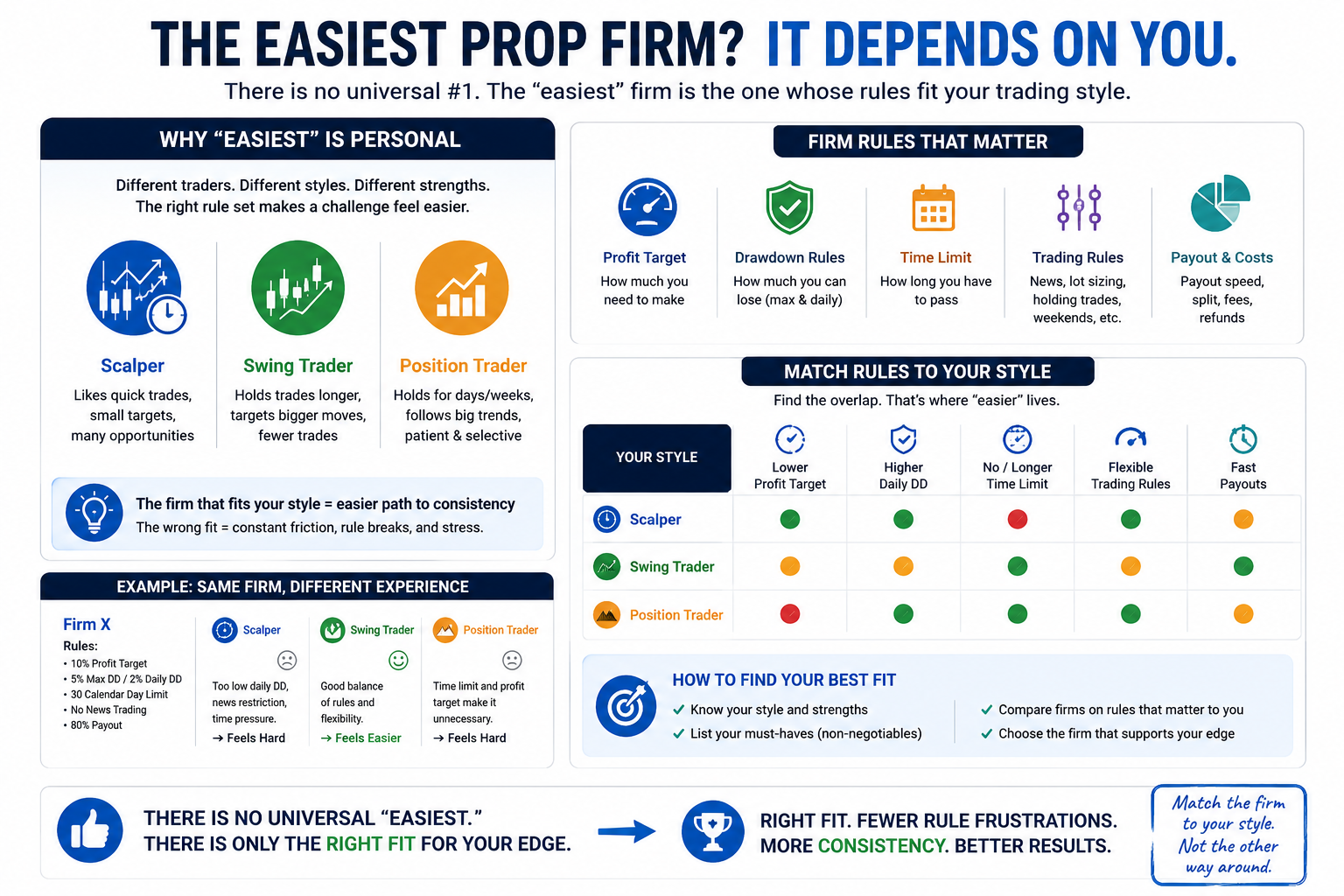
Fig 1.1 Easiest prop firm to pass infographic
The Rules That Make a Challenge More Winnable
Several rule features genuinely affect how achievable an evaluation is, and understanding them lets you compare difficulty fairly. The drawdown structure matters most: a larger maximum drawdown and a generous daily limit give you more room to survive a losing streak, which is the leading cause of failure. Firms with tighter drawdowns are objectively harder.
The profit target is the second lever — a lower target requires less risk and fewer trades to reach, reducing the temptation to oversize. Time limits matter too; a challenge with no time pressure, or a long window, lets you wait patiently for quality setups. Finally, the absence of strict consistency rules and freedom to trade your style — scalping, news, or weekend holds — removes obstacles that trip many traders. A prop firm with highest pass rate typically combines several of these forgiving features.
| Rule Feature | More Winnable | Harder |
|---|---|---|
| Maximum drawdown | Larger buffer | Tight limit |
| Profit target | Lower target | High target |
| Time limit | None or long | Short window |
| Consistency rule | Relaxed or none | Strict |
One-Step Versus Two-Step Challenges
A common question in the search for the easiest prop firm to pass is whether one-step or two-step challenges are simpler. The answer depends on what “easy” means to you. One-step challenges require hitting a single profit target, which feels faster and removes the second hurdle, but they often pair that with tighter drawdown rules to offset the firm’s risk.
Two-step challenges spread the requirement across two phases with smaller targets, which many traders actually find more forgiving because each phase demands less aggressive trading. The lower per-phase target reduces the pressure to oversize. So a two-step structure can be a lowest difficulty prop firm challenge in practice, even though it has more stages. The key is to look past the number of steps and examine the drawdown room and target size, which determine real difficulty far more than the phase count.
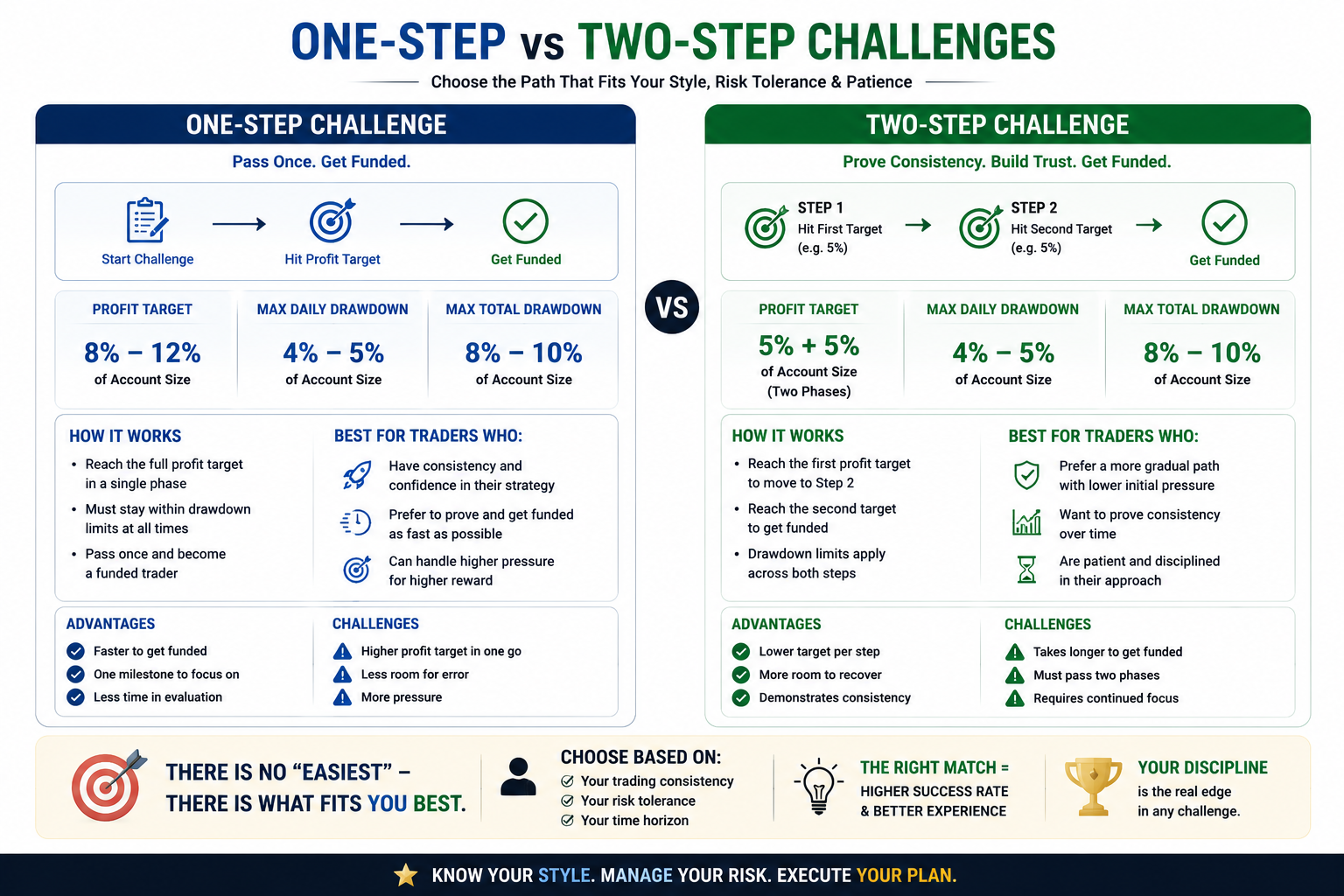
Fig 1.2 One-step versus two-step prop firm challenge
How to Spot a Prop Firm With Highest Pass Rate
Firms rarely publish honest pass-rate data, so spotting a genuinely achievable evaluation requires reading between the lines. Start with the rule structure: forgiving drawdown, a modest profit target, and no restrictive consistency rule strongly suggest a more winnable challenge. These structural features are more reliable than any advertised statistic.
Independent trader reviews and community discussion offer the next layer of insight, revealing whether real traders find the rules fair and the payouts reliable. Be cautious of firms that loudly advertise a high pass rate without transparent rules, since marketing claims are unverifiable. A genuine prop firm with highest pass rate earns its reputation through forgiving structure, clear terms, and consistent payouts rather than slogans. Combine rule analysis with real reviews, and you can identify the firms where disciplined traders genuinely succeed most often.
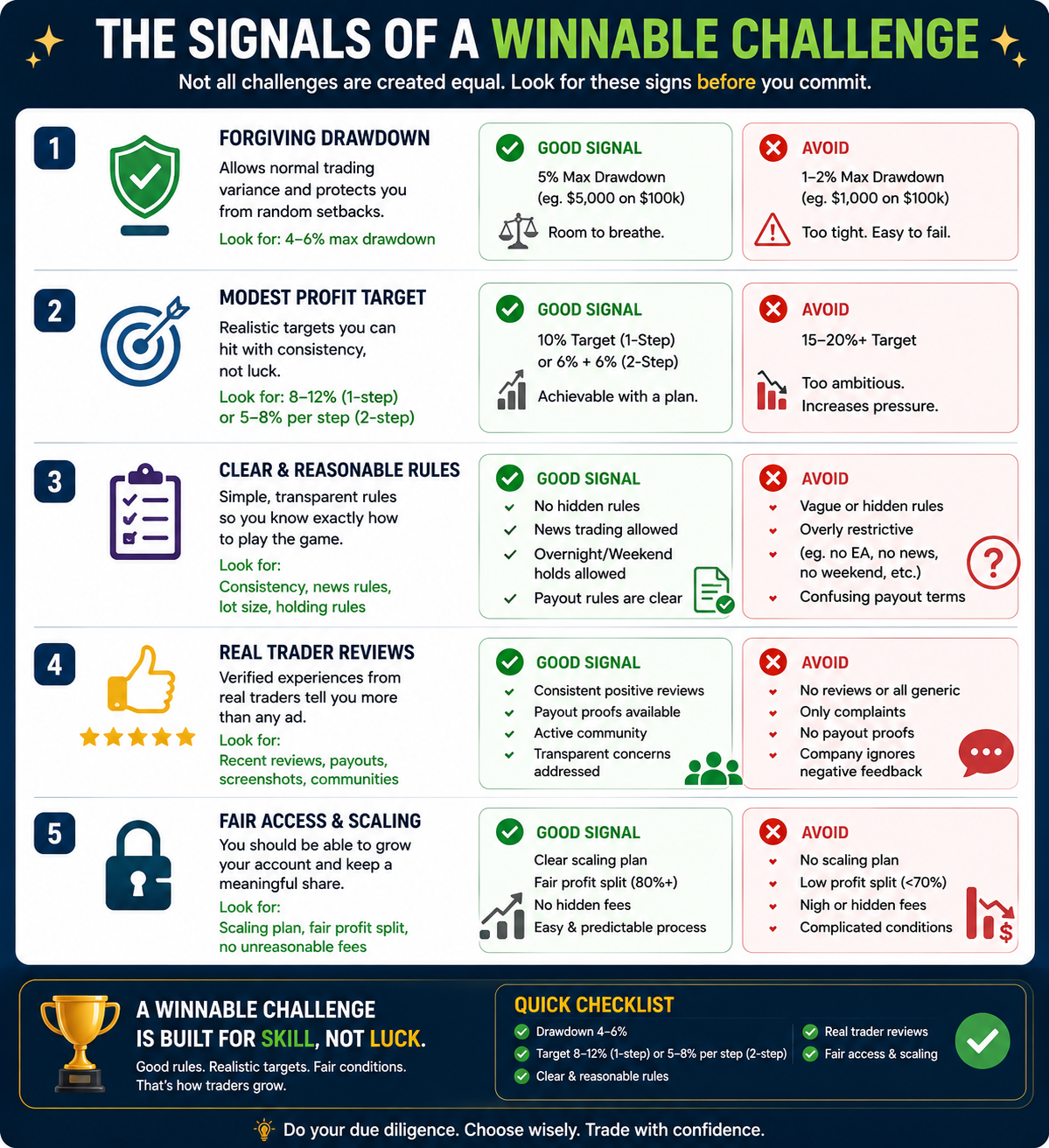
Fig 1.3 Prop firm with highest pass rate signals
What Top Traders and Research Say
Sound risk management matters more than any firm’s difficulty, and the literature agrees. In Trading in the Zone, Mark Douglas argues that consistent traders protect capital relentlessly and think in probabilities — the discipline that passes any challenge, easy or hard. Jack Schwager’s Market Wizards reinforces this through interviews where survival, not aggression, defined the greatest traders.
Academic research keeps expectations grounded. The widely cited Barber and Odean study, “Trading Is Hazardous to Your Wealth,” found that the most active retail traders underperformed largely because of overtrading and costs — a reminder that even the easiest prop firm to pass punishes reckless trading. As Warren Buffett put it, “The first rule is never lose money.” Applied to any evaluation, that principle means the forgiving structure only helps if you still trade with the discipline that keeps you clear of the drawdown limit.
The Trade-Offs of Choosing the Easiest Option
It is tempting to chase only the lowest difficulty prop firm challenge, but every forgiving feature usually comes with a trade-off worth weighing. A firm with very generous rules may charge a higher fee, offer a smaller profit split, or apply stricter conditions once you are funded. Easier to pass does not always mean better overall value.
The smartest approach balances winnability against the full package. A slightly harder challenge with reliable payouts, a strong profit split, and a generous scaling plan may serve you far better than an easy one with poor post-funding terms. Remember that passing is only the beginning; the funded stage is where income actually comes from. So while seeking the easiest prop firm to pass is reasonable, judge each firm on payouts, rules, cost, and scaling together rather than difficulty alone. The best choice is the one that fits your style and rewards you fairly after you pass.
Frequently Asked Questions
What is the easiest prop firm to pass?
There is no single easiest prop firm to pass for everyone, because difficulty depends on your trading style and the firm’s rule structure. The most winnable challenges generally combine a generous drawdown buffer, a modest profit target, no tight time limit, and relaxed consistency rules. A firm that suits a scalper may frustrate a swing trader. Rather than chasing a universal answer, match the rules to how you trade, and prioritise firms with forgiving structure and reliable payouts.
Which prop firm has the highest pass rate?
Firms rarely publish honest pass-rate data, so identifying a prop firm with highest pass rate means reading the rule structure and real trader reviews rather than trusting marketing. Forgiving drawdown, a modest target, the absence of strict consistency rules, and clear, stable terms all signal a more achievable challenge. Independent community feedback reveals whether traders find the rules fair and payouts reliable. Combine structural analysis with genuine reviews to spot where disciplined traders actually succeed most often.
Is a one-step or two-step challenge easier?
It depends on the rules, not just the step count. A one-step challenge removes the second phase but often pairs that with tighter drawdown to offset the firm’s risk. A two-step challenge spreads smaller targets across two phases, which many find a more forgiving lowest difficulty prop firm challenge because each phase demands less aggressive trading. Look past the number of steps and examine the drawdown room and target size, which determine real difficulty far more than whether there are one or two phases.
Does an easier challenge mean a worse deal?
Often there is a trade-off. A very forgiving challenge may charge a higher fee, offer a smaller profit split, or impose stricter post-funding conditions. The easiest prop firm to pass is not automatically the best value. Since the funded stage is where income comes from, weigh winnability against payouts, profit split, and scaling together. A slightly harder challenge with reliable payouts and a strong scaling plan can serve you far better than an easy one with poor terms after you pass.
Can beginners pass a prop firm challenge?
Yes, beginners can pass, especially by choosing a forgiving structure and trading with discipline. The most winnable route combines a generous drawdown buffer, a modest target, and no strict consistency rule, paired with small risk per trade and proven setups. Even the easiest prop firm to pass still rewards patience and capital protection, so beginners should prove a strategy on a demo account first. Matching a beginner-friendly firm to disciplined trading dramatically improves first-attempt success.
How can I improve my odds of passing any challenge?
Improving your odds is mostly about discipline, regardless of which firm you choose. Risk a small amount per trade so a losing streak cannot approach the drawdown limit, take only proven setups, and spread gains across the full time window. Set a personal daily loss limit inside the firm’s rule and stop when you hit it. Choosing a lowest difficulty prop firm challenge that fits your style helps, but disciplined risk management is what actually converts any evaluation into a funded account.
Final Thoughts
The search for the easiest prop firm to pass is best reframed from “which challenge is easy?” to “which structure is most forgiving for the way I trade?” No reputable evaluation is genuinely easy, because every firm exists to filter for disciplined, profitable traders before risking its capital. What makes a challenge more winnable is concrete: a generous drawdown buffer, a modest profit target, little or no time pressure, and relaxed consistency rules that let you trade your style. A genuine prop firm with highest pass rate earns that reputation through forgiving structure, transparent terms, and reliable payouts rather than marketing slogans. Yet even the most achievable lowest difficulty prop firm challenge still punishes reckless trading, so the forgiving features only help when paired with small risk per trade, proven setups, and strict daily limits. Weigh winnability against payouts, profit split, and scaling, because passing is only the beginning and the funded stage is where income lives. Match the rules to your style, trade with discipline, and you will give yourself the best possible chance of success.