
Introduction
This EUR/USD technical analysis June 6 2025 examines a market that has decisively resumed its uptrend, pushing to fresh multi-month highs as the broader dollar-weakness theme reasserted itself through the spring. After the orderly early-May pullback, dip-buyers returned in force, lifting the pair back above its April peaks and into new territory in the mid-1.14s. The June 6 session carried added significance because it coincided with the closely watched US non-farm payrolls report, a high-impact event with the power to either turbocharge the rally or trigger a sharp shakeout. In this breakdown we map the key support and resistance, read the major moving averages and momentum tools, and outline clear scenarios around the data. We also connect the picture to the earlier EUR/USD technical analysis May 8 2025 and the broader EUR/USD trend analysis June 2025 to show how the advance developed.
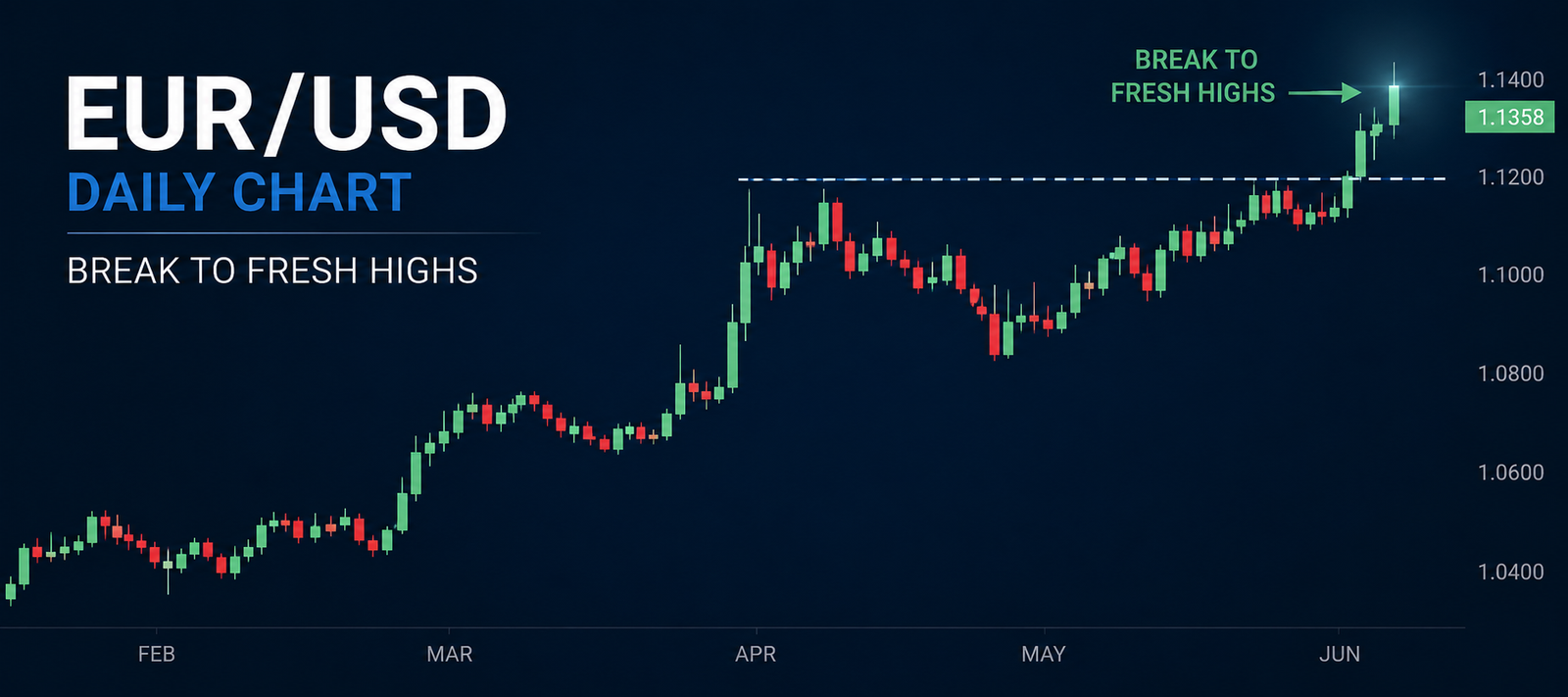
Fig 1.1 EUR/USD technical analysis June 6 2025 daily chart
Market Context Heading Into June 6
By early June, the euro’s uptrend had regained full momentum. The early-May correction proved shallow and temporary, as the structurally soft dollar — pressured by trade-tariff uncertainty and shifting rate expectations — drew sellers back in. EUR/USD reclaimed its April highs and pressed into fresh multi-month peaks, confirming that the broader bullish theme remained firmly intact.
The June 6 session, however, was dominated by event risk. The US non-farm payrolls report is one of the most market-moving data releases on the calendar, capable of sparking sharp moves in either direction. A soft jobs number would likely reinforce dollar weakness and extend the euro’s advance, while a strong print could spark a dollar-supportive shakeout. Traders therefore approached the session respecting the bullish trend while bracing for elevated, two-way volatility around the data.
Trend and Overall Structure
On the daily chart, the structure was emphatically bullish. EUR/USD had resumed its sequence of higher highs and higher lows, breaking back above the April swing-high region and printing fresh peaks. Price traded well above its rising 20-, 50-, and 200-day moving averages, the classic configuration of a strong, healthy uptrend.
The successful defence of the May pullback and the subsequent break to new highs were technically significant. They confirmed that buyers remained dominant and that the correction had been a pause, not a top. With the trend re-accelerating, the path of least resistance pointed firmly higher. The main caveat was that fresh highs combined with a major data release raised the risk of a sharp, if temporary, reaction in either direction once the numbers hit.
Key Support and Resistance Levels
Clear levels were essential ahead of a high-impact release. On the upside, the pair was probing fresh resistance near 1.1495, with the psychologically important 1.1550 and then 1.1600 zones as the next major objectives. A soft NFP print and a clean break above 1.1500 would have opened the door toward those higher targets.
On the downside, immediate support sat near 1.1420, the prior breakout area, followed by 1.1380 and the deeper 1.1320 zone. A strong jobs report that drove price back below 1.1420 would have signalled a near-term shakeout. The table below summarises the levels framing the session.
| Type | Level | Significance |
|---|---|---|
| Resistance 3 | 1.1600 | Major upside objective |
| Resistance 2 | 1.1550 | Psychological round number |
| Resistance 1 | 1.1495 | Fresh-high resistance |
| Support 1 | 1.1420 | Prior breakout support |
| Support 2 | 1.1380 | Secondary support |
| Support 3 | 1.1320 | Deeper demand zone |
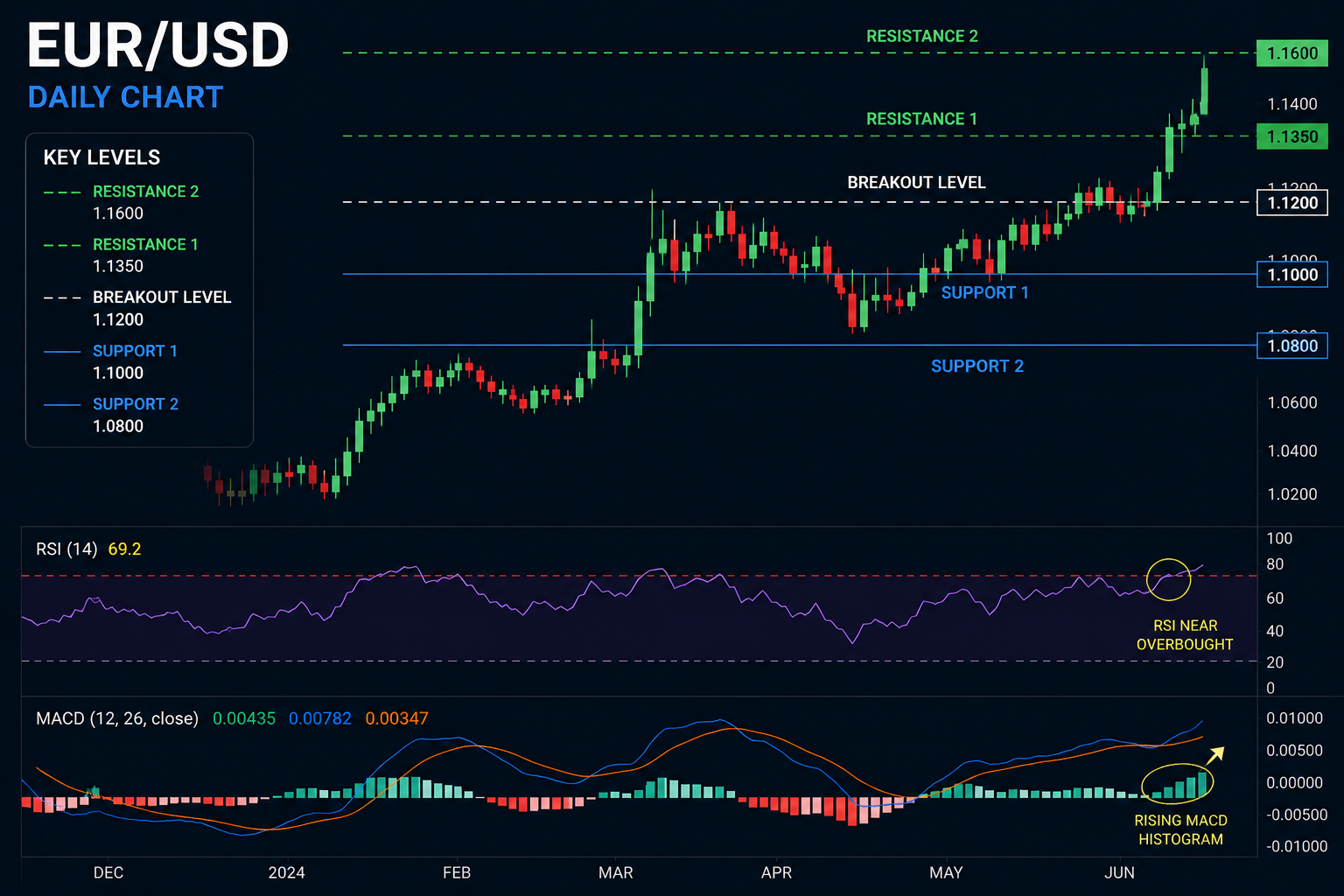
Fig 1.2 EUR/USD support and resistance levels
Bullish and Bearish Scenarios
For the bullish scenario, a soft non-farm payrolls report reinforcing dollar weakness, combined with a clean break above 1.1495–1.1500, would extend the rally toward 1.1550 and 1.1600. In this case, momentum traders would look to ride the continuation, treating shallow pullbacks toward 1.1420 as opportunities to join the trend rather than reasons to turn cautious.
For the bearish scenario, a strong jobs print could spark a dollar-supportive shakeout, driving price back below 1.1420 toward 1.1380 or even 1.1320. The overbought RSI added to the risk of a sharp corrective move. However, given the firmly intact uptrend, such a pullback would most likely represent a healthy reset and a potential buying opportunity rather than a structural reversal, so traders needed to distinguish a data-driven dip from a genuine change in trend.
How This Fit the June Uptrend
The June 6 session sat at the heart of a powerful renewed advance. The earlier EUR/USD technical analysis May 8 2025 had captured the orderly pullback that set the stage, and the return of dip-buyers transformed that correction into a springboard for fresh highs. June 6 confirmed that the May dip had indeed been a pause within a larger uptrend, not a top.
The broader EUR/USD trend analysis June 2025 framed the month as a continuation of the euro’s 2025 strength, with the pair extending its gains as the dollar-weakness theme persisted. Viewing June 6 within this context — a re-accelerating trend pushing to new highs around a major data event — was far more instructive than treating the session in isolation. It reinforced the disciplined approach of trading with the dominant trend while managing the elevated volatility that high-impact releases inevitably bring.
Moving Averages and Momentum Indicators
The moving average picture strongly favoured the bulls. Price traded above all major averages, with the shorter 20- and 50-day lines sloping sharply upward beneath price, providing a rising support structure and confirming re-accelerating momentum. The renewed separation between the fast and slow averages reflected a trend gathering pace rather than fading.
Momentum tools confirmed the strength while flagging some caution. The Relative Strength Index had climbed back toward overbought territory as the pair printed fresh highs, signalling powerful momentum but also a stretched short-term condition. The MACD turned firmly positive with an expanding histogram, validating the bullish thrust. The combined message was a strong, re-accelerating uptrend that was becoming stretched — a market to trade with the trend, while respecting the potential for sharp pullbacks, especially around NFP.
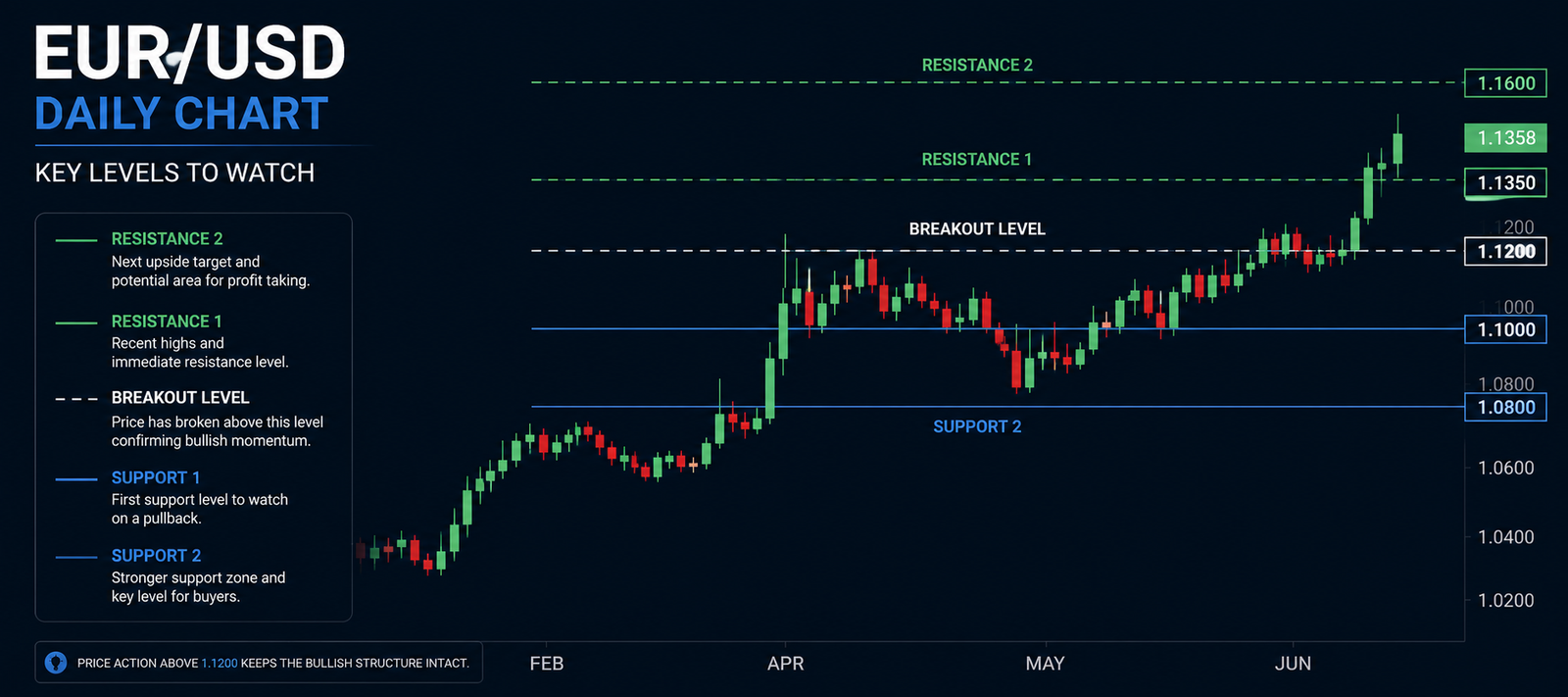
Fig 1.3 EUR/USD RSI and MACD momentum
What Top Traders and Research Say
Seasoned traders stress aligning with strong trends rather than fighting them. As Paul Tudor Jones observed, “The trend is your friend until the end when it bends.” On June 6, the trend was decisively bullish, and the discipline lay in trading with it while staying alert for the volatility that NFP could unleash at stretched levels.
The research literature supports a structured reading of trend and momentum. In “Foundations of Technical Analysis,” Andrew Lo, Harry Mamaysky, and Jiang Wang demonstrated that technical patterns can carry statistically meaningful information for future returns. For a comprehensive framework on interpreting trend strength, breakouts, and momentum together, John Murphy’s Technical Analysis of the Financial Markets remains the standard reference. Both the evidence and the literature reinforce a disciplined, level-based approach — exactly what a fresh-high market facing major event risk demanded.
Frequently Asked Questions
What did the EUR/USD technical analysis June 6 2025 show?
The EUR/USD technical analysis June 6 2025 showed a re-accelerating uptrend with price pushing to fresh multi-month highs in the mid-1.14s. The pair traded above all major moving averages, momentum was strongly bullish, and the RSI neared overbought. Resistance sat at 1.1495 and 1.1550, with support at 1.1420 and 1.1380. The bias clearly favoured continuation, though the NFP release threatened sharp two-way volatility that demanded careful risk management around the data.
How did NFP affect EUR/USD on June 6 2025?
The non-farm payrolls report was the session’s key risk event. A soft jobs number would reinforce dollar weakness and likely extend the euro’s rally above 1.1500 toward 1.1550, while a strong print could spark a dollar-supportive shakeout back toward 1.1420 or 1.1380. Because the RSI was near overbought, the pair was vulnerable to a sharp data-driven move. Traders approached this EUR/USD technical analysis June 6 2025 ready for elevated, two-way volatility around the release.
Where were the key EUR/USD levels on June 6 2025?
Key resistance levels were 1.1495, the psychological 1.1550, and 1.1600, while support rested at 1.1420, 1.1380, and 1.1320. A break above 1.1500 would confirm continued bullish control and open higher targets, whereas a loss of 1.1420 would signal a near-term shakeout. These levels framed the trade setups in this EUR/USD technical analysis June 6 2025, helping traders define risk around the NFP event on both paths.
How did June 6 relate to the May 8 2025 analysis?
The EUR/USD technical analysis May 8 2025 captured the orderly pullback that set the stage, and June 6 confirmed that dip had been a pause, not a top. Dip-buyers returned, lifting the pair back above its April highs and into fresh peaks. Together the two sessions illustrate a classic trending market that uses corrections to refresh — the May dip became the springboard for the June advance, validating the constructive read from the earlier analysis.
Was EUR/USD overbought on June 6 2025?
Yes, momentum readings suggested it was. The RSI had climbed back toward overbought territory as the pair printed fresh highs, reflecting the strength of the renewed advance. Overbought conditions in a powerful uptrend often signal a pause or shallow pullback rather than a reversal, but combined with the NFP release they raised the risk of a sharp move. The disciplined approach was to respect the bullish trend while being selective with entries at stretched levels into the data.
Final Thoughts
The EUR/USD technical analysis June 6 2025 captured a euro firmly back in command, pushing to fresh multi-month highs as the structurally soft dollar reasserted itself. Price traded above all major moving averages with strong, re-accelerating momentum, eyeing the 1.1550 and 1.1600 objectives, while support at 1.1420 and 1.1380 marked where buyers were likely to defend. The session’s defining wildcard was the NFP release, which threatened sharp two-way volatility at a time when the RSI was already near overbought. Read alongside the May pullback that preceded it, June 6 confirmed a classic trending market that uses corrections to refresh rather than reverse, extending the euro’s broader 2025 advance. For traders, the lasting lessons are to trade with a strong trend, respect the volatility that major data brings, define risk around clear levels, and let discipline rather than emotion drive every decision. This article is educational and reflects technical analysis as of June 6 2025; it is not financial advice.