
Few chart formations earn the trust of experienced traders as quickly as the flag, because it captures a simple, repeatable truth about how strong trends actually behave. The flag pattern forex traders watch for marks a brief pause in a powerful move, a moment when the market gathers its breath before pushing onward in the same direction. Learn to read it well, and you gain a high-probability entry with a clearly defined risk level and a logical profit target. This guide explains the flag in depth, then extends the same continuation logic to pennant pattern trading and contrasts it with the warning signal of the rising wedge.
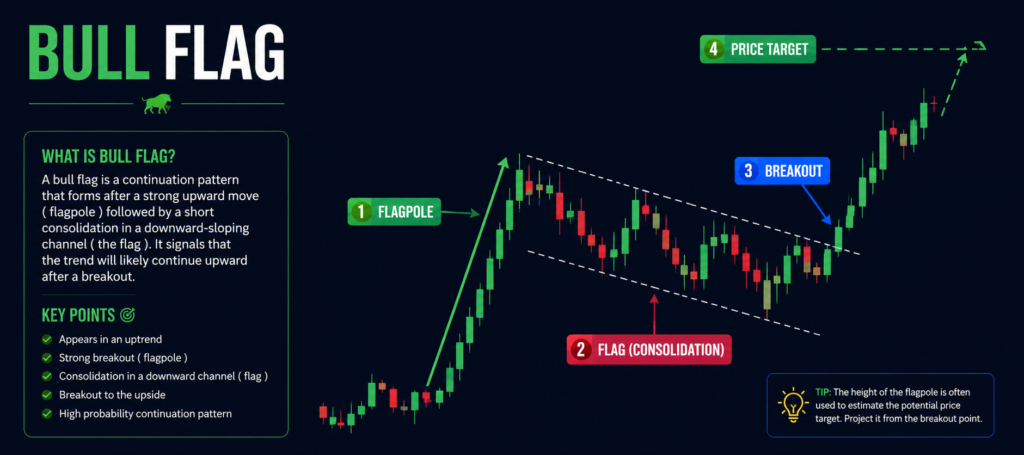
Fig 1.1 Flag pattern forex bull flag on a price chart
What Is a Flag Pattern in Forex?
A flag pattern forex traders watch for is a short-term continuation pattern that forms immediately after a strong, sharp price move known as the flagpole. Following that burst of momentum, price drifts into a small, orderly channel that slopes gently against the prevailing trend, before eventually breaking out and continuing in the original direction. The visual result genuinely resembles a flag flying from a pole, which is how the pattern earned its memorable name.
What the pattern really represents is a brief, healthy pause in an otherwise powerful trend. After a sharp advance or decline, early buyers or sellers take some profit, fresh participants hesitate, and price consolidates within a tight range while the underlying momentum quietly recharges. Crucially, the dominant force behind the move has not reversed; it has merely rested. That distinction is what makes the flag a continuation pattern rather than a reversal one, and it is why disciplined traders treat a well-formed flag as an opportunity rather than a warning.
Flags appear in two forms that mirror each other. A bull flag forms during an uptrend, sloping slightly downward as price consolidates, and it signals that the advance is likely to resume once the consolidation resolves. A bear flag forms during a downtrend, sloping slightly upward against the fall, and it signals further downside ahead. Recognising which version you are looking at, and confirming it sits within a genuine trend, is the foundation of trading the pattern well.
Why Flags Work So Well
Flags are reliable for a reason that runs deeper than chart aesthetics: they capture the natural pause-and-continue rhythm that defines almost every strong trend. Markets rarely move in a single uninterrupted line. Instead they surge, pause to let participants reposition, and then surge again, and the flag is simply the visual fingerprint of that pause. Because the consolidation forms while the dominant momentum is still intact, the breakout that follows tends to carry real conviction.
This temporary balance between buyers and sellers is what creates the tidy flag channel in the first place. Profit-takers from the initial move sell into the consolidation, while traders who missed the move wait for a better entry, and the resulting equilibrium holds price in a narrow band. When that equilibrium finally breaks in the direction of the trend, the traders who were waiting pile in, and the next leg of the move often unfolds quickly and cleanly, rewarding anyone positioned for it.
The flag also offers something many setups lack: a built-in, objective profit target. By measuring the height of the flagpole and projecting that same distance from the breakout point, you obtain a logical target that reflects the strength of the move that created the pattern. This measured-move technique removes much of the guesswork from exits, giving you a target grounded in the pattern’s own structure rather than in hope or arbitrary round numbers.
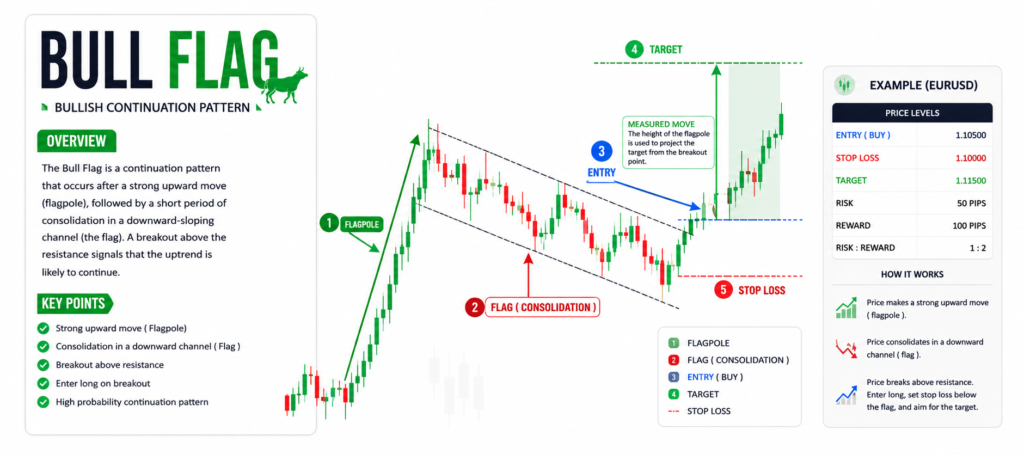
Fig 1.2 How to trade the flag pattern forex entry stop and target
How to Trade the Flag Pattern
Trading a flag successfully comes down to a clear, patient, three-part process, and the discipline to follow it without cutting corners. The first requirement is a genuine flagpole — a sharp, momentum-driven move that establishes an unmistakable trend direction. Without that strong preceding move, the small consolidation is just noise rather than a meaningful flag, and trading it offers no real edge. The quality of the pole is the single best predictor of whether the pattern will perform.
Once you have identified a strong pole, the second step is to wait for the consolidation to form a tidy channel sloping against the trend. Patience is genuinely difficult here, because the temptation to anticipate the breakout is powerful, yet entering before the pattern has fully formed is one of the most common ways traders get caught in false moves. Allowing the structure to develop completely, and resisting the urge to jump in early, separates consistent pattern traders from impulsive ones.
The third and final step is the entry itself, which comes only on a confirmed breakout in the direction of the original trend. At that point you place your stop loss beyond the opposite side of the flag, where a move would invalidate the setup, and you target the measured move projected from the flagpole. Holding to these rules — demanding a strong pole, waiting for the channel, entering on confirmation, and anchoring every trade to a logical stop — is what turns the flag from an interesting shape into a genuinely tradeable, repeatable edge.
Pennant Pattern Trading
Pennant pattern trading rests on exactly the same continuation logic as the flag, which is why the two are so often discussed together. The only meaningful difference is shape. Where a flag consolidates within a small parallel channel, a pennant consolidates within a small symmetrical triangle, with price coiling into an ever-tighter range as buyers and sellers reach a temporary stalemate. Both patterns follow a strong flagpole, and both resolve, more often than not, in the direction of the prior trend.
Like flags, pennants come in bullish and bearish varieties. A bullish pennant forms after a sharp advance and points to further upside once the coil resolves, while a bearish pennant forms after a sharp decline and points to further downside. The breakout from the triangle confirms the direction, and the same measured-move logic — projecting the flagpole’s height from the breakout point — provides the profit target. The table below lays out the key distinctions so you can identify each pattern quickly on a live chart.
| Feature | Flag | Pennant |
|---|---|---|
| Shape | Small parallel channel | Small symmetrical triangle |
| Slope | Against the trend | Converging toward a point |
| Signal | Trend continuation | Trend continuation |
| Target | Measured move from flagpole | Measured move from flagpole |
In practice, you should trade pennants with exactly the same discipline you apply to flags: insist on a strong preceding pole, let the consolidation complete, enter only on a confirmed breakout, place a stop beyond the pattern, and aim for a measured-move target. Treating flags and pennants as two expressions of one underlying principle keeps your approach simple and consistent rather than cluttered with redundant rules.
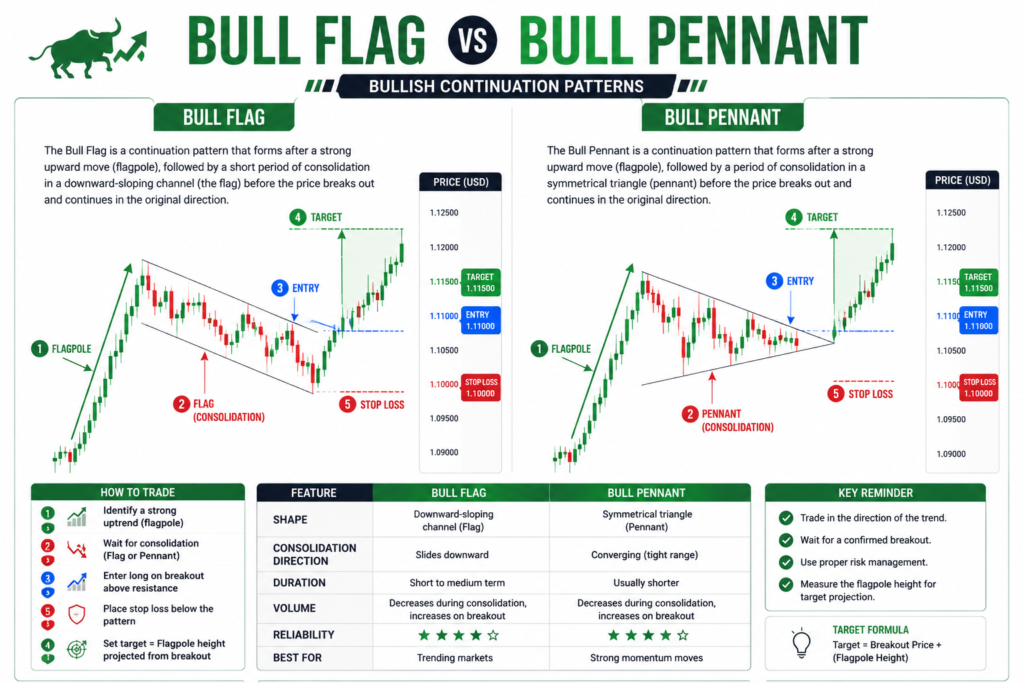
Fig 1.3 Pennant pattern trading versus flag pattern
Trading the Rising Wedge
The rising wedge forex pattern serves as a valuable counterpoint to the flag and pennant, because although it can look superficially similar, it usually carries the opposite message. A rising wedge forms as price grinds higher within two upward-sloping trendlines that converge toward each other, and despite that upward drift it frequently signals weakening momentum and an impending move to the downside. The narrowing range reflects buyers who are working harder and harder for smaller and smaller gains.
Context determines the wedge’s precise meaning. When a rising wedge appears at the end of a sustained uptrend, it often warns of an approaching reversal, as each successive push higher loses steam and the advance runs out of fuel. When it appears within a downtrend as a corrective bounce, it tends to signal that the downtrend is merely pausing and is likely to resume once the wedge resolves. Either way, the rising wedge is generally a bearish formation that hints at lower prices ahead.
Traders typically wait for price to break decisively below the lower trendline of the wedge before entering short, placing a protective stop above the most recent swing high. As with every pattern, confirmation matters enormously, because wedges can extend further and persist longer than impatient traders expect before they finally resolve. Combining the wedge with the broader trend context and waiting for a genuine break, rather than anticipating one, is what keeps you on the right side of this deceptively tricky formation.
What Research and Top Traders Say About Patterns
Chart patterns sometimes attract scepticism, dismissed as little more than wishful shapes, yet serious research suggests there is real substance behind the best of them. The work of Thomas Bulkowski, whose Encyclopedia of Chart Patterns statistically catalogues the historical behaviour of dozens of formations, treats patterns as measurable phenomena with documented tendencies rather than mystical predictions. His approach reminds traders to focus on the patterns and conditions that actually carry an edge rather than trading every shape they imagine they see.
Academic finance lends further weight to the idea. In the influential study “Foundations of Technical Analysis,” the researchers Andrew Lo, Harry Mamaysky, and Jiang Wang applied rigorous statistical methods to common technical patterns and concluded that several of them do convey genuine, measurable informational value. That finding does not promise that any single flag or pennant will work, but it does support the disciplined, evidence-based use of continuation patterns as part of a broader trading plan.
The trader Jesse Livermore captured the right mindset when he observed, “Markets are never wrong; opinions often are.” For a pattern trader, the lesson is to let the chart, the confirmed breakout, and the trend tell you what to do, rather than forcing a pattern to fit a prediction you have already made. Respecting the market’s verdict, waiting for confirmation, and managing risk on every trade is what allows these patterns to do their work over a long series of trades.
Frequently Asked Questions
1. What is a flag pattern in forex?
A flag pattern forex traders use is a continuation pattern that forms after a strong move called the flagpole, followed by a small channel that slopes gently against the trend. When price breaks out in the original direction, the trend usually resumes with conviction. Bull flags signal further upside, while bear flags signal further downside. The pattern is valued because it offers a clear entry, a logical stop beyond the flag, and a measured-move profit target derived from the pole.
2. How reliable is the flag pattern?
Flags are among the more reliable continuation patterns when they are traded correctly, because they capture the natural pause-and-continue rhythm of strong trends. Their reliability improves significantly when there is a clear, momentum-driven flagpole and you wait for a confirmed breakout rather than anticipating it. No pattern is ever guaranteed, so you should always use a stop loss placed beyond the flag. Combining flags with the dominant trend and key levels meaningfully increases your odds of success.
3. What is the difference between a flag and a pennant?
The difference is purely one of shape. In pennant pattern trading, price coils into a small symmetrical triangle, while a flag consolidates within a small parallel channel that slopes against the trend. Both patterns follow a strong flagpole, both signal trend continuation, and both use a measured-move target projected from the pole. Because they share the same underlying logic, you trade them with identical discipline: a confirmed breakout, a stop beyond the pattern, and sound risk management on every position.
4. Is a rising wedge bullish or bearish?
The rising wedge forex pattern is generally bearish. Price grinds higher within two upward-sloping, converging trendlines, but momentum usually weakens as the range narrows, which hints at a reversal or pullback. When the wedge appears at the top of an uptrend it can warn of an approaching top, and when it appears in a downtrend it often signals a corrective bounce before the decline resumes. Traders typically enter short on a confirmed break below the lower wedge line.
5. How do I set a target for a flag pattern?
The standard method is the measured move: measure the vertical height of the flagpole, then project that same distance from the breakout point in the direction of the trend. This produces a logical target that reflects the strength of the move which created the pattern. You can also scale out partially at intervening levels of support or resistance. Always pair the target with a stop loss beyond the flag so that your reward-to-risk ratio remains healthy on every trade.
Final Thoughts
The flag pattern forex traders rely on remains one of the most dependable continuation setups available, precisely because it reflects the natural pause-and-continue rhythm that defines strong trends. After a sharp flagpole move, the market consolidates briefly while early profit-takers exit and fresh participants wait, and then it resumes with renewed momentum — handing you a clean entry near the start of the next leg, a logical stop beyond the flag, and a built-in measured-move target. The very same continuation logic powers pennant pattern trading, which simply replaces the flag’s parallel channel with a small coiling triangle, while the rising wedge forex pattern provides a valuable warning of weakening momentum and potential downside. Success with all three flows from the same disciplined process: demand a strong preceding move, allow the consolidation to form fully, enter only on a confirmed breakout, and never trade without a stop loss and sensible position sizing. The research of Thomas Bulkowski and the academic findings of Lo, Mamaysky, and Wang both support the disciplined, evidence-based use of these patterns, and Jesse Livermore’s reminder that markets are never wrong keeps your ego out of the decision. Practise spotting these formations on higher timeframes, confirm them against the dominant trend, aim for a healthy reward-to-risk ratio, and you will gain a reliable, repeatable edge for trading the market’s strongest moves with genuine confidence.