
Introduction
Choosing where to put your first dollars is one of the most important decisions a new trader makes. The forex broker minimum deposit is the smallest amount a broker accepts to open and fund a live account, and it shapes everything from your position sizing to your psychology. Some brokers welcome traders with as little as a few dollars, while others expect a few hundred before you can place a single trade. Understanding these thresholds helps you match your budget to the right account type and avoid funding more than you can afford to lose. In this guide, we explain how minimum deposits work, why they vary so widely, and what a low entry point really buys you. We also cover the trade-offs of starting small, the account tiers you will encounter, and what experienced traders and research say about funding decisions. By the end, you will know how to pick a deposit level that fits your goals.
What a Minimum Deposit Actually Means
A minimum deposit is simply the floor a broker sets before your live account becomes tradable. It is not a fee and it is not lost money; it is your trading capital, and in most cases you can withdraw it later, subject to the broker’s terms. The forex broker minimum deposit exists because brokers need accounts to be economically worth servicing, and because very tiny balances can be impractical to trade given spreads and minimum lot sizes. Crucially, the minimum is a starting point, not a recommendation. A broker that accepts ten dollars is telling you what is technically possible, not what is strategically wise. Your real funding decision should flow from your risk plan, your position sizing, and how much you can comfortably afford to lose while you learn. Treat the published minimum as the door, and your own budget as the room you actually walk into.
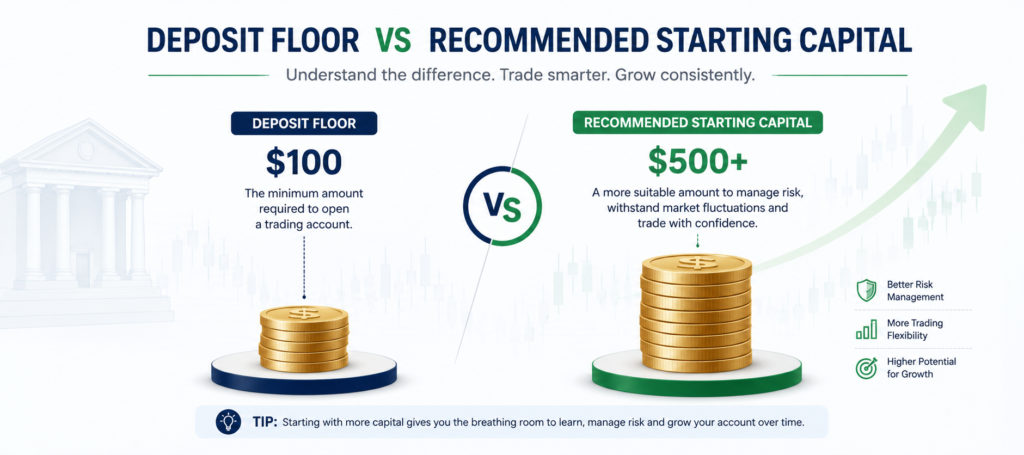
Fig 1.1 Forex broker minimum deposit explained
Why Minimum Deposits Vary So Widely
Deposit requirements differ because brokers serve different audiences and operate under different cost structures. Many micro-account brokers court beginners and emerging-market traders, so they keep entry points extremely low to widen their funnel. Brokers aimed at active or professional traders often set higher floors because their pricing, platforms, and support are built around larger balances. Regulation also plays a role: brokers in stricter jurisdictions may carry compliance costs that nudge minimums upward, while offshore entities sometimes advertise near-zero entry to attract volume. Account type matters too. The same broker may offer a cent or micro account with a tiny floor and a standard or premium account with a far higher one. This is why a lowest deposit forex broker in one tier can sit alongside a four-hundred-dollar premium tier at the very same company. Always read the floor in the context of the specific account you are opening, not the headline number on the homepage.
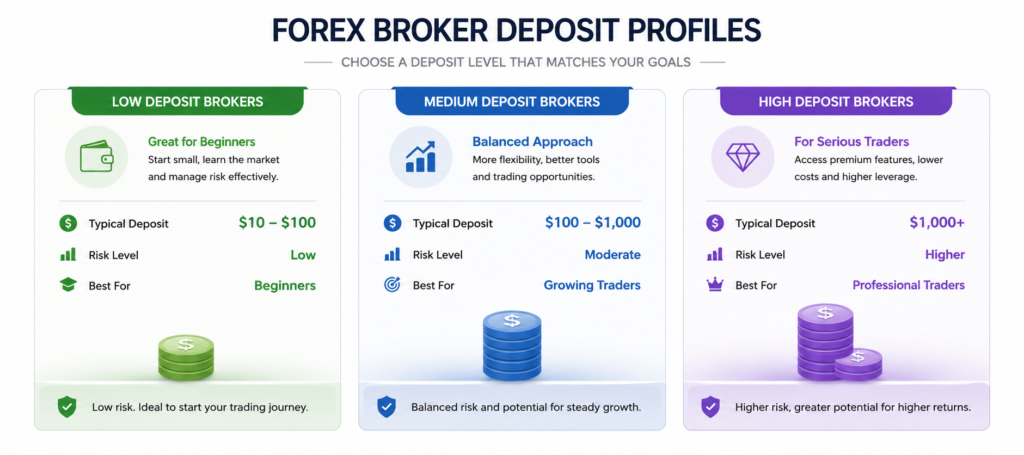
Fig 1.2 Comparison of lowest deposit forex broker tiers
Typical Minimum Deposit Tiers
While exact figures change constantly and vary by broker and region, deposit requirements tend to cluster into recognizable tiers. The table below is a generic, illustrative map of how these tiers usually break down and who each one tends to suit. Use it as a framework, then verify the live numbers directly with any broker you consider.
| Deposit Tier | Typical Account Type | Lot Sizing | Who It Suits |
|---|---|---|---|
| $0 to $10 (micro/cent) | Cent or nano account | Cent or micro lots | Absolute beginners testing live conditions with real but tiny risk |
| $50 to $100 (entry) | Micro or basic standard | Micro lots | New traders who have practiced on demo and want modest real exposure |
| $200+ (standard) | Standard account | Mini and standard lots | Traders with a tested plan who want better sizing flexibility |
| $500+ (premium/pro) | Premium or ECN-style | Standard lots | Experienced traders prioritizing tighter spreads and richer features |
The lowest tier is where forex trading with $10 deposit lives. Some brokers allow roughly ten dollars to fund a cent account, which lets you place real trades in very small units. The benefit is genuine live experience without meaningful financial risk. The limitation is that such a small balance leaves almost no room to absorb drawdowns, so it works best as a learning bridge rather than a profit engine.
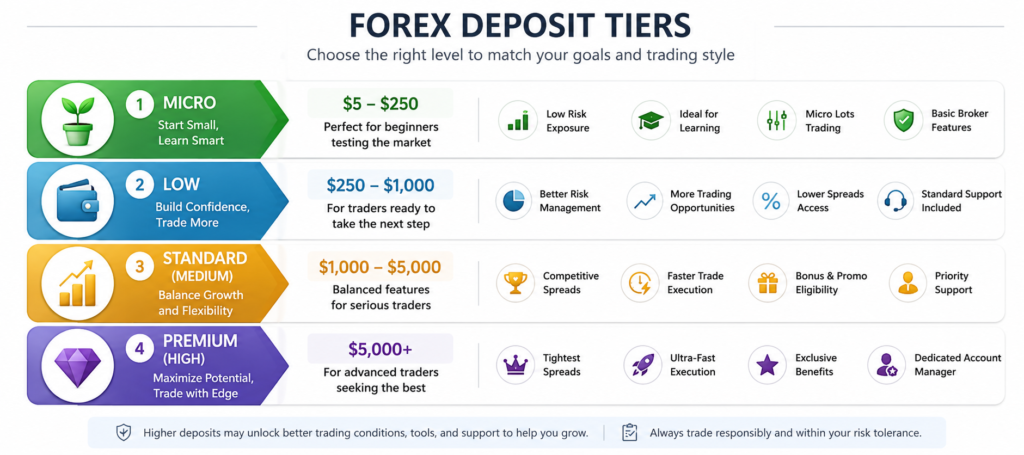
Fig 1.3 Forex broker minimum deposit tiers from low micro
The Trade-Offs of Starting Small
A low minimum deposit lowers the barrier to entry, but it does not lower the difficulty of trading. With a very small balance, fixed costs such as spreads weigh more heavily on each position, and a string of small losses can quickly erase a tiny account. Starting small also tempts traders into oversized leverage, because the urge to make a meaningful return on a small balance pushes people toward risky position sizes. That is precisely where many beginners fail. On the other hand, a small live account teaches the emotional reality of risking real money in a way no demo ever can. The healthiest approach is to treat forex trading with $10 deposit or any micro-funded account as tuition, not investment. Keep your risk per trade minuscule, focus on executing your plan correctly, and only scale your deposit once your process proves consistent over many trades rather than a lucky few.
How to Choose the Right Deposit Level
The right deposit is the amount that lets you trade your plan without threatening your financial wellbeing. Start by defining your risk per trade as a small percentage of your balance, then work backward to a deposit that supports sensible position sizes for the pairs you intend to trade. Prioritize regulation and withdrawal reliability over headline-low minimums; a lowest deposit forex broker is only attractive if you can actually retrieve your funds when you want them. Confirm the deposit and withdrawal methods, any inactivity rules, and whether the low-minimum account carries wider spreads. If you are still learning, a modest entry-tier deposit paired with disciplined sizing usually beats both an ultra-thin balance and an overfunded one. Above all, never fund a forex account with money earmarked for essentials. The goal is to start at a level you can lose entirely without disrupting your life, while still trading meaningfully enough to learn.
What Top Traders and Research Say
Seasoned voices in trading consistently emphasize discipline over deposit size. In Day Trading and Swing Trading the Currency Market, Kathy Lien stresses understanding the forces that move currencies before risking capital, a reminder that knowledge, not account size, drives results. Mark Douglas, in Trading in the Zone, argues that consistent profitability is a function of mindset and probabilistic thinking rather than starting balance. Academic research reinforces the cost angle: Barber and Odean’s well-known study “Trading Is Hazardous to Your Wealth” found that frequent trading and transaction costs eroded retail returns significantly, a finding especially relevant to thinly funded accounts where costs bite hardest. The practical lesson is that a small deposit magnifies the damage of overtrading. As Paul Tudor Jones put it, “The most important rule is to play great defense.” Funding decisions should serve that defensive discipline first.
Frequently Asked Questions
What is the lowest forex broker minimum deposit available? Some brokers advertise a forex broker minimum deposit of just a few dollars, and certain cent accounts can open with roughly ten dollars. These ultra-low floors are designed to attract beginners. However, the smallest legal minimum is not always the smartest choice, since tiny balances leave little room to manage drawdowns and amplify the impact of spreads and fees.
Can I really start forex trading with $10 deposit? Yes, forex trading with $10 deposit is technically possible at brokers offering cent or micro accounts. You can place real trades in very small units, which gives genuine live experience. Treat it as practice rather than a serious income attempt, keep your risk per trade extremely small, and expect a tiny balance to grow slowly if at all.
Is a lowest deposit forex broker safe to use? A lowest deposit forex broker can be safe, but the low minimum tells you nothing about safety on its own. Prioritize strong regulation, transparent terms, and reliable withdrawals. A reputable, well-regulated broker with a low entry point is fine, while an unregulated one advertising near-zero deposits should be approached with serious caution.
How much money do I actually need to trade forex? There is no universal figure. The amount depends on your risk plan, the pairs you trade, and your tolerance for loss. Many beginners start in the fifty-to-two-hundred-dollar range after demo practice. The key is funding only what you can afford to lose entirely while still allowing sensible position sizing under your risk rules.
Does a higher deposit improve my chances of success? Not directly. A larger deposit gives more flexibility in position sizing and can better absorb drawdowns, but it does not create skill. Many traders lose larger balances just as quickly through poor discipline. Success comes from a tested strategy, strict risk management, and emotional control, regardless of whether your deposit is small or large.
Final Thoughts
The forex broker minimum deposit is best understood as a doorway, not a destination. It tells you the smallest amount a broker will accept, but your real funding choice should be driven by your risk plan, your discipline, and the money you can genuinely afford to lose. Low-minimum and cent accounts make it possible to gain real, emotional trading experience for very little, and a lowest deposit forex broker can be a sensible launchpad when paired with regulation you trust and withdrawals you can rely on. Just remember that forex trading with $10 deposit is tuition, not a shortcut to income, and that costs hit small accounts hardest. Choose a deposit level that supports sensible position sizes, prioritize broker safety over headline-low numbers, and let consistency, rather than account size, decide when you scale up. Start small, protect your capital, and grow your deposit only when your process has earned it.