
Forex momentum trading is built on a simple but powerful idea: currencies that are moving strongly in one direction tend to keep moving that way for a while before they stall or reverse. Instead of trying to catch the exact bottom or top, a momentum trader waits for clear evidence that buyers or sellers are in firm control, then joins the move and rides it until the energy fades. This approach rewards patience and discipline far more than prediction, which is why it has stayed popular across decades of changing markets. In this guide you will learn how momentum actually works in the currency market, how to measure it with indicators you can trust, how to time your entries and exits, and how to protect your account when a strong trend suddenly turns.
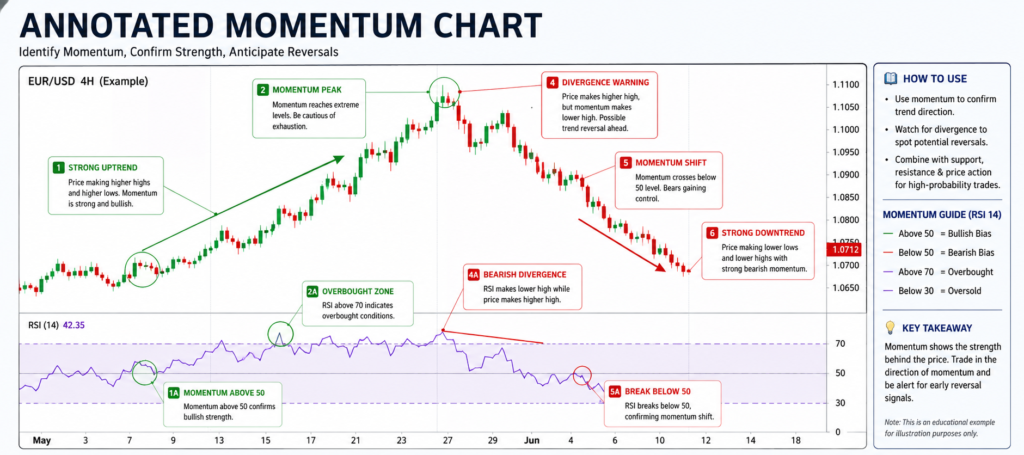
Fig 1.1 EUR/USD chart showing RSI and MACD confirming bullish momentum during an uptrend
What Momentum Really Means in Forex
Momentum, at its core, is the speed and force behind a price move. When EUR/USD climbs from one level to the next on widening daily ranges and strong closes, that is momentum building. When the same pair grinds higher on shrinking candles and frequent pullbacks, momentum is fading even if price is technically still rising. The distinction matters because momentum traders are not buying a currency simply because it is going up; they are buying because the rate at which it is going up suggests committed participation from large players. In the forex market, that participation often comes from interest-rate expectations, capital flows, and shifts in risk appetite, all of which tend to unfold over days and weeks rather than minutes. That persistence is exactly what gives momentum strategies their edge.
It helps to separate momentum from trend. A trend describes direction over time; momentum describes the conviction behind that direction right now. A market can be in an uptrend while losing momentum, which is often the first quiet warning that a reversal or deep correction is approaching. By learning to read momentum independently of price, you gain a second layer of information that pure trend-following can miss. This is why so many experienced traders combine a trend filter with a momentum trigger rather than relying on either one alone.
Measuring Momentum With Indicators You Can Trust
You do not need a cluttered chart to trade momentum well. A handful of reliable tools, understood deeply, will serve you better than a dozen you barely follow. The Relative Strength Index (RSI) is the most common starting point. Rather than treating RSI as a simple overbought/oversold signal, momentum traders watch how it behaves: readings that push above 60 and stay there during pullbacks usually confirm healthy bullish momentum, while a failure to reclaim 50 on a bounce often signals weakening strength. The Moving Average Convergence Divergence (MACD) adds a different angle by comparing two moving averages and plotting the gap between them. A widening MACD histogram tells you momentum is accelerating; a shrinking one warns that the move is running out of fuel even before price rolls over.
The Rate of Change (ROC) indicator is the purest momentum measure of the three because it simply expresses how much price has moved over a set number of bars as a percentage. When ROC rises and holds above zero, buyers are in control; when it crosses below and trends lower, sellers are taking over. Many traders also lean on the Average Directional Index (ADX) not as a momentum gauge itself but as a filter: an ADX above 25 confirms that a genuine trend exists for momentum signals to work within, while a low ADX warns you that the market is ranging and momentum signals will whipsaw. Used together, these tools form a checklist rather than a crystal ball, each one confirming or questioning what the others suggest.
Timing Entries: Breakouts and Pullbacks
There are two classic ways to enter a momentum trade, and the better choice depends on your temperament and the market’s structure. The breakout entry involves buying as price clears a clear resistance level or recent swing high on strong momentum readings. The appeal is that you join the move the moment it confirms; the danger is the false breakout, where price pokes above a level, traps eager buyers, then collapses. To reduce that risk, momentum traders look for confirmation, a strong close beyond the level rather than a fleeting spike, expanding range, and supportive readings from RSI or MACD. A breakout backed by accelerating momentum is far more trustworthy than one that limps across the line.
The pullback entry takes the opposite posture: it waits for a strong trend to pause and pull back to a value area, such as a rising moving average or a shallow Fibonacci retracement, before buying in the direction of the dominant momentum. This style usually offers a tighter stop and a better reward-to-risk ratio because you are entering closer to support. The trade-off is patience and the occasional missed move when price never pulls back at all. Many traders blend the two, taking pullback entries during established trends and breakout entries when a fresh trend is being born out of a long consolidation. Whichever you choose, the entry should always be a reaction to confirmed strength, never an attempt to guess where strength will appear.
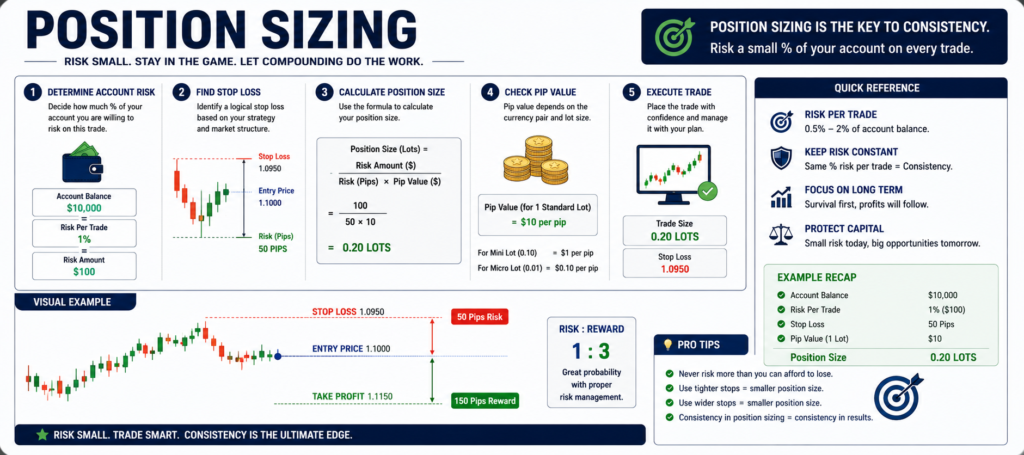
Fig 1.2 Position sizing based on a fixed one to two percent account risk
Exits: The Skill That Separates Winners
Most traders obsess over entries and neglect exits, yet exits decide whether momentum trading is profitable. The challenge is unique to this style: you are deliberately holding a position into strength, so you must let winners run without giving back too much when the move finally turns. A practical approach is to use a trailing stop that follows price at a sensible distance, often anchored to a moving average or to the swing lows of the trend, so that you stay in as long as momentum persists and get taken out automatically when structure breaks. This removes the temptation to exit too early out of fear or hold too long out of greed.
A second, complementary tool is the momentum exit signal itself. When MACD’s histogram contracts sharply, RSI fails to make a new high alongside price, or ROC rolls toward zero, the move is losing its driving force. Bearish or bullish divergence, where price makes a new extreme but the indicator does not, is one of the most reliable early warnings that momentum is exhausting. Skilled traders often scale out in stages, banking partial profit when the first divergence appears and trailing the remainder until the trend structure actually breaks. This balance between protecting gains and respecting the trend is the real craft of momentum trading.
Risk Management for Momentum Traders
Momentum trading can produce sharp, satisfying runs, but it also exposes you to violent reversals when crowded trades unwind. The currency market is especially prone to this because so many participants chase the same interest-rate themes at once. The defense is unglamorous but non-negotiable: define your risk per trade before you enter, usually no more than one to two percent of your account, and size your position so that your stop-loss distance fits within that limit. A wider stop simply means a smaller position, never a larger risk. This single rule keeps a string of false momentum signals, which every trader will experience, from doing lasting damage.
Beyond per-trade risk, momentum traders should respect correlation. Going long three different dollar-weak pairs at once is really one large bet on the dollar, not three diversified trades, and a single surprise from the Federal Reserve can hit all of them together. Spreading exposure across genuinely independent themes, and reducing size during high-impact news windows, keeps a good week from turning into a brutal one. Finally, accept that momentum strategies tend to win less than half the time but profit overall because the winners are larger than the losers. If you cannot tolerate frequent small losses on the way to occasional big gains, this style will frustrate you no matter how good your signals are.
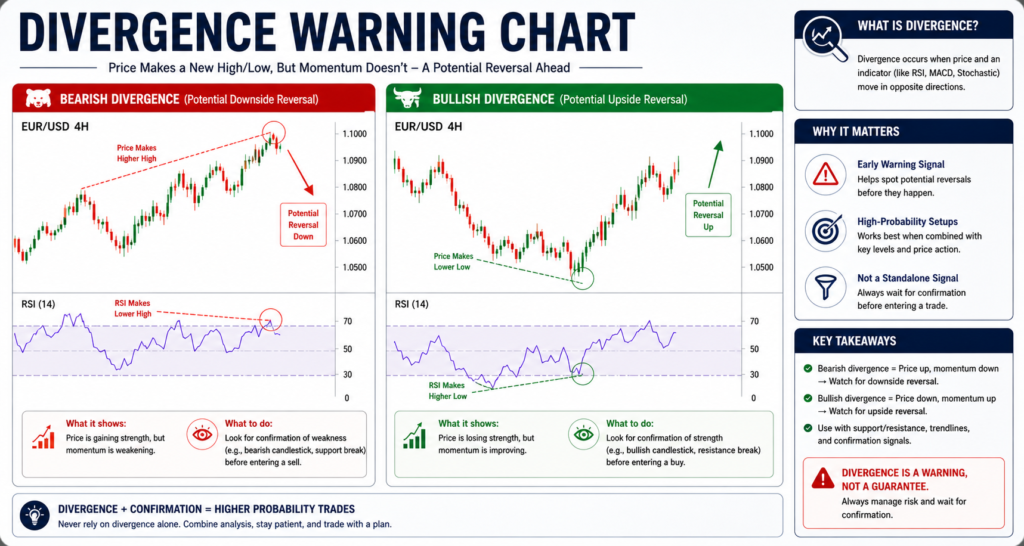
Fig 1.3 Chart illustrating momentum divergence
What Top Traders and Research Say
The academic case for momentum is unusually strong. In their influential 1993 study “Returns to Buying Winners and Selling Losers,” Narasimhan Jegadeesh and Sheridan Titman documented that assets which had performed well over recent months continued to outperform over the following months, a persistence that should not exist in a perfectly efficient market. Later work extended the finding directly into currencies and other asset classes, giving momentum one of the most robust track records in all of finance. For a practical, modern treatment of how to build rules-based momentum systems, Wesley Gray and Jack Vogel’s book Quantitative Momentum lays out the logic and the pitfalls in clear, testable terms.
The trader’s perspective adds color to the data. The fund manager Richard Driehaus, often called a father of momentum investing, summed up the counterintuitive heart of the approach when he observed that far more money has been made buying high and selling at even higher prices than by trying to buy bottoms. That single idea, that strength tends to beget strength, runs against every instinct to bargain-hunt, and learning to act on it is much of what separates consistent momentum traders from the crowd.
Frequently Asked Questions
What timeframe is best for forex momentum trading?
There is no single best timeframe; it depends on your schedule and tolerance for noise. The four-hour and daily charts tend to produce cleaner, more reliable momentum signals because they filter out intraday noise, making them popular with swing-style momentum traders. Shorter timeframes like the five- or fifteen-minute charts offer more opportunities but also far more false signals, demanding tighter discipline and faster decisions. Many traders use a higher timeframe to define the dominant momentum and a lower one to fine-tune entries.
How is momentum trading different from trend following?
The two overlap but are not identical. Trend following focuses on direction and aims to stay in a move as long as the trend persists, often using moving averages to define it. Momentum trading focuses on the strength and acceleration behind the move, entering when conviction is high and exiting when that energy fades, sometimes well before the trend itself technically reverses. In practice many traders combine them, using a trend filter to pick direction and a momentum trigger to time the entry.
Which indicator is best for measuring momentum?
No single indicator is best, and relying on just one invites trouble. RSI is excellent for gauging strength and spotting divergence, MACD shines at revealing acceleration and exhaustion, and ROC gives the cleanest read on raw momentum direction. The strongest approach treats them as a small committee: when two or three agree, the signal is far more trustworthy than any one alone. Pair them with ADX to avoid trading momentum signals in a flat, ranging market.
Does momentum trading work in ranging markets?
Generally no, and this is the most common reason beginners lose money with it. Momentum strategies are designed to capture sustained directional moves, so in a sideways market they produce repeated false breakouts and whipsaws. This is exactly why a trend filter such as ADX is so valuable, it tells you when conditions favor momentum and when to stand aside. Trying to force momentum trades during low-volatility, range-bound periods is a reliable way to bleed your account.
How many trades should a momentum trader expect to win?
Momentum strategies typically win less than half their trades, and that is normal rather than a flaw. The profitability comes from a favorable reward-to-risk profile: the winning trades, which ride strong trends, are considerably larger than the frequent small losses from false signals. If you measure success by win rate alone you will likely abandon a working system at the worst time. Judge it instead by overall expectancy across a large sample of trades.
Final Thoughts
Momentum trading rewards traders who can do something genuinely difficult: act on strength instead of bargain-hunting, hold winners through discomfort, and cut losses quickly when a move proves false. The tools are simple, RSI, MACD, ROC, and a trend filter like ADX, but the edge comes from how you combine them and, above all, from disciplined exits and risk control. Treat momentum not as a way to predict the market but as a way to align yourself with moves that are already underway and likely to continue. Backtest your rules, keep your risk per trade small and consistent, and give the strategy enough trades to reveal its true expectancy before you judge it.