
A well-crafted forex session trading strategy is one of the most powerful tools any trader can add to their toolkit. The foreign exchange market runs 24 hours a day, five days a week — but not all hours are created equal. Volatility surges, liquidity floods in, and price moves decisively during specific trading windows, while other hours drag along in lifeless, low-volume chop. Understanding which session aligns with your schedule, your chosen currency pairs, and your risk tolerance is the difference between fighting the market and flowing with it. This article breaks down the four major trading sessions — Sydney, Tokyo, London, and New York — explains the characteristics of each, identifies the pairs that move most in every window, and delivers a clear, step-by-step session-based approach you can apply starting today.
The Four Major Forex Sessions Explained
Every forex trader quickly learns that the market does not behave the same way at 3:00 AM as it does at 10:00 AM London time. Activity is anchored to the business hours of the world’s major financial centers — Sydney, Tokyo, London, and New York. Each center opens and closes in a rolling sequence, creating distinct windows of activity with unique characteristics. Mastering a forex session trading strategy begins with understanding exactly what happens in each of these windows and why.
The Sydney Session
The Sydney session kicks off the 24-hour cycle each day, running from approximately 10:00 PM to 7:00 AM GMT. Sydney is the quietest of the four major sessions by volume and liquidity. Spreads are wider, price action is thinner, and many major pairs drift without clear direction. The session is most relevant for AUD/USD and NZD/USD pairs. Traders in other time zones should approach it with realistic expectations — large, trending moves are rare, and overtrading during low-liquidity periods is one of the most common and costly mistakes in currency trading.
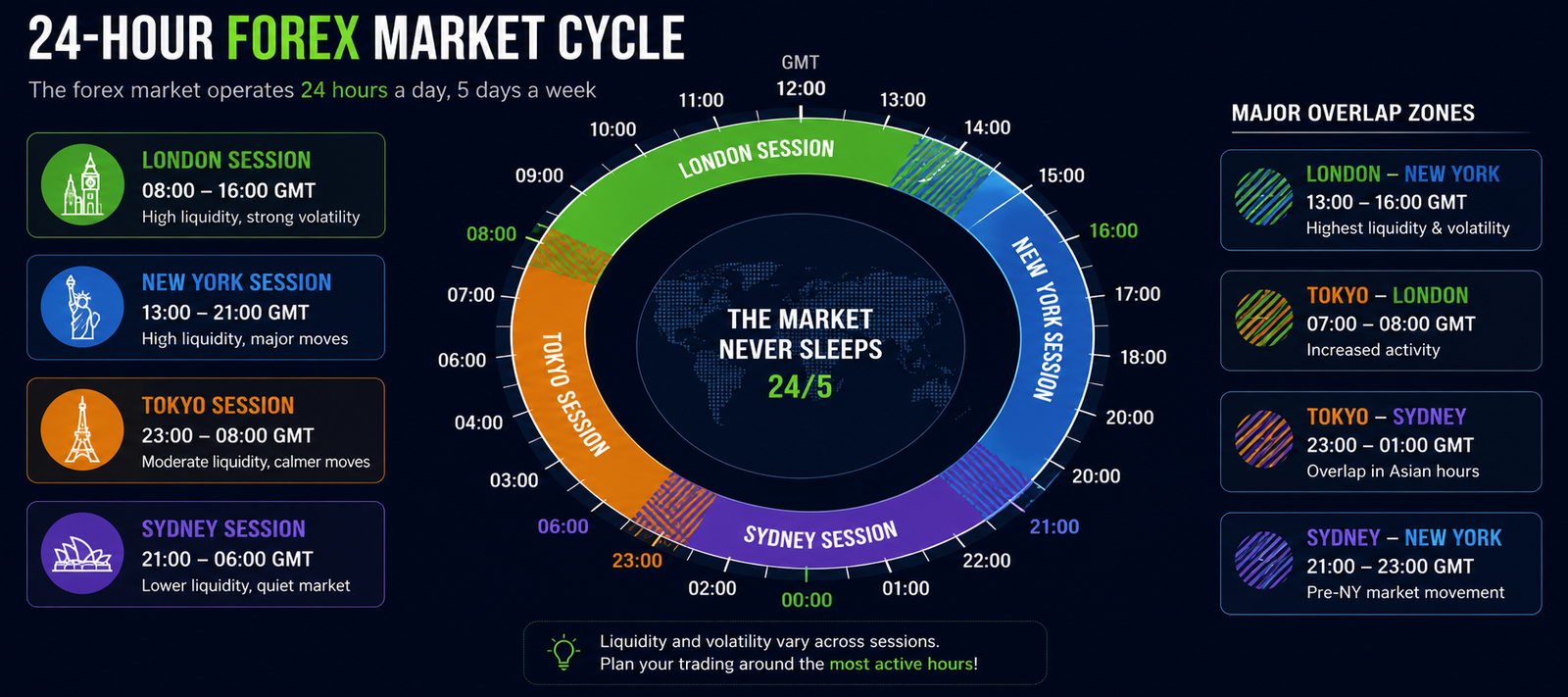
Fig 1.1 Forex session trading strategy world map
The Asian / Tokyo Session
The Asian session, anchored by Tokyo, runs from approximately 12:00 AM to 9:00 AM GMT. JPY pairs — USD/JPY, EUR/JPY, GBP/JPY — are the natural stars of this window, with the Bank of Japan, Japanese exporters, and major Asian banks active. Volatility is moderate and considerably lower than London and New York, so price often consolidates within a defined range, making it a favorite environment for range-bound strategies. The session high and low established during the Asian window frequently become reference points for the London open.
The London Session
The London session forex trading window is, by most measures, the most important trading session in the global currency market. London opens at 8:00 AM GMT and closes at 5:00 PM GMT. The UK houses the largest share of global forex turnover, and when London opens, liquidity floods the market, spreads compress sharply, and institutional order flow drives clear trends. Major pairs like EUR/USD, GBP/USD, and USD/CHF reach their highest daily liquidity here. The London open itself — the first 60 to 90 minutes — is one of the most actively traded windows in all of forex, frequently breaking price out of the Asian session range.
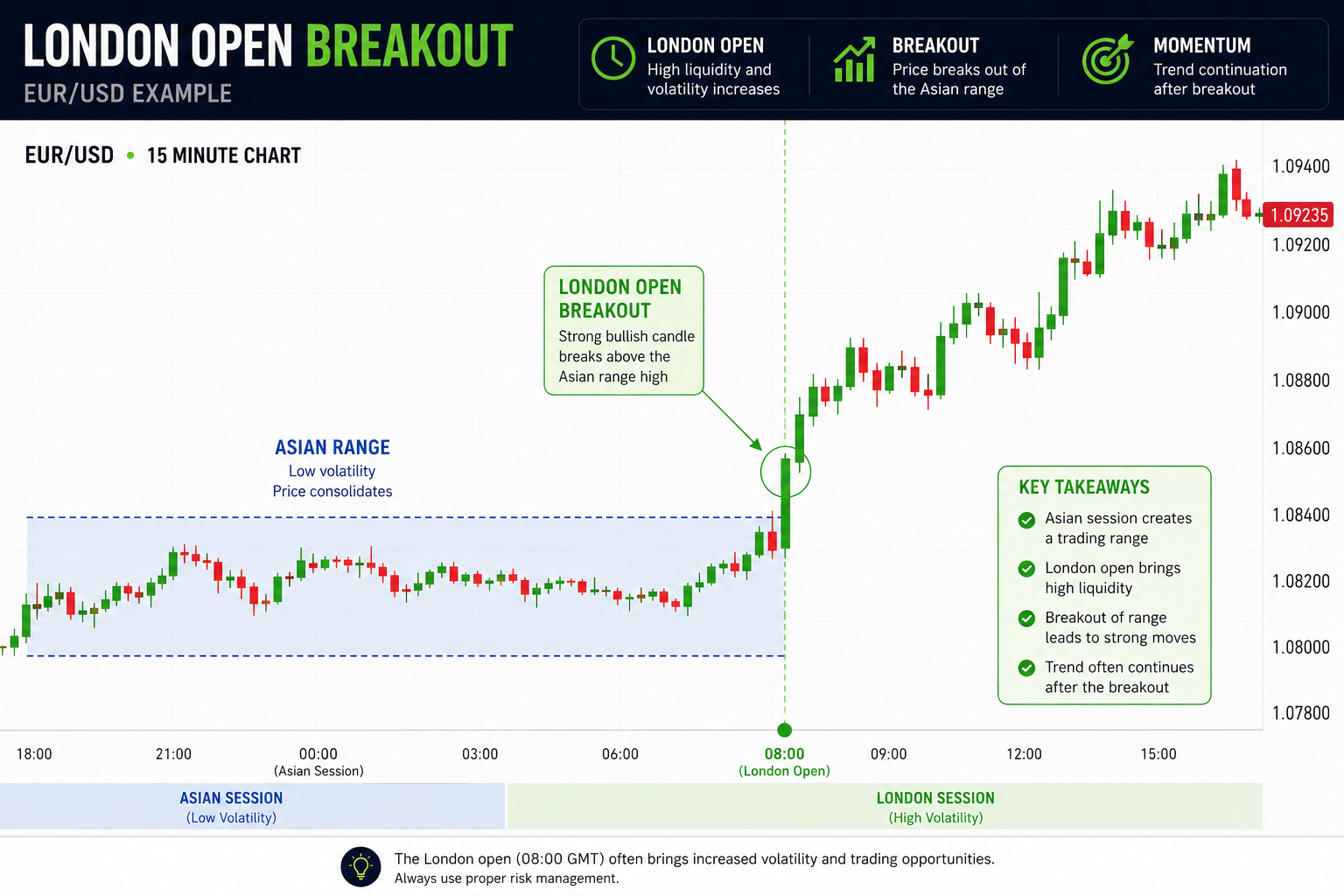
Fig 1.2 London session forex trading breakout on EUR/USD
The New York Session
The New York session forex window opens at 1:00 PM GMT and closes at 10:00 PM GMT. New York is the second-largest forex trading center, and when it opens it collides with the tail end of the London session to create the most liquid and volatile window of the week. The session is heavily news-driven — the majority of high-impact U.S. data such as Non-Farm Payrolls, CPI, and FOMC decisions hits during these hours. USD/CAD is especially active. As the New York afternoon progresses and London closes, volume diminishes significantly, making the late session one of the quietest periods of the trading day.
The London–New York Overlap
No discussion of a forex session trading strategy is complete without addressing the London–New York overlap, running from approximately 1:00 PM to 5:00 PM GMT. Both major financial centers are simultaneously open, institutional participation is at its highest, and the combination of European and North American liquidity creates the fastest, most decisive price moves of the entire trading day — the greatest potential for catching meaningful trends with tight spreads.
Forex Session Times: Reference Table
| Session | GMT Open | GMT Close | Key Pairs |
|---|---|---|---|
| Sydney | 10:00 PM | 7:00 AM | AUD/USD, NZD/USD |
| Tokyo / Asian | 12:00 AM | 9:00 AM | USD/JPY, EUR/JPY, GBP/JPY |
| London | 8:00 AM | 5:00 PM | EUR/USD, GBP/USD, USD/CHF |
| New York | 1:00 PM | 10:00 PM | USD/CAD, EUR/USD, GBP/USD |
| London–NY Overlap | 1:00 PM | 5:00 PM | All major pairs |
Note: Times shift by approximately one hour during daylight saving transitions in the US and Australia. Always confirm current session times with a live forex clock.
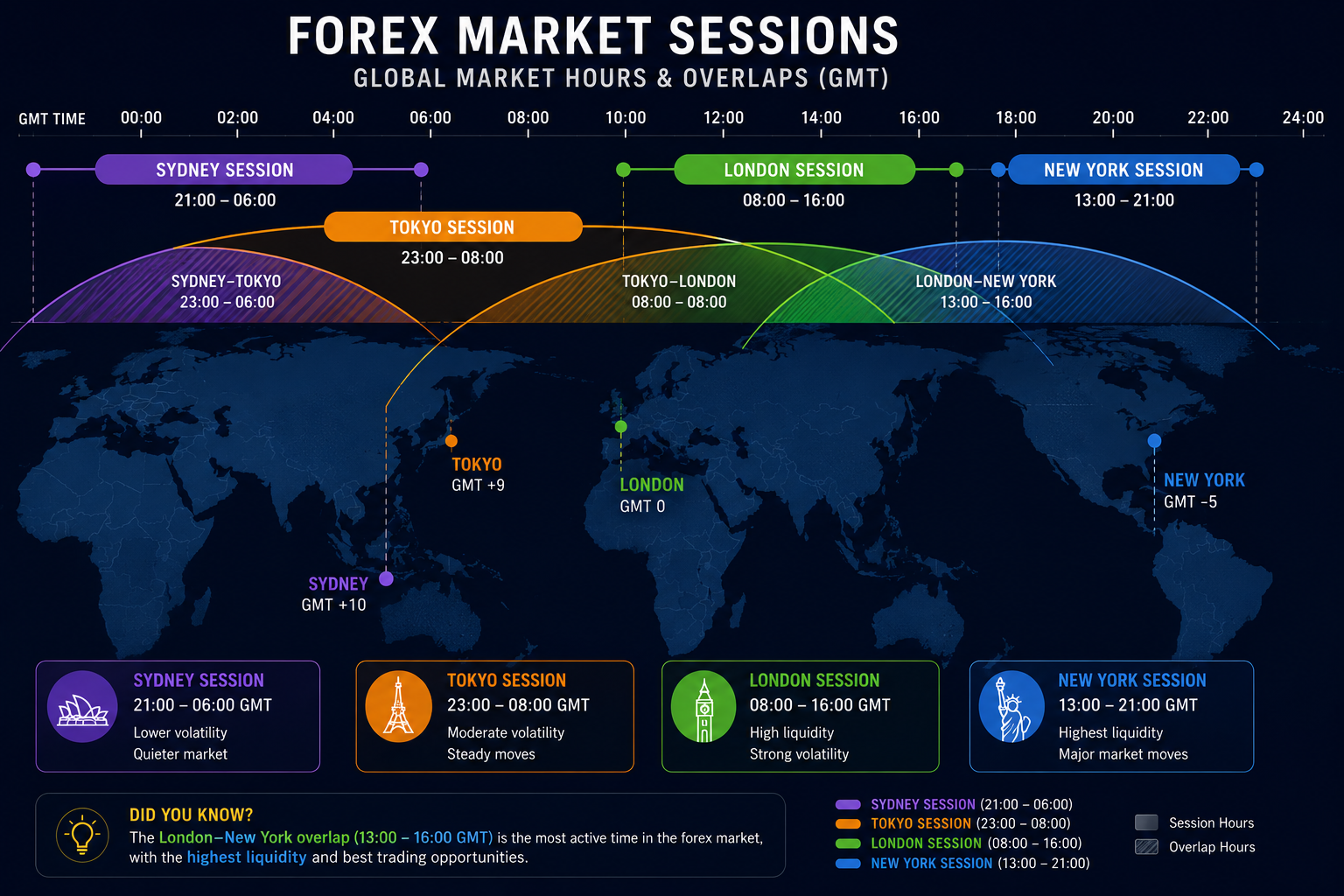
Fig 1.3 Forex session trading strategy clock
Building a Session-Based Forex Trading Strategy
The single most overlooked element of a forex session trading strategy is schedule alignment. The best session for you is the one you can show up for consistently, alert and prepared. Before the active session begins, mark the high and low of the preceding session — the Asian session range is particularly useful as a reference for the London open. These levels often act as magnets or barriers; smart money and algorithms frequently probe them, either sweeping them to trigger stops before reversing or breaking through them to signal a directional bias for the day.
The London open is one of the highest-probability windows for a directional breakout. A common approach is to wait for the first 15 to 30 minutes to pass, allowing early volatility to settle, then enter in the direction of the break once price closes convincingly beyond the Asian range. During the London–New York overlap, momentum-based pullback entries work well as price trends with conviction. Always manage around news: close or reduce positions 15 to 30 minutes before a major release and wait for the initial reaction and retest before re-engaging.
Common Mistakes Traders Make with Session Strategies
The most common error is trading during dead hours — the Sunday open, the post-New York late afternoon, and the deep Asian session in non-JPY pairs — where price action is thin, spreads widen, and false breaks are elevated. A second major mistake is ignoring news that falls within the session; a five-minute review of the day’s scheduled releases is non-negotiable. Overtrading the Asian range is another frequent pitfall: because the range seems predictable, newer traders chase every touch of the boundaries until the accumulated losses outweigh the small wins. The Asian session is best treated as a preparation window for marking levels and identifying bias.
What Top Traders and Research Say
Kathy Lien’s Day Trading and Swing Trading the Currency Market remains one of the most authoritative practical guides to session-based forex trading, covering how different pairs behave during specific windows and how economic releases are timed by session. The Bank for International Settlements (BIS) Triennial Central Bank Survey provides real-world data confirming that the United Kingdom — primarily London — accounts for the largest share of global daily FX turnover, consistently capturing over 38% of global volume, with the United States accounting for roughly 19%.
Academic research on intraday FX volatility consistently documents a session-driven volatility pattern — activity is highest at session opens, compresses during mid-session hours, and spikes again around major data releases. As veteran trader Kathy Lien has noted: “The best trades happen when session liquidity aligns with a clear catalyst.” Timing and liquidity work together, not in isolation.
Frequently Asked Questions
What is a forex session trading strategy?
A forex session trading strategy is a trading approach built around the four major market windows — Sydney, Tokyo/Asian, London, and New York — rather than trading at random hours. Because liquidity, volatility, and pair activity vary dramatically by session, aligning your trades with the right window dramatically improves the quality of your setups. The strategy involves identifying session highs and lows, targeting breakouts or momentum entries during peak liquidity windows, and avoiding low-volume dead hours.
When is the best time to trade forex?
Most traders point to the London session and the London–New York overlap (1:00 PM to 5:00 PM GMT) as the single best window in the trading week. This period combines the liquidity of both major financial centers, produces the tightest spreads on major pairs, and generates the most reliable directional moves. The London open itself is particularly powerful for breakout strategies.
Is the Asian session worth trading?
The Asian session is worth trading selectively, particularly for JPY pairs like USD/JPY and GBP/JPY, and for AUD/USD and NZD/USD during the earlier overlap. However, major EUR and GBP pairs tend to be sluggish and range-bound during Asian hours. Many experienced traders use the Asian session as a preparation window rather than a primary trading period.
What is the London–New York overlap?
The London–New York overlap refers to the window from approximately 1:00 PM to 5:00 PM GMT when both sessions are simultaneously open. This is the highest-volume, highest-liquidity, and generally highest-volatility period of the entire trading day. For traders who can access these hours, it represents the most favorable environment for momentum-based strategies, trend trading, and news-driven setups.
How do I use session highs and lows in my strategy?
Session highs and lows reflect the boundaries of price discovery during a specific window. The Asian session range is particularly useful as a reference for the London open. Institutional algorithms frequently target these levels at the London open, either sweeping them to trigger resting stop orders before reversing, or breaking through them cleanly to signal a directional bias. Marking these levels before the London session opens is a simple, high-value habit.
Should I trade the New York session if I focus on EUR/USD?
Yes — the New York session forex is highly relevant for EUR/USD, especially in the early New York hours during the overlap. However, as European traders exit and London closes around 5:00 PM GMT, EUR/USD activity diminishes and the pair can drift or produce choppy price action. Concentrate your activity in the London session and the overlap rather than the late New York window.
Final Thoughts
A forex session trading strategy is not a magic formula — it is a framework for working with the market’s natural rhythms instead of against them. The foreign exchange market rewards traders who understand that liquidity is not constant, that volatility has a schedule, and that the best setups cluster around specific, predictable windows each day. By studying the characteristics of the Sydney, Tokyo, London, and New York sessions, identifying the pairs most active in each window, and building a clear routine around your two or three best daily trading hours, you create a repeatable edge that compounds over time. The traders who build long-term success are not the ones who trade the most hours; they are the ones who trade the right hours with discipline and clarity. For more in-depth analysis, session breakdowns, and real-time market insights, visit forexmarkettrendss.com.