
What Is the Forex Stochastic Strategy?
A forex stochastic strategy is a momentum-based trading method built around the stochastic oscillator, a tool that measures where price closes relative to its recent high-low range. The reading swings between 0 and 100, helping you judge whether a currency pair is stretched too far in one direction.
When the oscillator climbs above 80, the market may be overbought and due for a pullback. When it drops below 20, the pair may be oversold and ready to bounce. Skilled traders treat these zones not as automatic signals but as alerts that demand confirmation. That discipline is what separates a reliable strategy from random guessing.
The real power lies in timing. Price tells you direction, but the stochastic indicator forex specialists rely on tells you the speed and exhaustion behind a move. Combine the two, and your entries become far sharper.
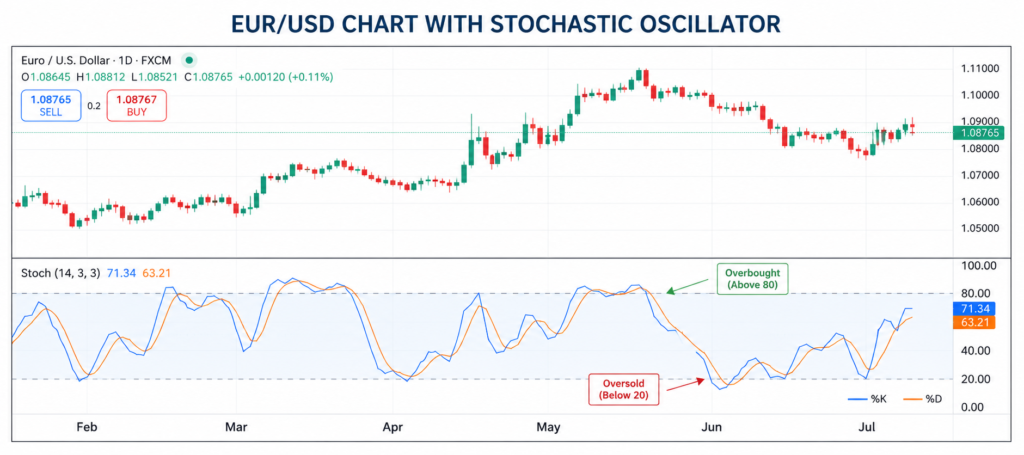
Fig 1.1 Forex stochastic strategy stochastic oscillator beneath a currency price chart
How the Stochastic Indicator Works
The oscillator plots two lines that do the heavy lifting. The %K line reacts quickly to price, while the %D line is a smoothed average of %K and acts as the signal line. A crossover between them often marks a shift in short-term momentum.
Most platforms such as MT4 and MT5 let you adjust three numbers. The standard configuration is 14, 3, 3, which suits swing traders well. Faster setups like 5, 3, 3 generate more signals and fit scalpers, though they also produce more noise. Choosing the right stochastic oscillator settings depends entirely on your timeframe and patience.
Reading the lines becomes intuitive with practice. A %K crossing above %D inside the oversold zone hints at a buying opportunity. The opposite cross inside the overbought zone warns of selling pressure. Always wait for the candle to close before acting, because intrabar signals frequently reverse.
A Step-by-Step Stochastic Trading System
A clear, repeatable process keeps emotion out of your decisions. Below is a framework many profitable traders follow on the 1-hour and 4-hour charts, where signals carry more weight than on lower timeframes.
First, identify the dominant trend using a 50-period or 200-period moving average. Trading in the direction of the trend dramatically improves your win rate. Next, wait for the oscillator to reach an extreme zone that aligns with a trend pullback rather than a trend reversal.
The entry trigger comes when the %K and %D lines cross while leaving the extreme zone. For confirmation, look for a supportive candlestick pattern such as a pin bar or engulfing candle. Finally, place a stop loss beyond the recent swing point and target a reward at least twice the size of your risk.
Core rules to remember:
- Trade pullbacks in the trend direction, not blind reversals against strong momentum.
- Demand a clean line crossover plus a price-action confirmation before you click.
- Anchor every trade to a defined stop loss, never a mental one.
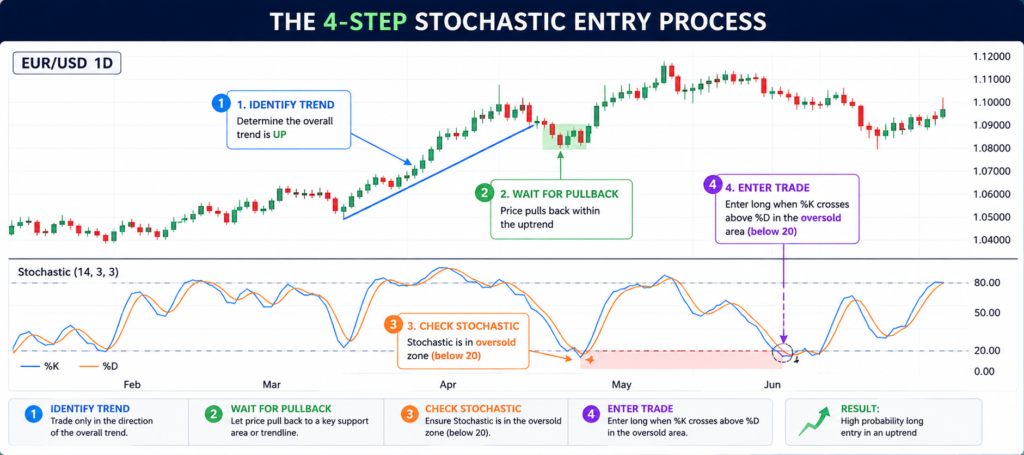
Fig 1.2 Step-by-step stochastic indicator forex trading system from trend check to entry and stop loss
Best Settings by Trading Style
Different traders need different sensitivity. The table below maps common configurations to their ideal use, helping you match the tool to your routine.
| Trading Style | Stochastic Settings | Best Timeframe | Signal Frequency |
|---|---|---|---|
| Scalping | 5, 3, 3 | 1m – 5m | Very high |
| Day trading | 9, 3, 3 | 15m – 1h | High |
| Swing trading | 14, 3, 3 | 4h – Daily | Moderate |
| Position trading | 21, 5, 5 | Daily – Weekly | Low |
There is no single “best” number. Faster settings catch more moves but whipsaw often, while slower settings filter noise yet arrive later. Test a configuration on a demo account for several weeks before committing real capital.
Trading Stochastic Divergence
Divergence is where the strategy earns its reputation. It occurs when price prints a new high or low, but the oscillator fails to follow. This mismatch reveals weakening momentum and frequently precedes a turn.
Regular divergence signals a potential reversal, making it valuable near the end of an extended trend. Hidden divergence, on the other hand, signals trend continuation and offers excellent pullback entries. Learning to spot both gives you an edge most beginners overlook.
Patience matters here. Divergence can persist for several candles before price reacts, so combine it with a structure break or a line crossover before entering. Used carefully, divergence transforms the oscillator from a simple overbought-oversold tool into a genuine forecasting aid.
Combining Stochastic with Other Tools
The oscillator performs best as part of a small, complementary toolkit rather than in isolation. Pairing it with a moving average confirms trend direction and keeps you on the right side of the market. Adding the RSI offers a second momentum opinion, reducing false alarms.
Support and resistance levels add a final layer of context. A buy signal that lines up with a strong support zone carries far more conviction than one floating in open space. This confluence approach is the backbone of consistent, professional forex trading.
Common Mistakes to Avoid
Many traders shorten their learning curve simply by sidestepping predictable errors. The biggest is selling every time the oscillator hits overbought, even during a powerful uptrend that keeps climbing for days. Strong trends can stay stretched far longer than expected.
Overtrading is another trap. Lower timeframes flash dozens of signals daily, and chasing each one drains your account through spreads and poor entries. Quality always beats quantity. Finally, never abandon your stop loss after a string of wins, because one undisciplined trade can erase weeks of progress.
Frequently Asked Questions
1. What is the best stochastic setting for forex trading? The most popular configuration is 14, 3, 3, which balances signal speed with reliability on the 4-hour and daily charts. Scalpers often prefer a faster 5, 3, 3 setup for quicker reactions on the 1-minute and 5-minute charts. There is no universally perfect number, so test settings on a demo account first. The right choice always depends on your timeframe, trading style, and tolerance for false signals.
2. Is the forex stochastic strategy profitable? A forex stochastic strategy can be profitable when combined with trend analysis, price-action confirmation, and strict risk management. On its own, the oscillator produces too many false signals to trade reliably. Most consistent traders use it as a timing tool rather than a complete system. Profitability ultimately comes from discipline, position sizing, and a positive risk-to-reward ratio.
3. How is the stochastic indicator forex different from RSI? Both are momentum oscillators, but they measure different things. The stochastic indicator forex traders use compares the closing price to the recent high-low range, while RSI measures the speed and magnitude of price changes. Stochastic reacts faster and suits range-bound markets, whereas RSI is smoother and better for confirming trends. Many traders run both together for a stronger, layered read on momentum.
4. What do overbought and oversold mean on the stochastic oscillator? Overbought refers to a reading above 80, suggesting price has risen quickly and may pause or pull back. Oversold refers to a reading below 20, hinting that selling may be exhausted. These zones are warnings, not automatic buy or sell triggers. In strong trends, price can remain overbought or oversold for extended periods, so always wait for confirmation.
5. Which currency pairs work best with this strategy? Liquid major pairs such as EUR/USD, GBP/USD, and USD/JPY respond well because they trend cleanly and have tight spreads. These pairs reduce the slippage and noise that distort oscillator signals. Exotic pairs are riskier due to wider spreads and erratic moves. Beginners should master one or two majors before expanding their watchlist.
6. Can beginners use the stochastic oscillator successfully? Yes, the oscillator is beginner-friendly because its overbought and oversold zones are easy to read. New traders should start on higher timeframes, where signals are cleaner and decisions are less rushed. Pairing it with a moving average simplifies the learning curve. With consistent demo practice and proper stochastic oscillator settings, beginners can build confidence quickly.
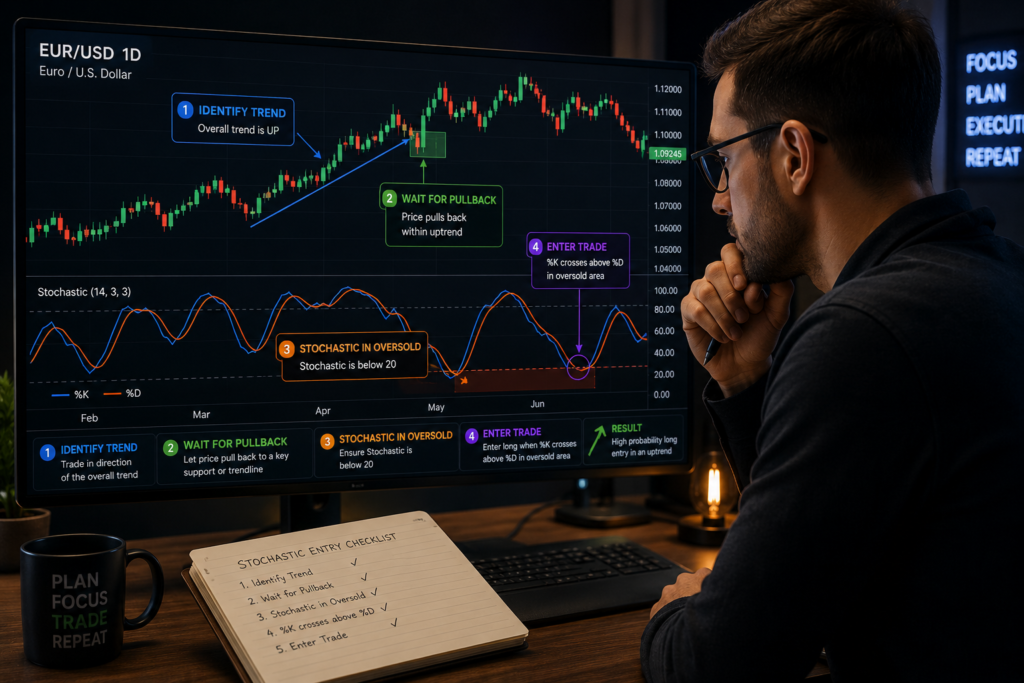
Fig 1.3 Trader applying a forex stochastic strategy with disciplined risk management
Final Thoughts
The forex stochastic strategy remains one of the most accessible yet powerful approaches for traders who want sharper timing on their entries and exits. By reading momentum through the %K and %D lines, respecting the overbought and oversold zones, and confirming every signal with trend direction and price action, you transform a simple oscillator into a dependable decision-making tool. The strategy rewards patience, structure, and the willingness to wait for high-probability setups rather than chasing every flicker on the chart. Pairing the stochastic indicator forex professionals favor with disciplined risk management — a defined stop loss, a healthy reward-to-risk ratio, and sensible position sizing — is what turns occasional wins into lasting consistency. Treat your demo account as a training ground, refine your stochastic oscillator settings to match your style, and only scale up once your results prove repeatable. Master these fundamentals, and you will trade with greater clarity, confidence, and control in any market condition.
Ready to put this strategy to work? Explore more practical trading guides and live market insights at forexmarkettrendss.com and start trading with confidence today.