
Introduction
The forex market can feel like an intimidating wall of jargon, blinking charts, and confusing acronyms—but it does not have to be. This forex trading for dummies guide breaks the whole subject down into plain English, so you can understand how currency trading works without a finance degree. Forex is simply the act of exchanging one currency for another to profit from changing prices, and millions of ordinary people trade it every day. We will walk through the essentials step by step, point you toward the best forex trading books for beginners, and share simple day trading strategies for beginners that keep things manageable. No hype, no overwhelming detail—just a clear, friendly foundation that helps you start smart, protect your money, and build real skill at your own pace.
What Is Forex Trading, in Plain English?
Forex short for foreign exchange is the global marketplace where currencies are bought and sold. When you trade forex, you are betting that one currency will rise or fall against another. Prices are always quoted in pairs, like EUR/USD, because you are always exchanging one for the other.
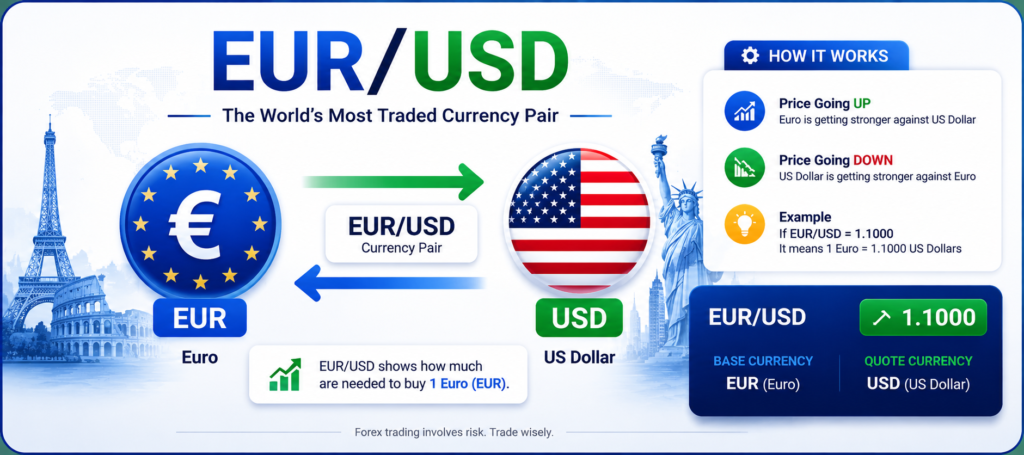
If you think the euro will strengthen against the dollar, you buy EUR/USD; if you think it will weaken, you sell. Profit comes from the difference between your entry and exit price, measured in tiny units called pips. It is the same idea as exchanging money for a holiday, just done electronically to capture price moves rather than to spend abroad.
The Building Blocks You Need to Know
A few simple concepts unlock the whole market. A pip is the smallest standard price move, and your profit or loss is counted in pips. A lot is the size of your trade, with smaller “micro” lots letting beginners trade tiny amounts safely. Leverage lets you control a larger position with a small deposit, which magnifies both gains and losses—so it deserves respect.
Understanding these basics removes most of the fear. Currency pairs, spreads (the small cost to enter a trade), and order types sound technical, but each is straightforward once explained. Spend your first days learning this vocabulary, and the charts suddenly start making sense.
Best Forex Trading Books for Beginners
Books remain the cheapest, most reliable way to learn, and the best forex trading books for beginners explain everything clearly. Currency Trading for Dummies by Brian Dolan is a natural fit for this guide, covering market mechanics in friendly language. Alexander Elder’s Trading for a Living introduces the vital balance of mindset, method, and money management.
For reading the charts themselves, Steve Nison’s Japanese Candlestick Charting Techniques teaches the visual language of price without overwhelming you. Reading one of these slowly, while practicing on a demo account, turns abstract theory into practical understanding. A small personal library is one of the smartest early investments any new trader can make.
How to Start Forex Trading Step by Step
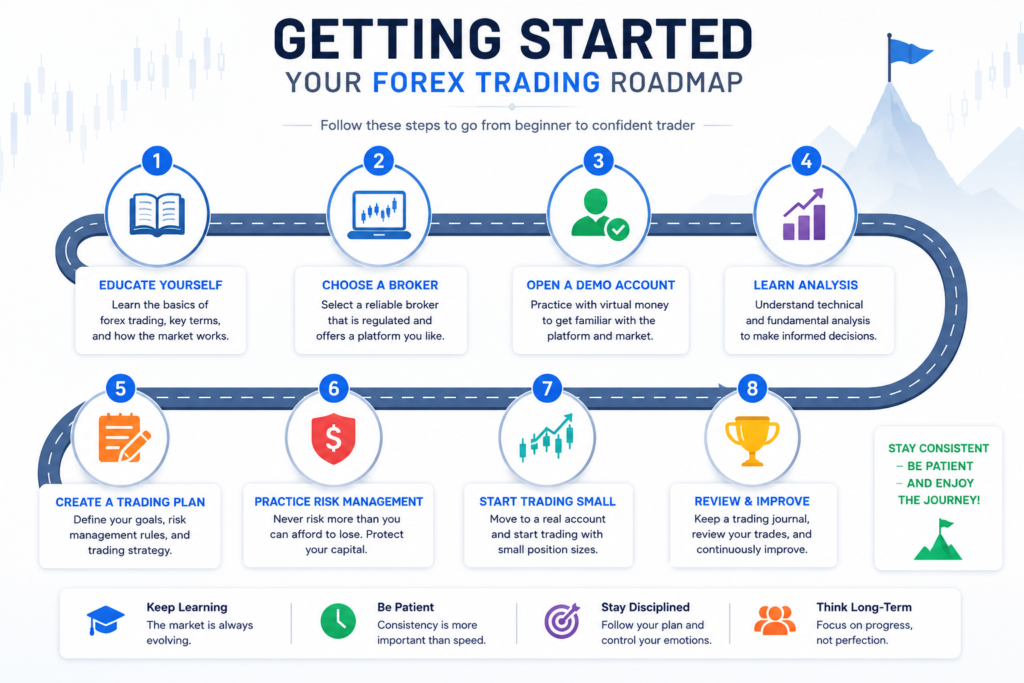
Getting started is simpler than it looks when you follow a clear order. Rushing into live trades with real money is the classic beginner mistake, so build your foundation first. Begin by learning the basics through reading and free tutorials. Next, choose a reputable, regulated broker with low fees and a beginner-friendly platform. Then open a demo account and practice with virtual money until you understand how trades work. Only once you feel comfortable should you fund a small live account and trade tiny positions. This patient sequence protects your money while your confidence and skill grow together.
Simple Day Trading Strategies for Beginners
You do not need a complicated system to start. The best day trading strategies for beginners are simple, rule-based, and easy to follow.
Trend trading means identifying the market’s direction and trading with it, buying dips in an uptrend or selling rallies in a downtrend. Support and resistance trading involves watching key price levels where the market has reversed before and trading the bounce. Breakout trading captures momentum when price pushes through a clear level on strong activity. Each approach gives you a defined entry, a logical stop-loss, and a clear reason to act—exactly what a beginner needs to stay disciplined.
| Strategy | What You Do | Why It Works for Beginners |
| Trend Trading | Trade in the market’s direction | Simple, high-probability, easy to spot |
| Support & Resistance | Trade bounces off key levels | Clear entries and stop placement |
| Breakout Trading | Enter on a strong level break | Captures momentum with defined risk |
The Mindset That Keeps You in the Game
Forex tests your emotions as much as your knowledge. Fear and greed push beginners to cut winners early and hold losers too long. Mark Douglas’s Trading in the Zone teaches the antidote: think in probabilities, accept that any trade can lose, and stay calm and consistent.
Research supports this caution. Barber and Odean’s famous study “Trading Is Hazardous to Your Wealth” found that the most active, overconfident traders earned the worst returns. The lesson for a beginner is liberating—you do not need to trade constantly. Patience, discipline, and a handful of good trades beat frantic activity every time.
Risk Management Made Simple
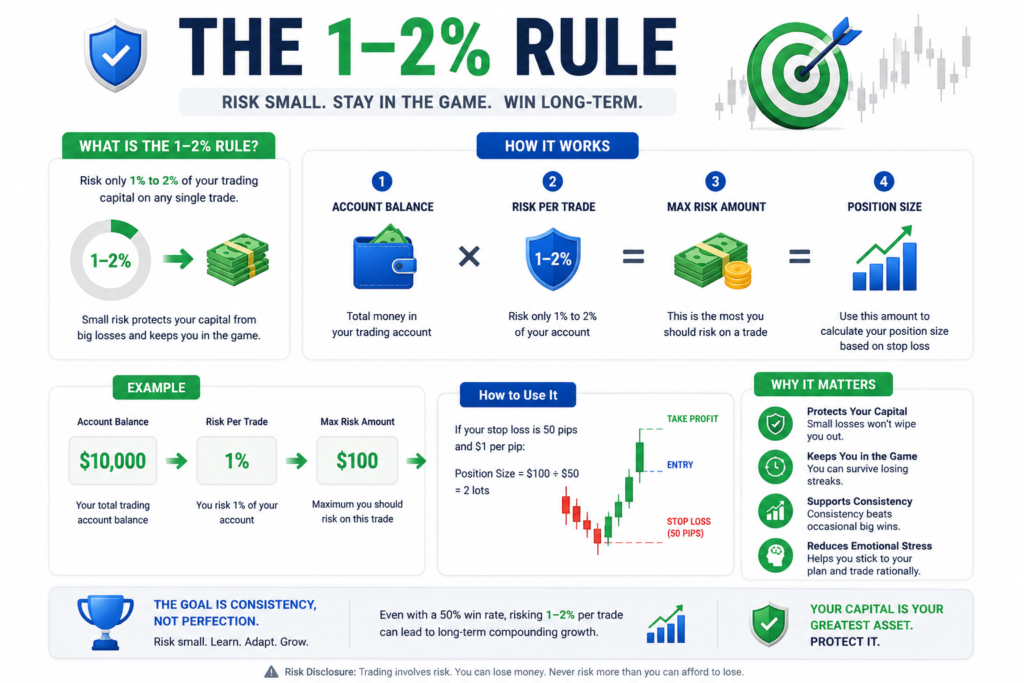
This is the part most beginners ignore and later regret. The golden rule is simple: never risk more than one to two percent of your account on a single trade. That way, even a string of losses cannot wipe you out, and you live to trade another day.
Always use a stop-loss—an automatic exit that caps your loss—on every trade. Decide before entering exactly where you will exit if wrong, and size your position so the loss stays small. As Warren Buffett wisely said: “Rule No. 1: never lose money.” For a beginner, protecting your capital matters far more than chasing big wins.
Frequently Asked Questions
Is forex trading hard for beginners?
Forex feels hard at first because of the jargon, but the core idea is simple once explained. This forex trading for dummies approach breaks it into small steps: learn the basics, practice on a demo account, and start with tiny positions. The real challenge is emotional discipline, not complexity. With patience, the right forex trading books for beginners, and strict risk management, most people can learn the fundamentals steadily and safely over time.
How much money do I need to start forex trading?
You can start learning for free on a demo account, which every beginner should do first. For live trading, some brokers let you open micro accounts with as little as fifty to a hundred dollars, though more breathing room helps. The smarter question is how little you can risk while learning, not how much to deploy. Start small, protect your capital, and scale only once you trade consistently and confidently.
What are the best forex trading books for beginners?
The best forex trading books for beginners are Currency Trading for Dummies, Trading for a Living, and Japanese Candlestick Charting Techniques. They explain market mechanics, risk, and chart reading in clear, friendly language. Read one slowly while practicing on a demo account so theory becomes practical skill. A small, focused library teaches you far more safely and cheaply than learning expensive lessons through trial and error with real money.
What are the easiest day trading strategies for beginners?
The easiest day trading strategies for beginners are trend trading, support and resistance trading, and breakout trading. Each is simple, rule-based, and gives you a clear entry, a logical stop-loss, and an obvious reason to act. Master one fully on a demo account before adding another. Keeping your method simple early on builds discipline and confidence, which matter far more than any complicated system when you are just starting out.
Can I learn forex trading on my own?
Yes, many successful traders are self-taught. The key is following a structured path: read quality beginner books, watch reputable tutorials, and practice extensively on a demo account. Keep a trading journal to learn from every decision, and treat risk management as your top priority. Self-study works best when paired with patience and discipline, so go slowly, absorb the basics, and let your skills build naturally over weeks and months rather than days.
Is forex trading profitable for beginners?
Forex can be profitable, but most beginners lose money early by skipping preparation and over-risking. Profit comes from a tested approach, strict risk control, and emotional discipline—not from any magic shortcut. Treat your first months as a learning investment, not an income source. Protect your capital, keep losses small with stop-losses, and let consistency build over time. The traders who survive the beginning are the ones who respect risk before chasing reward.
Final Thoughts
Forex does not have to be intimidating, and this forex trading for dummies guide proves the basics are well within anyone’s reach. You now understand what forex is, the simple building blocks of pips, lots, and leverage, and a clear step-by-step path to start safely. Lean on the best forex trading books for beginners to deepen your knowledge, practice simple day trading strategies for beginners on a demo account, and treat risk management as your unbreakable first rule. The market rewards patience and discipline far more than excitement, so go slowly, protect your capital, and let your skills compound. Remember Warren Buffett’s advice never to lose money, trade calmly, and your forex journey can become a genuine, rewarding skill rather than a costly gamble.