
Introduction
Learning how to get a funded trading account is one of the fastest ways for a skilled trader to scale without risking a large slice of personal savings. Proprietary trading firms now hand qualified traders five, six, and even seven-figure accounts in exchange for a share of the profits, which has reshaped how serious retail traders approach the market. The catch is that every firm sets its own rules, evaluation models, and payout structures, and the wrong choice can cost you time and money. Some traders prefer a structured challenge, while others hunt for a funded trading account no challenge route or prop firm instant funding. In this guide you will learn the exact steps to secure funding, the difference between each funding model, the rules that trip people up, realistic costs, and how to protect the account once you earn it.
What a Funded Trading Account Really Is
A funded trading account lets you trade a proprietary firm’s capital instead of your own. You prove your skill, the firm provides the money, and you keep the majority of the profits. This arrangement solves the single biggest constraint most talented traders face: a small balance that makes meaningful income impossible no matter how good the strategy.
Understanding how to get a funded trading account starts with grasping the firm’s incentive. Prop firms profit by partnering with consistent, risk-aware traders and by collecting evaluation fees from those who fail. The best firms genuinely want you to succeed, because a profitable trader who passes and keeps trading is a long-term revenue source. That alignment is why rules around drawdown and consistency exist — they filter for traders who can protect capital, not just chase home runs.
Fig 1.1How to get a funded trading account
The Main Routes to Get Funded
There is no single path to funding, and choosing the right model matters as much as your trading skill. The most common route is the two-step challenge, where you hit a profit target in phase one, a smaller target in phase two, and respect drawdown limits throughout. It is the cheapest entry but demands patience.
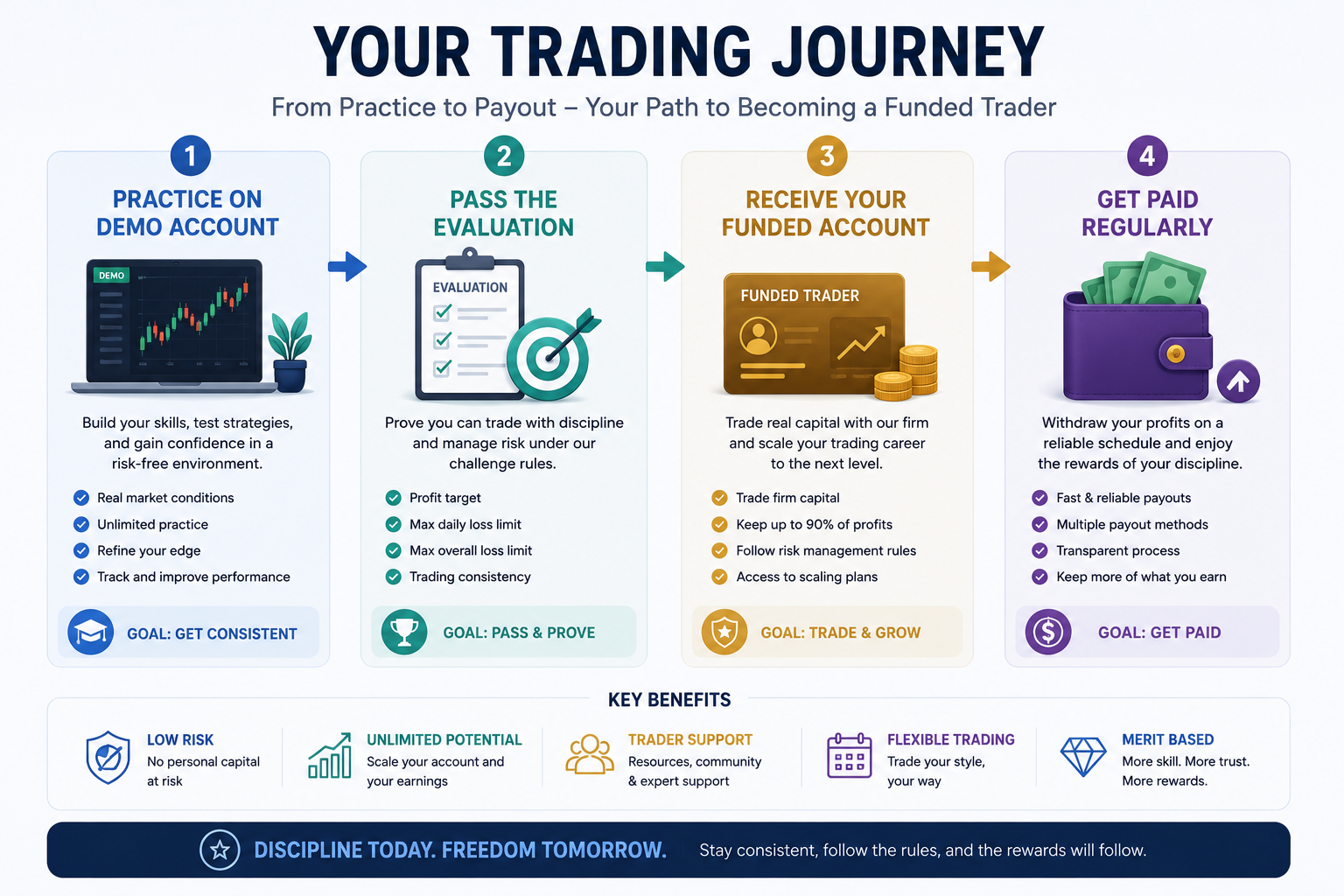
Other traders prefer faster options. A one-step challenge compresses the process into a single target, trading a higher fee for quicker access. A funded trading account no challenge model skips evaluation entirely and hands you a live account immediately, usually at a higher upfront cost and with tighter early rules. Prop firm instant funding works the same way, prioritising speed for traders confident in their edge. Each route balances cost, speed, and rule strictness differently, so match the model to your experience and bankroll.
| Funding Route | Speed | Typical Cost | Best For |
|---|---|---|---|
| Two-step challenge | Slower | Lowest | Disciplined, patient traders |
| One-step challenge | Medium | Moderate | Confident intermediates |
| Instant funding / no challenge | Immediate | Highest | Proven traders wanting speed |
How to Get a Funded Trading Account Step by Step
The process is more predictable than most beginners expect once you break it into stages. Following a clear sequence keeps you from wasting fees on firms or rules that do not suit your style.
First, define your trading style and choose a firm whose rules fit it — a swing trader needs weekend holding allowed, while a news trader needs no news-trading restriction. Second, pick the funding model that matches your bankroll and confidence, whether that is a low-cost two-step challenge or prop firm instant funding. Third, select an account size you can manage responsibly; a larger account means a larger drawdown buffer in absolute terms but also a larger evaluation fee. Fourth, trade the evaluation exactly as you would a live account, prioritising drawdown protection over hitting the target quickly. Finally, pass the verification and KYC steps, receive your funded account, and trade consistently to reach your first payout. This disciplined sequence is the real answer to how to get a funded trading account without burning capital on avoidable mistakes.
Reading the Rules Before You Pay
The fastest way to lose a funded account is to ignore the fine print. Every firm publishes a rulebook, and the details decide whether your strategy can survive there at all. Two numbers matter most: the maximum drawdown and the daily drawdown. The maximum drawdown caps your total loss from the starting balance or trailing high, while the daily drawdown caps how much you can lose in a single day.
Beyond drawdown, watch for consistency rules that prevent one giant trade from making up most of your profit, minimum trading-day requirements, and restrictions on news trading or weekend holds. A funded trading account no challenge often carries the strictest early-stage rules to offset the firm’s upfront risk. Reading these terms before paying is non-negotiable, because a strategy that works beautifully on your own chart can breach a rule you never knew existed.
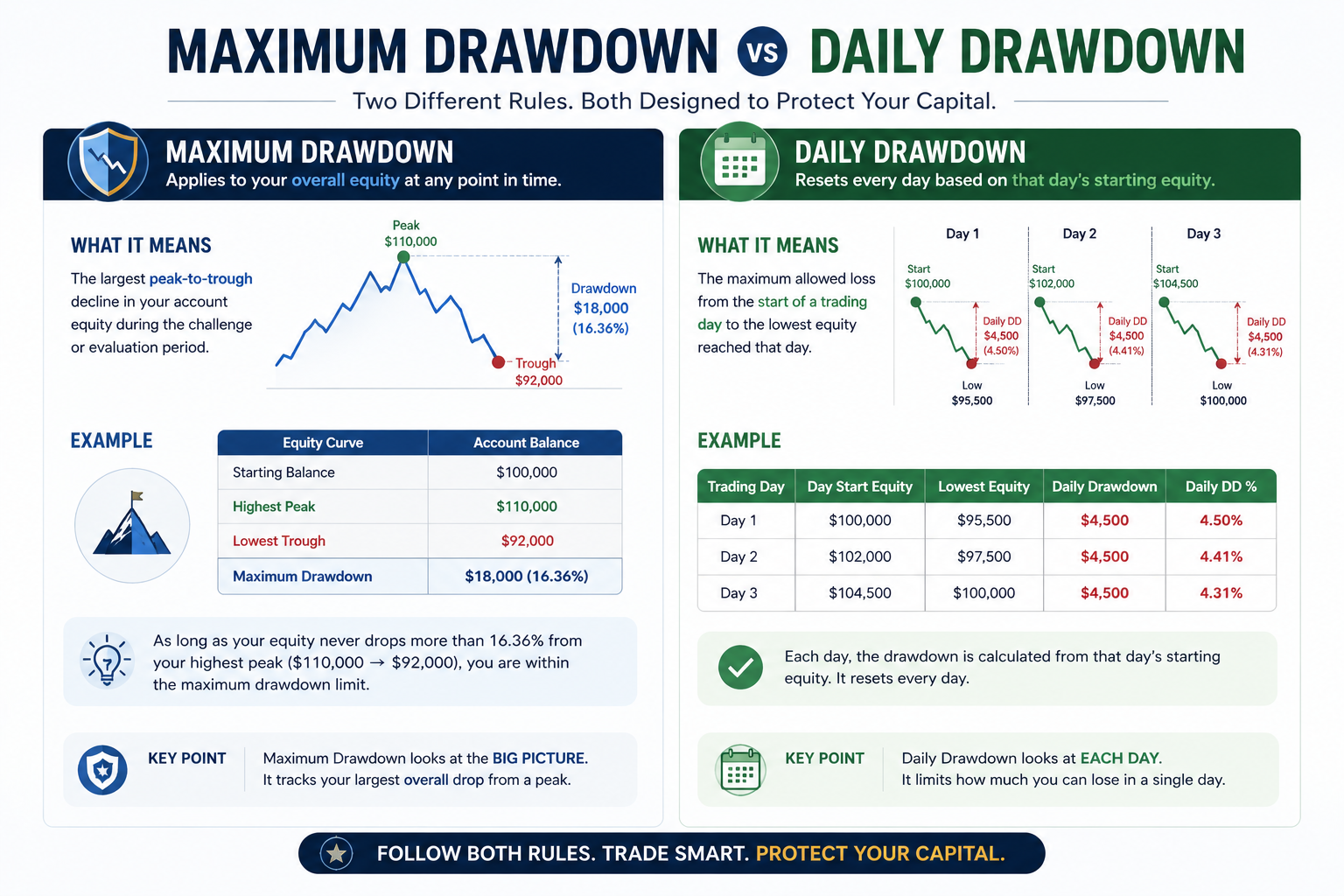
Fig 1.2 Funded trading account rules comparing
What Top Traders and Research Say
Sound risk management matters more than any clever entry, and the literature agrees. In Trading in the Zone, Mark Douglas argues that consistent traders think in probabilities and protect capital relentlessly — precisely the mindset prop firm drawdown rules reward. Jack Schwager’s Market Wizards reinforces the same theme through dozens of interviews where survival, not prediction, defined the greats.
Academic work keeps expectations grounded. The widely cited study by Barber and Odean, “Trading Is Hazardous to Your Wealth,” found that the most active retail traders underperformed largely because of overtrading and costs. For anyone learning how to get a funded trading account, the lesson is direct: the evaluation rewards patience, not frantic activity. As Warren Buffett put it, “The first rule is never lose money.” That single principle, applied to drawdown limits, is what separates traders who keep their funded accounts from those who breach them in the first week.
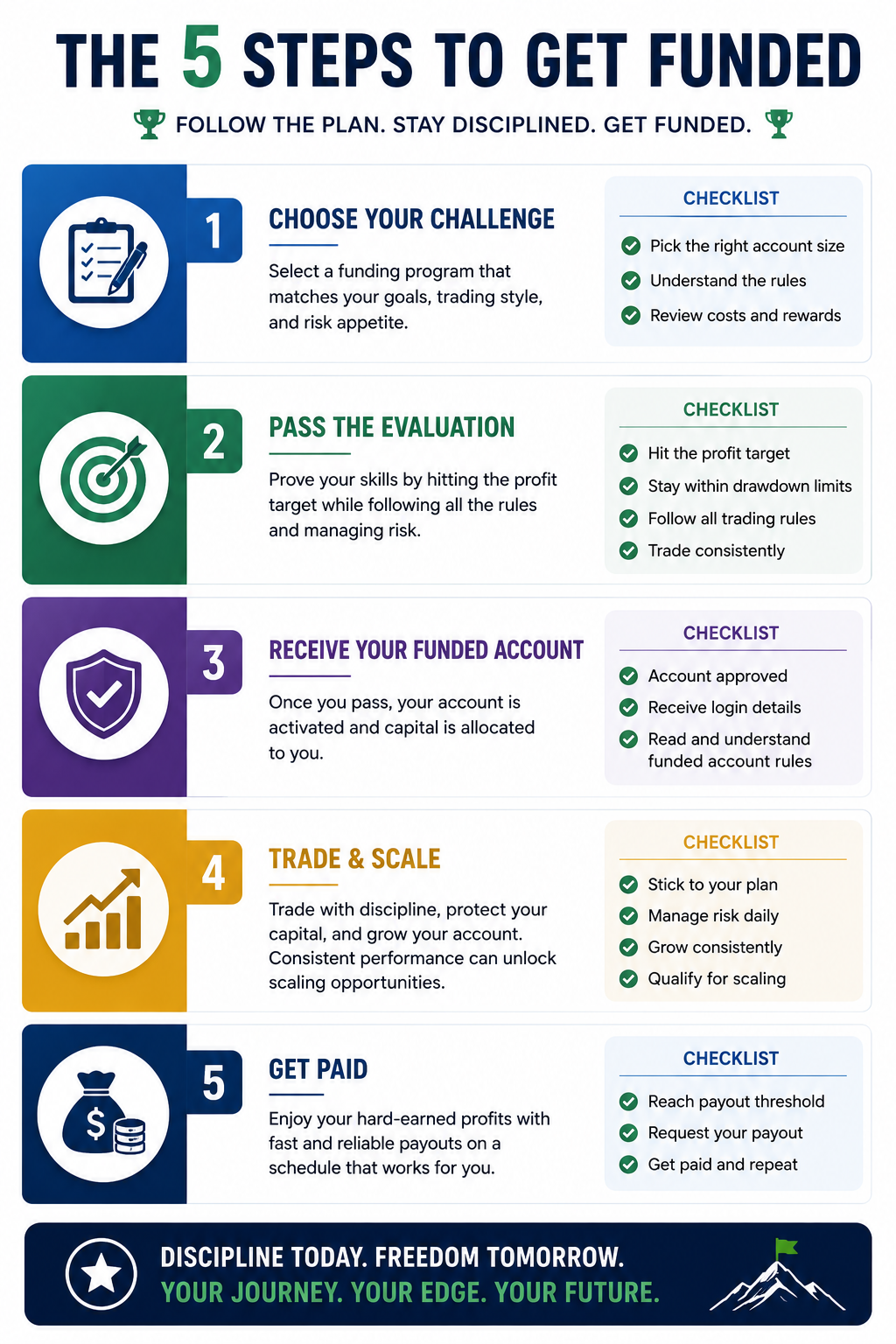
Fig 1.3 How to get a funded trading account
Common Mistakes That Cost Traders Funding
Even skilled traders fail evaluations for avoidable reasons. The most frequent mistake is oversizing positions to hit the profit target quickly, which inflates drawdown and breaches the account on a single bad day. Treating the evaluation as a sprint rather than a controlled process is the root cause.
A second mistake is choosing a firm without checking whether its rules suit your strategy. A scalper trapped under a consistency rule, or a swing trader who cannot hold over the weekend, fights the rulebook instead of the market. Many traders also ignore payout-proof and reputation before paying, then discover withdrawal problems later. Finally, some chase prop firm instant funding without the discipline to handle a live account immediately, losing the higher fee in days. Selecting a reputable firm and trading the account conservatively from day one avoids nearly all of these traps.
Protecting the Account After You Pass
Earning funding is only half the journey; keeping it is where real income comes from. Once funded, treat the firm’s capital as more precious than your own, because losing it means starting over. Define a daily loss limit well inside the firm’s drawdown rule and stop trading the moment you hit it.
A scaling plan turns a single funded account into a growing income stream. Many firms increase your capital as you stay consistent, so steady, modest returns compound into far larger accounts than aggressive swings ever could. Withdraw profits on schedule to lock in real money, keep detailed records for KYC and tax, and never let a good run tempt you into abandoning the risk discipline that earned the account. That patience is exactly what understanding how to get a funded trading account is ultimately about.
Frequently Asked Questions
How do I get a funded trading account as a beginner?
The clearest path to how to get a funded trading account as a beginner is to first build a consistent, tested strategy on a demo account, then choose a reputable firm with rules that match your style. Start with a low-cost two-step challenge and a modest account size so a mistake does not cost much. Trade the evaluation conservatively, prioritising drawdown protection over speed. Beginners who treat the challenge like a real account, not a lottery ticket, pass far more often.
Can I get a funded trading account with no challenge?
Yes, a funded trading account no challenge route exists, where the firm hands you a live account immediately without an evaluation phase. These accounts cost more upfront and usually carry stricter early-stage rules to offset the firm’s risk. They suit proven traders who already trade consistently and want to skip the multi-week evaluation. Beginners are usually better served by a cheaper challenge first, since paying a high instant-funding fee before you are consistent simply transfers the risk to you.
How does prop firm instant funding work?
Prop firm instant funding gives you a live trading account the moment you pay, with no profit-target evaluation to clear first. You begin trading the firm’s capital straight away, but you must respect drawdown and consistency rules from the first trade. The upfront fee is higher than a standard challenge because the firm takes on immediate risk. Instant funding rewards traders with a proven edge and strict discipline, since there is no practice phase to ease into the live environment.
How much does it cost to get funded?
Costs vary widely depending on the funding model and account size. A small two-step challenge can start cheaply, while larger accounts and prop firm instant funding cost considerably more. Many firms refund the evaluation fee with your first payout, effectively making a passed challenge free. When learning how to get a funded trading account, weigh the fee against the account size, profit split, and the firm’s payout reputation rather than chasing the lowest price alone, since a cheap account with poor terms is no bargain.
What happens if I break a funded account rule?
Breaching a rule such as the maximum or daily drawdown usually ends the account immediately, and you must purchase a new evaluation to try again. This is why reading the rulebook before paying is essential. Some firms offer a paid reset, while others require a fresh challenge. The safest approach is to set personal limits well inside the firm’s thresholds so normal market noise never pushes you into a breach. Protecting the account always matters more than any single trade.
Are funded trading accounts worth it?
For a consistent, disciplined trader, a funded account is often well worth it because it removes the capital ceiling that limits income. Instead of risking large personal savings, you trade the firm’s money and keep most of the profit. The value depends entirely on your edge — funding amplifies a profitable strategy and a losing one alike. Anyone researching how to get a funded trading account should first prove consistency on demo, because funding rewards skill rather than creating it.
Final Thoughts
Understanding how to get a funded trading account comes down to matching the right firm and funding model to a strategy you have already proven, then protecting the account with relentless discipline. The path itself is straightforward: define your style, choose between a two-step challenge, a one-step challenge, a funded trading account no challenge, or prop firm instant funding, pick a manageable account size, and trade the evaluation exactly as you would live capital. The traders who succeed are rarely the ones with the flashiest entries; they are the ones who respect drawdown limits, read the rulebook before paying, and treat the firm’s money as more precious than their own. Pass the challenge with patience, scale steadily rather than chasing oversized wins, and withdraw profits on schedule. Done this way, a funded account transforms a small-balance trader into someone managing serious capital, turning a tested edge into real, repeatable income.