
Most proprietary trading firms make you earn access to their capital through a profit-target challenge, but a smaller group offers a fundamentally different bargain, and Lux Trading Firm has long been associated with that alternative path. This lux trading firm review examines in detail how its model works, how its scaling structure rewards long-term consistency, and how the idea of a no evaluation prop firm genuinely compares with the more familiar prop firm challenge route that dominates the industry. The aim throughout is to help you understand the real trade-offs rather than the marketing, because removing the challenge does not remove risk or rules, it simply relocates them into the funded phase. Knowing exactly where that risk sits is the key to deciding whether this firm fits your goals, your capital, and your trading style.

Fig 1.1 Lux trading firm review graphic
What Is Lux Trading Firm?
Lux Trading Firm is a proprietary trading firm that provides traders with access to simulated capital and a share of the profits they generate, positioned with an emphasis on longer-term traders and a structured scaling path. Its identity in the market has been tied to professional, growth-oriented funding rather than the fast, gamified challenges that characterise much of the retail prop space. The proposition appeals to traders who think in terms of building a track record and growing capital steadily over months, rather than racing to pass a quick evaluation and chase an immediate payout.
The firm has historically been associated with a model designed around demonstrating consistent performance over time, with the size of the funded account and the trader’s share growing as that consistency is proven. This orientation toward development and scaling aligns the firm’s incentives with the trader’s, since both benefit from durable, repeatable returns rather than a single profitable burst. For a patient trader with a genuine edge, that alignment can be more valuable than a high headline profit split offered with little room to grow.
As with every firm in this sector, the specifics, fees, account sizes, profit splits, scaling milestones, and the exact structure of any no-evaluation route, change over time and should be confirmed on the official website before committing. This review focuses on the durable concepts: what a no-evaluation model means in practice, how scaling works, and how to judge the fit, all of which remain useful regardless of the current terms.
No Evaluation Prop Firm vs the Challenge Route
The phrase no evaluation prop firm describes a model where, instead of passing a profit-target challenge before receiving capital, you gain access to a funded simulated account through a different arrangement, often a subscription or upfront cost, and prove yourself through live performance under risk rules rather than a separate test. The appeal is obvious: there is no pass-or-fail challenge hanging over you, no profit target to force trades toward, and no risk of losing an evaluation fee to a single bad day during a test phase. For traders who perform poorly under the artificial pressure of a challenge, this can be liberating.
The trade-off is that the risk and the rules do not disappear, they move into the funded phase itself. A no-evaluation account still carries drawdown limits, daily loss caps, and conditions you must satisfy to withdraw or to scale, and breaching them ends the arrangement just as surely as failing a challenge would. In some models the ongoing cost or the structure of early payouts effectively replaces the evaluation fee as the firm’s filter and revenue. The honest way to frame it is that you are paying for access and proving yourself in real conditions, rather than paying for a test and proving yourself in a simulated one.
Compared with the traditional prop firm challenge, the no-evaluation route suits traders who are confident in their edge, dislike test-phase pressure, and prefer to demonstrate consistency through actual trading. The challenge route, by contrast, offers a lower upfront commitment and a clear, finite hurdle, which can suit traders who want to test the waters cheaply or who perform well under defined targets. Neither is universally better; the right choice depends on your temperament, your confidence, and your budget.
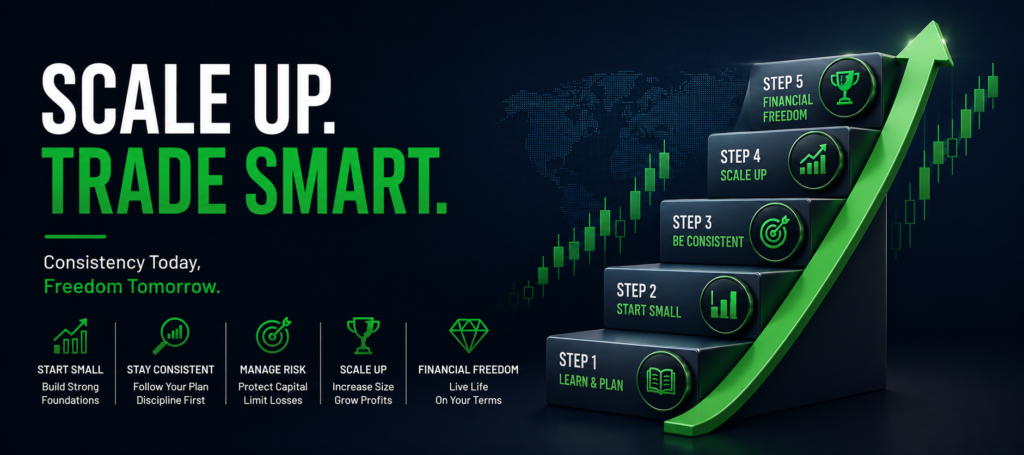
Fig 1.2 Lux trading firm review scaling ladder
Scaling and Long-Term Growth
Scaling is central to the appeal of a firm oriented toward longer-term traders. Rather than capping you at an initial account size, a scaling plan increases the capital you manage and, often, your profit share as you demonstrate sustained, rule-abiding performance over time. This turns the relationship from a one-off transaction into a genuine partnership, where steady consistency is rewarded with growing earning potential. For a disciplined trader, the compounding effect of scaling can dwarf the difference between a slightly higher or lower starting profit split.
The practical questions to ask about any scaling plan are how the milestones are defined, how realistically achievable they are for your strategy, and how long the path to meaningful capital takes. An attractive-sounding plan with milestones that require unrealistic returns or near-perfect consistency offers little real value, while a plan with sensible, reachable steps can be transformative. When assessing Lux Trading Firm, weigh the scaling structure against your honest expectations of your own performance, not against a best-case fantasy.
| Factor | No-Evaluation Model | Challenge Model |
|---|---|---|
| Entry hurdle | Access via cost/subscription | Pass a profit-target test |
| Where risk sits | In the funded phase | In the test, then funded |
| Best for | Confident, patient traders | Cost-conscious testers |
| Ongoing rules | Drawdown, daily limits apply | Drawdown, daily limits apply |
| Growth | Scaling over time | Scaling over time |
What Top Traders and Research Say
The case for a patient, scaling-oriented model is reinforced by the evidence on retail trading behaviour. The study “Trading Is Hazardous to Your Wealth” by Brad Barber and Terrance Odean found that the most active traders earned the worst returns, with overtrading and overconfidence the main culprits. A firm structured around long-term consistency and gradual scaling implicitly discourages exactly these destructive behaviours, rewarding the patience and discipline that the research identifies as the foundation of durable performance rather than the frenetic activity that erodes it.
The wisdom of seasoned traders points the same way. Mark Douglas, in Trading in the Zone, stressed that consistency arises from a disciplined process and acceptance of risk rather than from prediction, a mindset perfectly suited to a model that asks you to prove yourself steadily over time. And the investor Warren Buffett’s reminder that “the stock market is a device for transferring money from the impatient to the patient” applies just as well to trading: a scaling-oriented firm rewards the patient trader who compounds steady gains, not the impatient one chasing a quick score.
Pros, Cons, and Who It Suits
The strengths of Lux Trading Firm centre on its orientation toward serious, long-term traders: a no evaluation prop firm route removes test-phase pressure for confident traders, a structured scaling path rewards sustained consistency, and the professional, growth-focused positioning suits those building a real track record rather than chasing quick payouts. For a patient trader with a proven edge, the alignment of incentives and the potential to grow capital over time can be genuinely valuable.
The weaknesses are important to state honestly. Removing the challenge does not remove risk; drawdown and daily loss rules still apply in the funded phase, and breaching them ends the arrangement. The cost structure of a no-evaluation model can be higher upfront or ongoing, and it suits confident, capitalised traders far more than beginners. As always, terms change and must be verified directly. This firm suits the disciplined, patient trader who values scaling and dislikes challenge pressure; it suits poorly the newcomer hoping that skipping the challenge also skips the need for a genuine, tested edge.
Frequently Asked Questions
Is Lux Trading Firm legit?
Lux Trading Firm is an established name associated with longer-term, scaling-oriented funded trading. As with any firm, “legit” is best confirmed through current independent reviews, evidence of recent payouts, and the firm’s published terms rather than positioning alone. Because conditions in this sector change, verify the live rules, costs, and recent withdrawal record on the official website before committing, and judge the firm by how reliably it has paid real traders recently rather than by its professional branding or marketing claims.
What does no evaluation prop firm mean?
A no evaluation prop firm gives you access to a funded simulated account without first passing a profit-target challenge, typically through an upfront cost or subscription, and you prove yourself through live performance under risk rules instead. The benefit is no pass-or-fail test and no test-phase pressure; the trade-off is that drawdown limits, daily loss caps, and withdrawal conditions still apply in the funded phase, so the risk is relocated rather than removed. It suits confident traders who dislike challenge pressure.
How is it different from a prop firm challenge?
A traditional prop firm challenge requires you to hit a profit target within risk limits, at a lower upfront cost, before receiving capital, while a no-evaluation model grants access immediately and tests you in live conditions. The challenge offers a cheap, finite hurdle suited to cost-conscious testers; the no-evaluation route removes test pressure but often costs more and shifts the proving ground to the funded account itself. Both apply drawdown and daily rules, so disciplined risk management matters either way.
How does scaling work at Lux Trading Firm?
Scaling increases the capital you manage and often your profit share as you demonstrate sustained, rule-abiding performance over time, turning a one-off arrangement into a longer-term partnership. The key questions are how the milestones are defined, how realistically your strategy can reach them, and how long meaningful growth takes. A sensible, achievable plan can be transformative through compounding, while an over-ambitious one offers little practical value. Confirm the current scaling structure on the official site, as these plans are periodically revised.
Is Lux Trading Firm good for beginners?
The professional, scaling-oriented model is arguably better suited to experienced traders than to beginners, because a no-evaluation route still requires a genuine edge to navigate the funded phase profitably, and the cost is lost if you cannot trade within the rules. Beginners are usually better served by building and proving a strategy on a personal demo or small live account first, then approaching a funded model once the edge is real and the cost is affordable as risk capital. Skipping the challenge does not skip the need for skill.
Fig 1.3 Lux trading firm review infographic
Final Thoughts
This lux trading firm review points to a clear conclusion: the firm’s value is highest for the patient, confident, long-term trader. Its no evaluation prop firm route removes the test-phase pressure that derails many capable traders, its scaling path rewards the sustained consistency that compounds into meaningful capital, and its professional orientation suits those building a real track record rather than chasing a quick payout. The essential insight is that removing the challenge does not remove risk; it relocates the proving ground to the funded account, where drawdown and daily rules still decide everything, which is why the comparison with the traditional prop firm challenge comes down to temperament, confidence, and budget rather than one route being universally superior. The research from Barber and Odean, and the patience-first wisdom of Douglas and Buffett, all favour the disciplined, long-term approach this model rewards. Verify the current terms on the official site and treat any cost as risk capital.