
Introduction
A prop firm scaling plan is the structured pathway that lets a consistently profitable funded trader graduate from a modest account to managing significant capital, and understanding it can completely change your earning ceiling. Many traders pass an evaluation, earn a funded account, and then have no idea how to responsibly grow that capital over time. The scaling plan answers exactly that question. It rewards traders who demonstrate steady, rule-abiding performance by periodically increasing their account size, which directly increases their profit potential without requiring them to risk a cent of personal money. Yet scaling is widely misunderstood — some chase it recklessly and lose their accounts, while others ignore it and leave growth on the table. This guide explains how scaling plans actually work, the typical account growth rules firms impose, the disciplined approach that unlocks each tier, and the mistakes that quietly disqualify ambitious traders. If you want your funded career to compound rather than stall, this is the framework to master.

Fig 1.1 Prop firm scaling plan
What Is a Prop Firm Scaling Plan?
A prop firm scaling plan is a defined system through which a firm increases a funded trader’s account size as they meet specific performance and consistency benchmarks. Rather than handing out unlimited capital immediately, firms protect themselves by growing your allocation gradually, in proportion to your demonstrated reliability. Each successful period unlocks a larger account and, with it, larger potential payouts.
The logic is mutually beneficial. The firm reduces its risk by only entrusting more money to traders who have proven they can handle it responsibly, while the trader gains a clear, motivating roadmap toward serious capital. In effect, the scaling plan turns trading into a career with promotions, where disciplined performance is the only currency that earns advancement.
Why Scaling Plans Matter
For an ambitious trader, the scaling plan is where the real money lives. A consistent percentage return means little on a small account but becomes substantial once your capital has scaled several times over. This is the mechanism that transforms funded trading from a modest side income into a potentially serious profession, all without exposing your own savings to risk.
Scaling plans also impose a healthy long-term mindset. Because increases reward steady performance over time rather than explosive single-month gains, they discourage the reckless swing-for-the-fences trading that destroys accounts. The plan effectively trains you to value consistency, which is precisely the trait that sustains a trading career. In this sense, scaling is both a financial reward and a behavioural teacher.
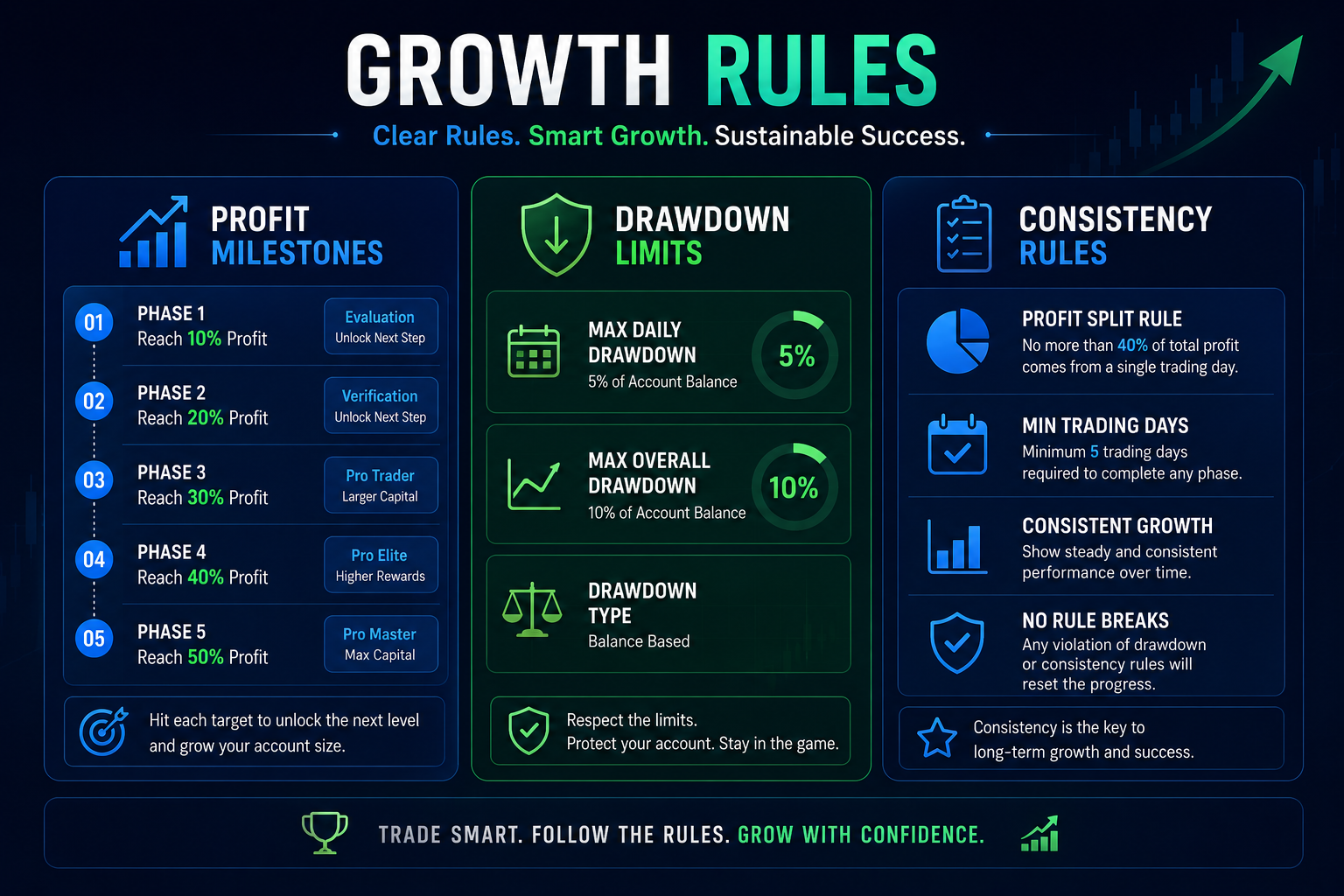
Fig 1.2 Prop trading account growth rules
Common Prop Trading Account Growth Rules
While every firm differs, most prop trading account growth rules share recognisable patterns. Typically, a trader must achieve a defined profit target over a set period while staying within drawdown limits and trading on a minimum number of days. Meeting these conditions over consecutive review periods triggers an increase in account size, often by a fixed percentage at each tier.
Many firms also enforce a consistency rule, which prevents a trader from hitting their target through a single lucky trade and instead requires steady contribution across multiple sessions. The table below outlines the typical components you will encounter when evaluating a scaling plan.
| Scaling Component | Typical Requirement | Purpose |
|---|---|---|
| Profit milestone | Hit a set percentage gain | Proves a reliable edge |
| Drawdown compliance | Stay within max loss limit | Confirms risk control |
| Minimum trading days | Trade across multiple sessions | Ensures consistency |
| Consistency rule | No single oversized win | Rewards steady performance |
| Review period | Monthly or quarterly check | Times each capital increase |
| Increase amount | Fixed percentage per tier | Defines the growth rate |
How to Scale a Prop Trading Account Successfully
Knowing how to scale a prop trading account comes down to treating consistency as your primary goal and capital growth as the natural by-product. The traders who scale fastest are rarely the boldest; they are the ones who hit reasonable targets month after month without breaking rules. Your job is to make your performance predictable enough that the firm feels safe handing you more.
That means resisting the urge to accelerate growth by taking oversized risks. Ironically, pushing too hard to scale faster is the surest way to breach a drawdown limit and lose the account entirely. Instead, define a repeatable process, risk a small fixed percentage per trade, and let the scaling plan’s tiers pull you upward at a sustainable pace. Patience, not aggression, is the engine of long-term capital growth in this model.

Fig 1.3 Trader learning how to scale a prop trading
Mistakes That Stall or End Scaling
The most damaging error is over-leveraging in pursuit of faster tiers. A trader who doubles their risk to reach a milestone quickly often blows past a daily loss limit and forfeits everything they built. The scaling plan rewards survival, and reckless risk is the opposite of survival. Closely related is abandoning a proven strategy mid-stream because progress feels slow.
Another subtle mistake is ignoring the consistency rule. Some traders concentrate gains into one large trade, only to find that the firm disqualifies the result because it violates the steady-performance requirement. Reading every rule carefully before you begin, then trading well within the limits rather than at their edges, keeps your account alive long enough for compounding to work. In scaling, the trader who avoids disqualification almost always outperforms the one who chases speed.
What Top Traders and Research Say
Veteran traders agree that durability beats brilliance, which is the very principle scaling plans reward. Ed Seykota, profiled in Jack Schwager’s classic Market Wizards, captured the spirit when he said, “The elements of good trading are cutting losses, cutting losses, and cutting losses.” That relentless focus on protecting capital is exactly what carries a trader smoothly through each scaling tier.
The behavioural research reinforces why patience is so hard. In “Trading Is Hazardous to Your Wealth,” Brad Barber and Terrance Odean demonstrated that the most active, aggressive retail traders earned the worst returns, undone by overconfidence and excessive risk. A scaling plan is essentially a structure that protects traders from this very tendency, rewarding the measured approach the data favours. The lesson is consistent across both wisdom and evidence: scale by surviving and compounding, not by gambling for shortcuts.
Frequently Asked Questions
What is a prop firm scaling plan and how does it work?
A prop firm scaling plan is a system that increases a funded trader’s account size as they meet consistent performance benchmarks. By hitting profit targets while respecting drawdown limits over set review periods, the trader unlocks larger capital and higher potential payouts. The firm reduces its risk by only scaling proven traders, while the trader gains a clear growth path. It rewards steady, rule-abiding performance rather than one-off lucky wins.
What are typical prop trading account growth rules?
Common prop trading account growth rules include reaching a defined profit milestone, staying within maximum drawdown, trading across a minimum number of days, and often satisfying a consistency rule. Meeting these conditions over consecutive review periods triggers a capital increase, usually a fixed percentage per tier. Each firm differs, so reading the exact rules before starting is essential. The rules exist to ensure capital only grows for genuinely reliable traders.
How do you scale a prop trading account quickly?
Learning how to scale a prop trading account is less about speed and more about reliability. The fastest sustainable growth comes from hitting reasonable targets consistently while never breaching risk limits. Ironically, taking oversized risks to scale faster usually ends the account through a drawdown breach. Define a repeatable process, risk a small fixed percentage per trade, and let the plan’s tiers lift you steadily. Consistency, not aggression, produces the quickest lasting growth.
What mistakes prevent traders from scaling?
The biggest mistakes that stall a prop firm scaling plan are over-leveraging to reach milestones faster, abandoning a proven strategy, and ignoring the consistency rule by concentrating gains into one trade. Each can trigger disqualification or an account breach. Successful scaling depends on trading well within the limits, following your plan, and treating survival as the priority. Avoiding these errors keeps your account alive long enough for compounding to work.
Is a scaling plan better than adding my own capital?
For most traders, a prop firm scaling plan is more attractive than risking personal savings, because it grows your buying power without exposing your own money to losses. You keep a high profit split while the firm absorbs trading risk. Adding personal capital increases both potential gains and personal financial danger. Scaling lets disciplined traders expand responsibly, making it a safer route to managing serious capital for those who value risk protection.
Final Thoughts
A prop firm scaling plan is the bridge between passing an evaluation and building a genuine trading career, but it only carries traders who treat consistency as sacred. The structure rewards measured, rule-respecting performance and quietly punishes the impatience that drives most account failures, which is precisely why the disciplined approach wins every time. By focusing on a repeatable process, keeping risk small, and respecting every growth rule rather than testing its limits, you let compounding do the heavy lifting and watch your capital climb tier by tier. Resist the temptation to rush, because in this model the trader who simply survives and stays steady almost always ends up managing the largest accounts. Build your reputation for reliability, and the scaling plan will reward you for years. This article is educational and not financial advice; prop-firm rules and outcomes vary by provider.