
Introduction
The right swing trading books can compress years of trial and error into a few focused evenings of reading, which is why serious traders keep returning to the classics. Swing trading sits in a rewarding middle ground — holding positions for days or weeks rather than minutes — and it rewards patience, structure, and a calm reading of the bigger picture. Yet the shelves are crowded with hype-filled titles promising effortless riches, making it hard to know which books genuinely sharpen your edge. The best authors blend strategy, risk management, and psychology, giving you a complete framework rather than a single trick. Whether you want the best swing trading books 2026 has to offer or are hunting for a reliable swing trading books PDF, the right choices matter enormously. In this guide you will find a curated, honest reading list, what each book teaches, and how to turn pages into consistent profits.
Why Swing Traders Still Need Books
In a world of endless videos and quick tips, it is fair to ask whether swing trading books still earn their place. They do, decisively. A well-written book delivers a complete, structured framework, while scattered clips teach fragments that rarely connect into a coherent method. For a style that depends on reading the bigger picture, that depth is invaluable.
The finest authors also write from genuine experience, having survived enough market cycles to know what truly matters over multi-day holds. That perspective is hard to find in content optimised for clicks. Reading the right books builds the mental models that let you interpret any market environment rather than memorise a single setup. For anyone serious about the craft, a thoughtful library of the best swing trading books 2026 offers remains one of the highest-return investments available, paying dividends across every trade you take afterward.
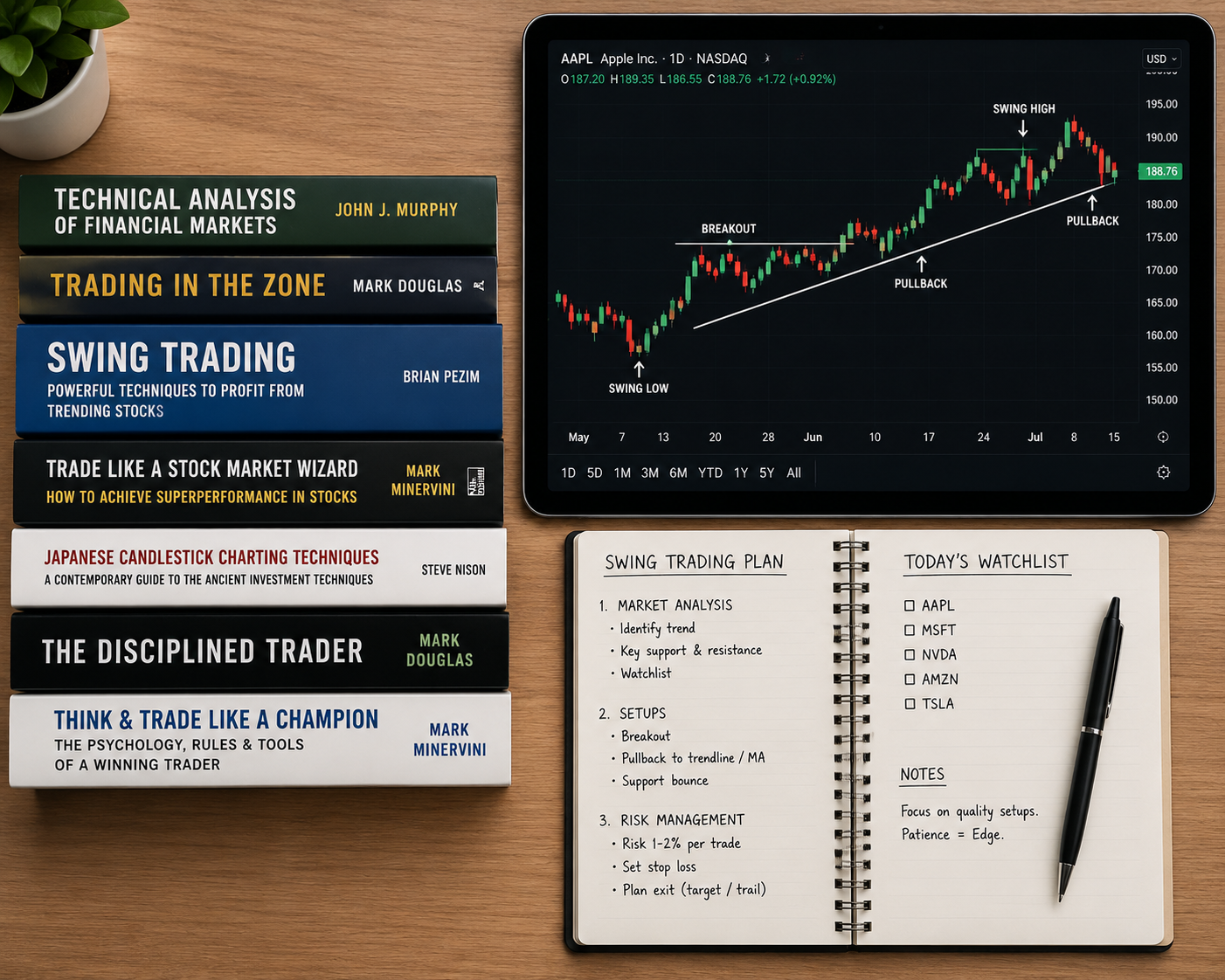
Fig 1.1 Swing trading books stacked
Best Swing Trading Books for Strategy
Strategy books teach you how to find and structure multi-day trades, forming the technical backbone of your education. John Murphy’s Technical Analysis of the Financial Markets is the genre’s reference work, covering trends, support and resistance, and indicators with rare clarity — essential grounding for any swing trader learning to read the bigger picture. It belongs on every serious list.
For pattern recognition, Thomas Bulkowski’s Encyclopedia of Chart Patterns catalogues formations in exhaustive, data-driven detail, helping swing traders judge which setups actually carry an edge over days and weeks. William O’Neil’s How to Make Money in Stocks adds a proven, trend-following framework for catching powerful moves. Together these titles build a strategic vocabulary that lets you analyse any chart with structure rather than guesswork, which is exactly what the strongest swing trading books on strategy should deliver.
| Book | Author | Best For |
|---|---|---|
| Technical Analysis of the Financial Markets | John Murphy | Complete technical foundation |
| Encyclopedia of Chart Patterns | Thomas Bulkowski | Data-driven pattern recognition |
| How to Make Money in Stocks | William O’Neil | Trend-following swing framework |
Best Swing Trading Books for Psychology
If strategy is the engine, psychology is the steering, and the best swing trading books treat the mental game as central rather than optional. Mark Douglas’s Trading in the Zone is the definitive work here, explaining why traders sabotage good systems and how to develop the probabilistic, disciplined mindset that multi-day holds demand. Holding a position overnight tests patience in ways day trading never does.
Edwin Lefèvre’s Reminiscences of a Stock Operator, a lightly fictionalised account of Jesse Livermore, remains astonishingly relevant a century later, capturing the emotional cycles every swing trader recognises. Morgan Housel’s The Psychology of Money widens the lens to financial behaviour broadly, teaching the patience and humility that translate directly to holding winners and cutting losers. These psychology-focused titles address the real reason most traders fail — not a lack of strategy, but a lack of emotional control across days of uncertainty.
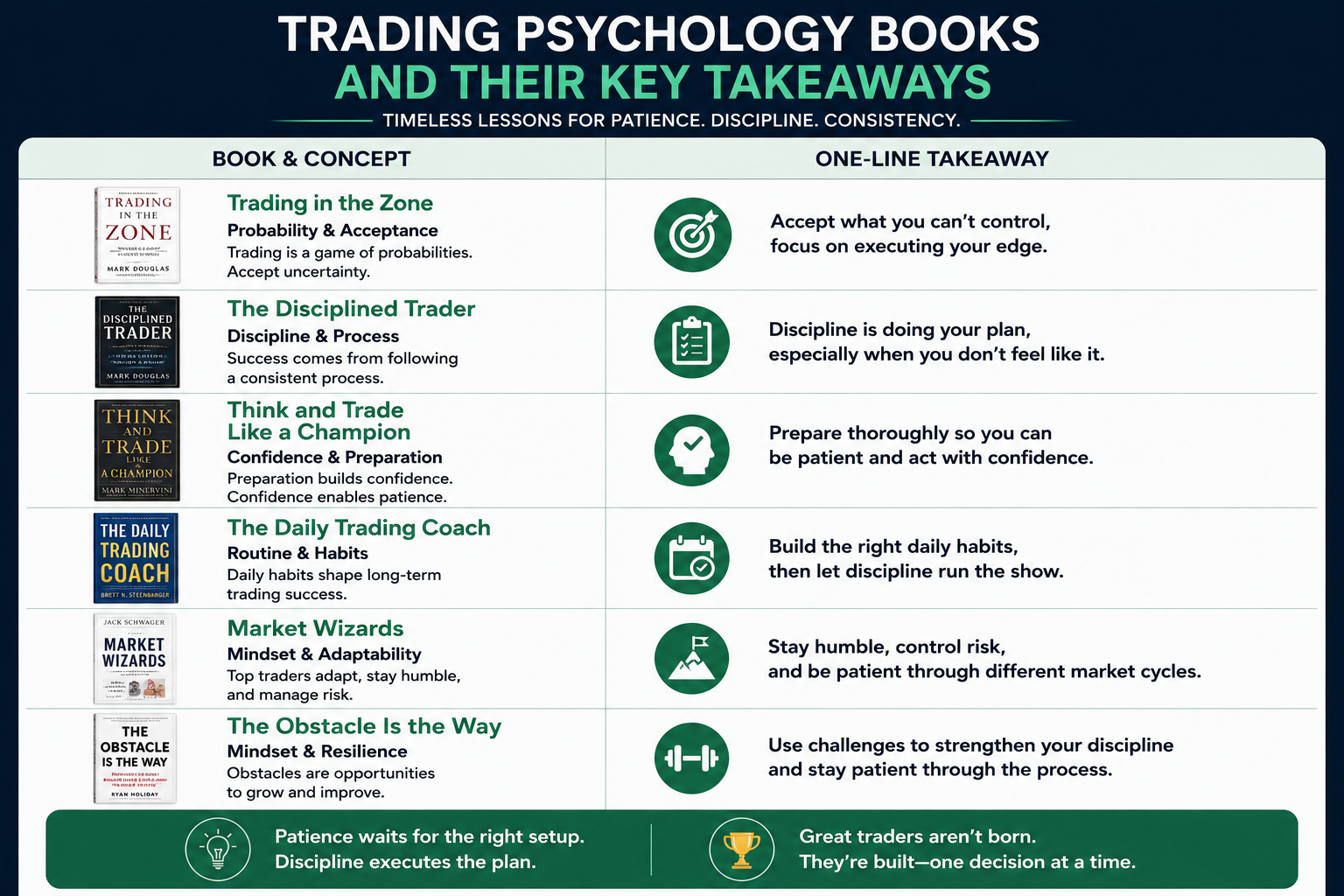
Fig 1.2 Best swing trading books for psychology
Finding a Swing Trading Books PDF Safely
Many readers search for a swing trading books PDF to study on the go, and there is nothing wrong with digital formats — provided you obtain them legitimately. The safest and most ethical route is to buy the official e-book through a reputable retailer, which gives you a clean, complete, and properly formatted copy while supporting the authors who earned their expertise the hard way.
Beware of unofficial PDF sites that promise free downloads of popular titles. These often deliver incomplete files, outdated editions, or malware bundled with the download, and they deprive authors of fair compensation. If budget is a concern, public libraries frequently offer free, legitimate digital lending of trading classics, and many authors publish affordable official e-book editions. Choosing a legitimate swing trading books PDF protects both your device and your trading education, ensuring the lessons you absorb are accurate and complete.
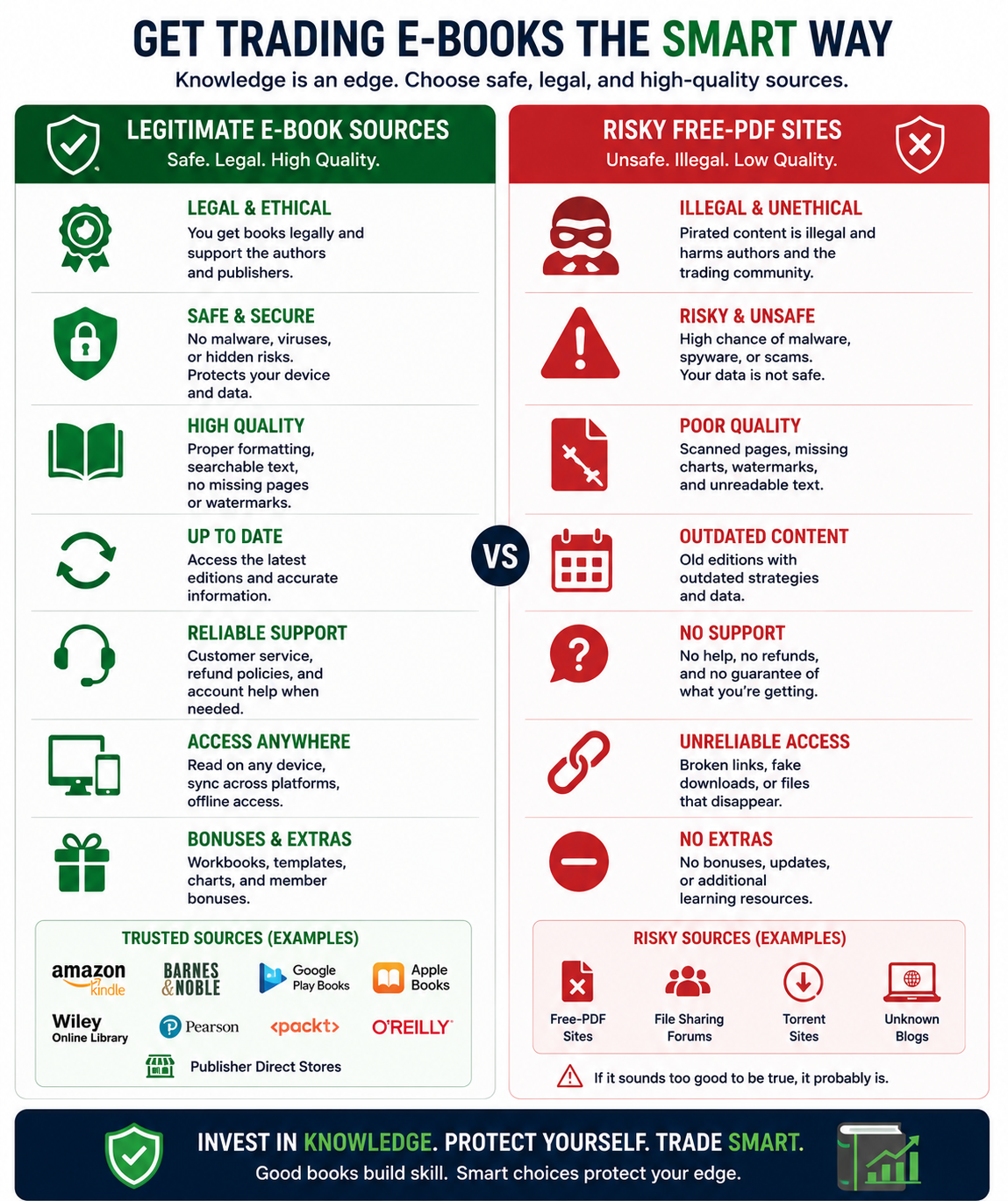
Fig 1.3 Swing trading books PDF safety infographic
What Top Traders and Research Say
The value of disciplined study is reinforced by the very authors these lists celebrate. In Trading in the Zone, Mark Douglas argues that knowledge without psychological discipline is worthless, which is why the best swing trading books pair strategy with mindset. Jack Schwager’s Market Wizards repeatedly shows that elite traders never stopped learning, treating reading and self-study as lifelong habits.
Academic research underlines why education and patience matter together. The widely cited Barber and Odean study, “Trading Is Hazardous to Your Wealth,” found that the most active retail traders underperformed largely because of overtrading and costs — a powerful argument for the patient, lower-frequency approach swing trading encourages. As Jesse Livermore observed, “The big money is made in the waiting.” For traders building a library of the best swing trading books 2026 offers, that patience is precisely the trait the great titles cultivate.
How to Turn Reading Into Profitable Swing Trades
Owning the best swing trading books changes nothing until you convert their lessons into habits. The most common mistake is passive reading — finishing a book, feeling inspired, and changing nothing. Active study works far better: take notes, mark the principles that suit your style, and translate them into concrete rules in your swing trading plan.
Pairing reading with practice accelerates everything. After learning a concept from one of the best swing trading books 2026 has produced, test it on a demo account across several multi-day trades and record the results in your journal. This loop of read, apply, review embeds knowledge far deeper than reading alone. Re-reading the great psychology titles periodically also helps, because their lessons land differently once you have held winners and losers through real overnight uncertainty. Treat your library as a working toolkit, not a trophy shelf.
Frequently Asked Questions
What is the best swing trading book to start with?
For most newcomers, John Murphy’s Technical Analysis of the Financial Markets is the strongest technical starting point among swing trading books, because it builds the foundation for reading trends and levels over days. Pair it with Mark Douglas’s Trading in the Zone for the patience and discipline that multi-day holds demand. There is no universal “best,” but combining one strategy reference with one psychology classic creates a balanced foundation that serves swing traders far better than any single title alone.
What are the best swing trading books 2026 has to offer?
The strongest picks among the best swing trading books 2026 readers recommend remain timeless classics: Technical Analysis of the Financial Markets by John Murphy for strategy, Trading in the Zone by Mark Douglas for psychology, How to Make Money in Stocks by William O’Neil for trend-following, and Reminiscences of a Stock Operator by Edwin Lefèvre for market wisdom. These titles endure because their principles outlast market fads. Read one strategy and one psychology book first, then expand as you discover specific gaps through practice.
Where can I find a swing trading books PDF safely?
The safest swing trading books PDF comes from buying the official e-book through a reputable retailer, which gives you a complete, properly formatted copy and supports the authors. Public libraries also offer legitimate digital lending of many trading classics for free. Avoid unofficial free-PDF sites, which often deliver incomplete files, outdated editions, or malware, and which deprive authors of fair pay. Choosing a legitimate source protects both your device and the accuracy of your trading education.
Can you really learn swing trading from books?
Yes, books build the essential frameworks for strategy, risk, and psychology, but they must be paired with practice. The best swing trading books teach you how to read multi-day moves and how disciplined traders think, yet skill develops only when you apply those lessons on a demo or live account. Reading without practising leaves knowledge abstract, while practising without reading repeats avoidable mistakes. The most effective approach combines both — study a concept, test it across several swing trades, journal the results, and refine.
Are swing trading psychology books really necessary?
Absolutely. Swing trading demands patience to hold positions through overnight uncertainty, which tests emotions in unique ways, so psychology titles are essential among swing trading books. Trading in the Zone and The Psychology of Money teach the discipline, patience, and probabilistic thinking that separate consistent swing traders from impulsive ones. A brilliant strategy executed emotionally still loses money. Psychology books address the real bottleneck, helping you hold winners, cut losers, and ignore the short-term noise that wrecks multi-day plans.
How many swing trading books should I read?
Quality matters far more than quantity. Reading two or three of the best swing trading books thoroughly — one on strategy, one on psychology, and one on trend-following — gives a stronger foundation than skimming a dozen. The goal is to extract principles and apply them, not to collect titles. After your starter library, add books that address specific gaps you discover through practice. Continuous, deliberate study beats binge reading, so pair each book with demo practice and journaling rather than rushing to the next.
Final Thoughts
The best swing trading books remain one of the highest-return investments any trader can make, precisely because they compress decades of hard-won experience into a form you can absorb in a few focused evenings. A complete swing trading education balances three pillars: strategy, taught by references like John Murphy’s Technical Analysis of the Financial Markets and William O’Neil’s How to Make Money in Stocks; psychology, mastered through Mark Douglas’s Trading in the Zone and Morgan Housel’s The Psychology of Money; and timeless market wisdom from Edwin Lefèvre’s Reminiscences of a Stock Operator. The titles only deliver value, however, when you read them actively — taking notes, translating lessons into trading rules, and testing those ideas on a demo account while journaling the results. Whether you want the best swing trading books 2026 has to offer or a legitimate swing trading books PDF to study on the move, treat your library as a working toolkit rather than a trophy shelf. Read, apply, review, and the pages will steadily compound into sharper analysis, stronger patience, and more consistent multi-day profits.