
Trading more than pairs? See our guide to what indices are in forex.
Introduction
Most traders chase quick wins, yet the calmest profits often belong to those who wait. What is position trading, and why do disciplined market participants treat it as the long game of the financial world? Position trading is a long-term approach where you hold a currency pair, stock, or commodity for weeks, months, or even years, riding major trends instead of reacting to daily noise. It demands patience, conviction, and a strong grasp of fundamentals and technical structure. In this guide, you will learn how the strategy works, how it differs from faster styles, and which tools help you manage risk over long horizons. You will also see real research, expert insight, and answers to common questions. By the end, you will know whether this measured, trend-following method suits your goals, your temperament, and your account.
The appeal runs deeper than convenience. Long-term trends often reflect powerful forces that take time to unfold, such as shifting interest rate cycles or structural changes in supply and demand. A position trader tries to align with those forces rather than fight them. This article treats the subject as a complete discipline, not a quick tactic. We will move from definition to execution, then to comparison, risk, and the evidence that supports a slower style. Read it as a roadmap you can return to whenever you weigh a long-term trade against the temptation to act now.
What Is Position Trading and How It Works
Position trading is a long-term strategy built on holding a single trade through a major market trend, often for weeks, months, or longer. Instead of scalping ticks or catching short swings, a position trader identifies the dominant direction of an asset and stays committed until the trend shows real signs of reversing. The approach blends macro fundamentals with high-timeframe technical analysis. A trader might study interest rate cycles, inflation data, and central bank policy to decide that a currency will strengthen over the coming quarters, then use weekly and monthly charts to time the entry.
The mechanics are deliberately simple, which is part of the appeal. You enter when the trend confirms, set a wide stop loss that respects long-term volatility, and let the position breathe. Because the holding period is long, daily fluctuations matter far less than the overall structure. This style suits people who cannot watch screens all day, since it removes the pressure of constant decision-making. The trade-off is patience. Position traders accept temporary drawdowns and unrealized losses as the cost of capturing a much larger move.
It helps to understand what actually drives the entry and the exit. The entry is rarely a single perfect price. A position trader often scales in, adding to a thesis as the trend confirms across higher timeframes. Confirmation might mean a weekly close above a long moving average, a clear break of a multi-month resistance zone, or a fundamental catalyst that strengthens the original story. The exit follows the same logic in reverse. You leave when the structure that justified the trade breaks, not when fear or boredom strikes. Many position traders trail their stop loss upward as the trend matures, locking in gains while still giving price room to wander through normal pullbacks.
Holding periods deserve special attention because they define the entire experience. A position trade is measured in weeks and months, sometimes years, so you must be comfortable doing nothing for long stretches. Consider a practical forex example. Suppose a trader reads that one central bank is raising rates aggressively while another holds steady. That widening rate gap tends to support the stronger currency over time. The trader buys that pair near a weekly support zone, sets a wide stop below the prior major low, and holds. Over the next four months the pair grinds higher with several sharp pullbacks along the way. A day trader would have been stopped out repeatedly. The position trader, anchored to the macro thesis, stays in and captures the bulk of a multi-month advance. That single trade illustrates how the style turns patience into a measurable edge.
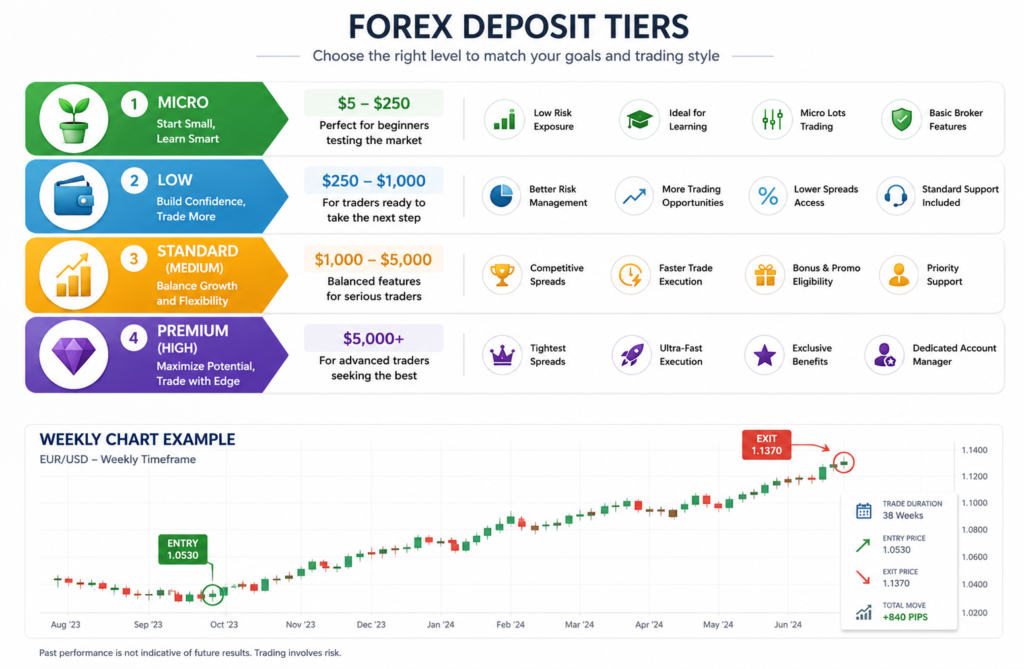
Fig 1.1 Weekly chart illustrating
Building a Reliable Position Trading Strategy
A strong position trading strategy starts with direction, not entry. First, you establish the macro thesis. In forex, that means reading the relative strength of two economies through growth, rate differentials, and policy outlook. In equities or commodities, it means understanding the structural story behind demand. Only after the thesis is clear do you move to the chart.
On the technical side, position traders lean on simple, durable tools. Long moving averages, such as the 50-week and 200-week, help define the prevailing trend. Major support and resistance zones mark logical entries and exits. Many traders add a momentum filter to avoid buying into an exhausted move. Once the setup aligns, position sizing becomes the heart of the plan. Because stops sit far from price, you must size each trade so a single loss never threatens the account. A common guideline is risking a small, fixed percentage of capital per position, which keeps long drawdowns survivable.
The fundamental and macro layer deserves more than a passing glance, because it is what gives a long-term trade its staying power. Interest rate differentials are often the strongest driver in forex, since capital tends to flow toward currencies that pay more. Inflation trends, employment data, trade balances, and central bank guidance all feed into the same picture. A position trader does not need to forecast every data release. Instead, they form a directional bias and then ask whether each new report strengthens or weakens that bias. When the data keeps confirming the thesis, conviction grows and the position can be held with confidence. When the data starts to contradict it, that is an early warning to tighten risk or step aside.
Risk management on wide stops is its own discipline. Because a long-term stop may sit hundreds of pips away, the only way to keep the loss small is to reduce the position size accordingly. A trader risking one percent of a fifty-thousand-dollar account, for example, can lose only five hundred dollars on a trade. With a wide stop, that math forces a smaller lot size, which is exactly the point. Leverage must stay modest for the same reason, since a long hold can suffer a deep pullback before the trend resumes. Many position traders also account for swap or financing costs, which accumulate quietly over months and can either help or hurt depending on the direction of the carry.
Patience separates a real strategy from a hopeful one. You will hold through pullbacks that would shake out a short-term trader. The discipline to do nothing while the thesis remains intact is the skill that turns a method into consistent results.
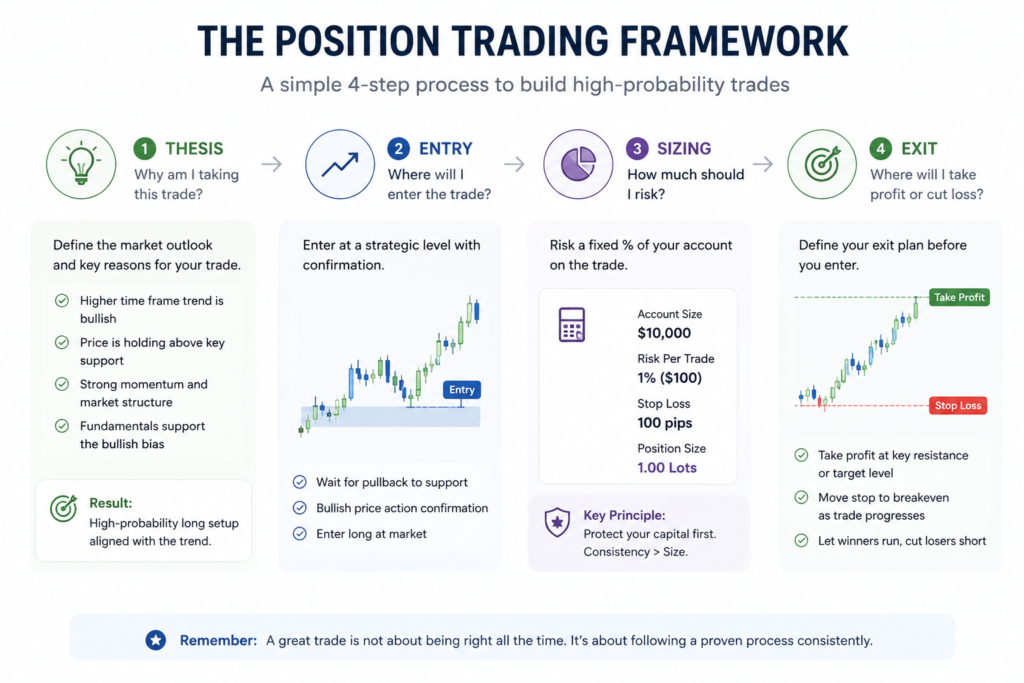
Fig 1.2 Four pillars of a position trading strategy
Position Trading vs Swing Trading vs Day Trading
The clearest way to understand position trading is to compare it with faster styles. The debate over position trading vs swing trading usually comes down to time, attention, and temperament. Swing traders hold for several days to a few weeks, aiming to capture medium-term moves. Position traders zoom out further, holding for months to capture the entire trend. Day traders sit at the opposite end, opening and closing trades within a single session.
Each style fits a different life. Day trading rewards speed and focus but demands constant screen time and a high tolerance for stress. Swing trading offers a middle path, balancing opportunity with manageable effort. Position trading rewards patience and big-picture thinking while asking the least of your daily attention. The table below summarizes how these approaches differ across the factors that matter most.
| Factor | Position Trading | Swing Trading | Day Trading |
|---|---|---|---|
| Primary timeframe | Weekly / monthly | Daily / 4-hour | 1-min to 1-hour |
| Typical hold time | Weeks to months+ | Days to weeks | Minutes to hours |
| Daily effort | Low | Moderate | Very high |
| Number of trades | Few | Moderate | Many |
| Best suited for | Patient, busy traders | Part-time traders | Full-time, fast decision-makers |
This comparison shows there is no universally best style. The right choice depends on how much time you can give the markets and how you handle waiting versus action.
It is worth noting how the same currency pair can look completely different through each lens. On a one-hour chart, a pair might appear choppy and directionless, frustrating a day trader with false breakouts. On a daily chart, that same pair could show a clean week-long swing for the swing trader to capture. Step back to the weekly chart and a single, powerful trend emerges that the position trader can ride for months. None of these views is wrong. They simply answer different questions and reward different temperaments. The position trader deliberately chooses the widest lens because it filters out the noise that traps faster participants. Choosing a style, then, is less about which is most profitable and more about which one you can execute calmly and consistently for years.
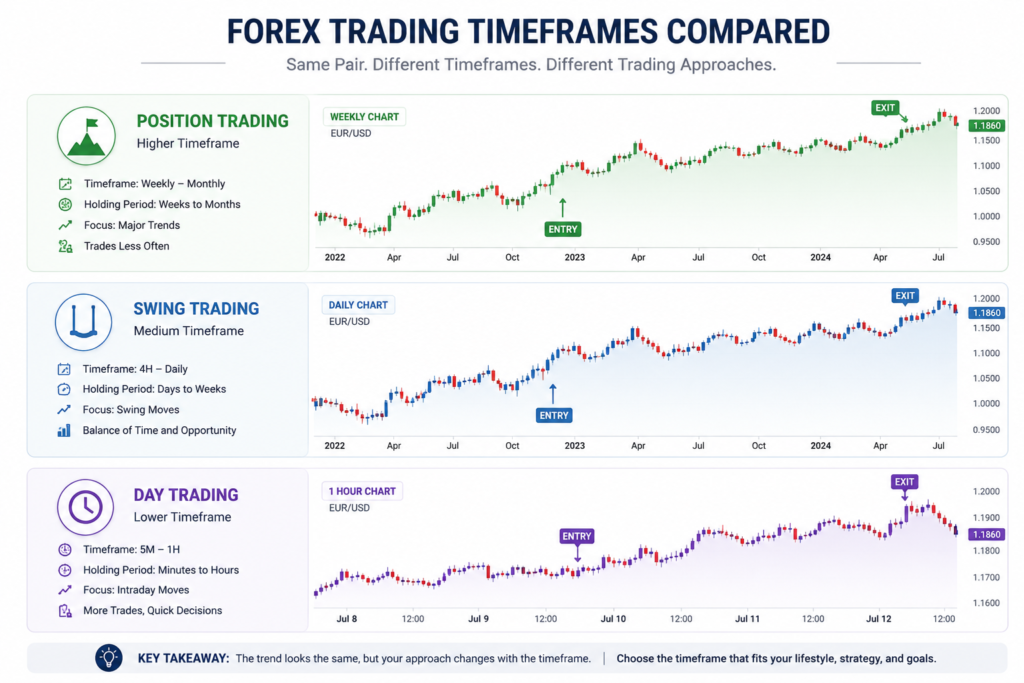
Fig 1.3 Visual comparison of position trading vs swing trading
Pros, Cons, and Risk Management
Position trading carries real advantages. It captures the largest part of a trend, reduces trading costs because you trade rarely, and lowers the emotional toll of constant decisions. It also fits people with full-time jobs, since a few hours a week can manage a portfolio. Many traders find the calmer pace easier to sustain over years.
The drawbacks deserve equal attention. Capital is tied up for long periods, so you may miss other opportunities. Wide stops mean larger nominal losses when a trade fails, and overnight or weekend gaps can move against you while markets are closed. In leveraged forex, swap fees on long holds can erode returns, so you must factor financing costs into every plan.
Risk management is therefore non-negotiable. Size positions so any single loss is small relative to the account. Keep leverage modest, because long holds amplify the danger of margin pressure during deep pullbacks. Diversify across uncorrelated markets so one macro surprise cannot sink the whole book. Above all, define your invalidation point before entering. When the thesis breaks, you exit without hesitation, protecting capital for the next high-conviction trade.
There is also a psychological cost that few beginners anticipate. Holding a winning position for months requires the discipline to ignore tempting exits, while holding through a drawdown requires the conviction to trust your original analysis. Both demands test the mind in different ways. The trader who closes early to lock in a small profit often watches the trend run on without them. The trader who refuses to honor a broken thesis often turns a manageable loss into a damaging one. The solution is a written plan that defines entry, sizing, invalidation, and exit before the trade begins. A plan removes the need to make emotional decisions in the heat of a moving market, which is precisely where most long-term traders sabotage themselves.
What Top Traders and Research Say
Respected voices reinforce the patience at the core of this style. In Technical Analysis of the Financial Markets, John Murphy stresses that identifying and respecting the primary trend is the foundation of durable trading decisions, a principle that defines position trading. His emphasis on higher-timeframe structure mirrors how long-term traders filter out short-term noise.
Academic research also supports a slower approach. In their landmark study “Trading Is Hazardous to Your Wealth,” Brad Barber and Terrance Odean analyzed thousands of retail accounts and found that the most active traders earned the lowest net returns, largely because frequent trading and costs eroded their gains. The finding offers a powerful argument for the low-frequency, patient nature of position trading.
The legendary speculator Jesse Livermore captured the mindset best when he said, “The big money is made in the waiting.” That single line distills the discipline this strategy demands and rewards. Taken together, these perspectives point in the same direction. A trader who respects the primary trend, trades sparingly to keep costs low, and waits for high-conviction setups is following principles that both decades of market wisdom and rigorous data endorse. Position trading is not a shortcut, but it aligns a trader with forces that reward patience rather than punishing it.
Frequently Asked Questions
Is position trading profitable? Position trading can be profitable when you combine a sound macro thesis with strict risk management. Because it targets large trends, a single well-timed position can outweigh many smaller trades. However, profitability depends on patience, disciplined position sizing, and the ability to hold through normal drawdowns without abandoning a valid thesis too early.
How is position trading vs swing trading different? The core of position trading vs swing trading is holding time. Swing traders hold for days to weeks and trade more often, while position traders hold for months to capture an entire trend. Position trading needs less daily attention, but it ties up capital longer and requires deeper conviction in the underlying fundamentals driving the move.
Is position trading good for beginners? Position trading suits beginners who value patience over excitement. The slower pace reduces emotional mistakes and screen-time pressure. Still, newcomers must learn fundamental and technical analysis, practice strict risk management, and accept long waits. Starting on a demo account helps build the discipline a long-term position trading strategy demands before risking real money.
How long do position traders hold a trade? Holding periods vary with the trend. Many position traders hold for several weeks to several months, and some hold winning positions for over a year when the trend stays intact. The exit is driven by the thesis, not the clock. You stay in while structure supports the trade and leave when it breaks down.
What markets work best for position trading? Position trading works well in markets with strong, durable trends, including major forex pairs, gold, indices, and large-cap stocks. These markets respond to macro forces like interest rates and economic cycles, which produce the long moves position traders seek. Avoid thin, erratic markets where overnight gaps and low liquidity raise long-term holding risk.
How much capital do you need to start position trading? There is no fixed minimum, but you need enough capital to size positions safely around wide stops. Because long-term stops sit far from entry, a small account can struggle to risk only a tiny percentage per trade while still placing a meaningful position. A larger buffer also helps you withstand deep pullbacks and swap costs without forced exits.
Final Thoughts
So, what is position trading in the end? It is the patient discipline of holding a high-conviction trade through a major trend, trading rarely but with purpose. The style rewards those who can read the big picture, respect risk, and wait without flinching while a thesis plays out over weeks or months. A solid position trading strategy unites a clear macro view, simple high-timeframe technicals, and conservative position sizing into one repeatable process. When you weigh position trading vs swing trading, the deciding factors are time, attention, and temperament rather than which method is objectively superior. If you prefer calm decisions over constant action and can stay committed through normal pullbacks, this long-game approach may fit you perfectly. Master patience, protect your capital, and let strong trends do the heavy lifting for your account over the long run.