
Introduction
Knowing what is a funded trader has become one of the most searched topics in modern retail trading, and for good reason — it represents a genuine path for skilled traders who lack large personal capital. A funded trader is someone who trades a proprietary firm’s money rather than their own, keeping a generous share of the profits while the firm absorbs the financial risk. For thousands of talented people priced out of meaningful results by tiny accounts, this model has rewritten what is possible. But the concept is widely misunderstood, surrounded by both hype and scepticism. This guide separates reality from marketing. You will learn exactly how funded trading works, how the evaluation challenges test your skill, what genuine benefits the model offers, the risks and rules you must respect, and the honest steps to becoming a funded trader. Whether you are curious or ready to apply, this is the grounded overview you need before committing time or money.
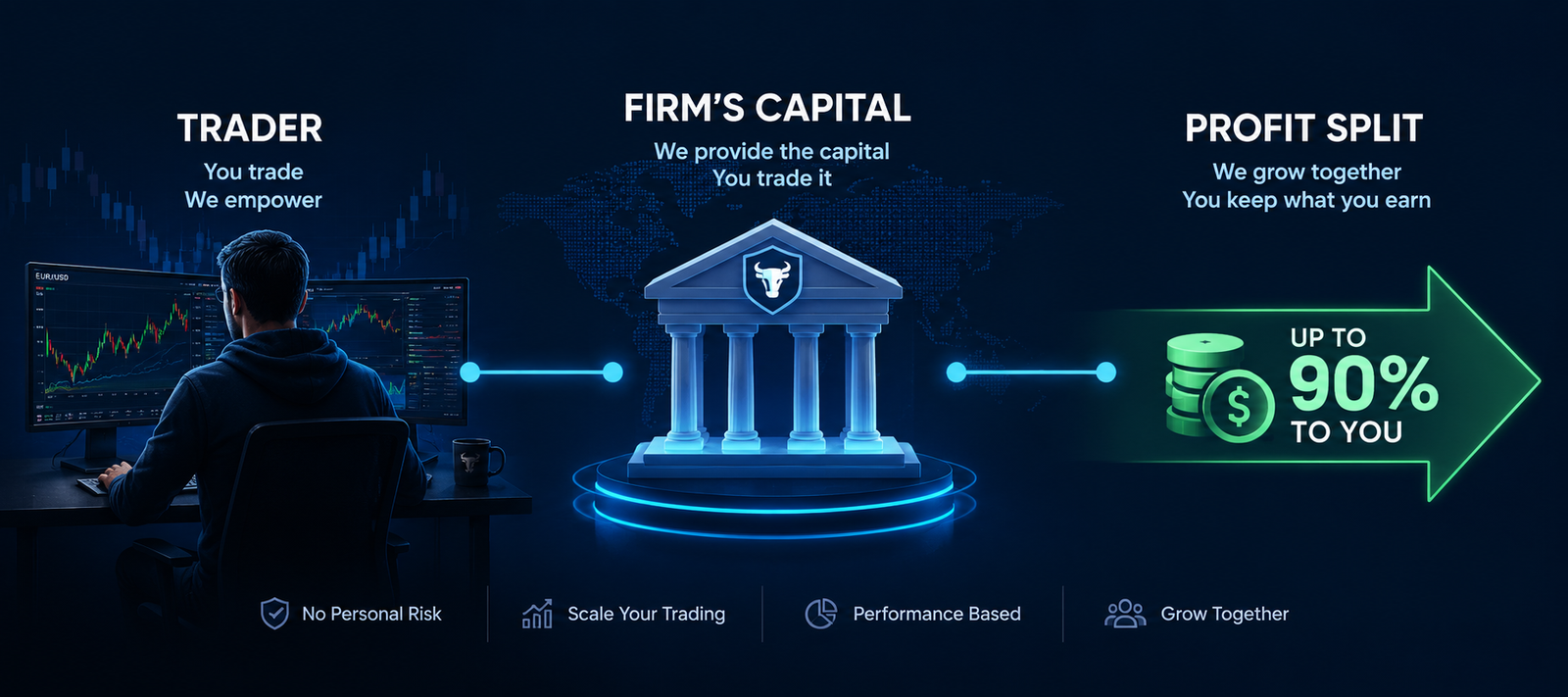
Fig 1.1 What is a funded trader illustrated
What Is a Funded Trader, Exactly?
A funded trader is an individual who trades capital provided by a proprietary trading firm, commonly called a prop firm, instead of risking their own savings. The firm supplies the account, sets the rules, and keeps a portion of any profits, while the trader earns the majority share for their performance. In essence, your skill becomes the product, and the firm’s capital becomes the fuel.
This arrangement solves the oldest problem in retail trading: a brilliant strategy is nearly worthless on a tiny account. A trader who can reliably grow capital but only has a small balance is stuck earning small amounts. By passing a firm’s evaluation, that same trader can manage a far larger account and earn proportionally larger rewards, all without exposing personal funds to catastrophic loss.
How Funded Trading Works
The journey usually begins with an evaluation, sometimes called a challenge. The firm asks you to trade a demo account that mirrors live conditions and to hit a profit target without breaking specific risk rules, such as a maximum drawdown or a daily loss limit. Passing proves you can generate returns while protecting capital, which is exactly the behaviour a firm wants from anyone handling its money.
Once you pass, the firm grants a funded account and you begin trading toward real payouts. Profits are split according to an agreed percentage, often heavily in the trader’s favour, and you withdraw your share on a regular schedule. Crucially, you continue operating within the same risk rules. Break them, and the account can be suspended, which is why discipline matters even more after funding than during the evaluation itself.
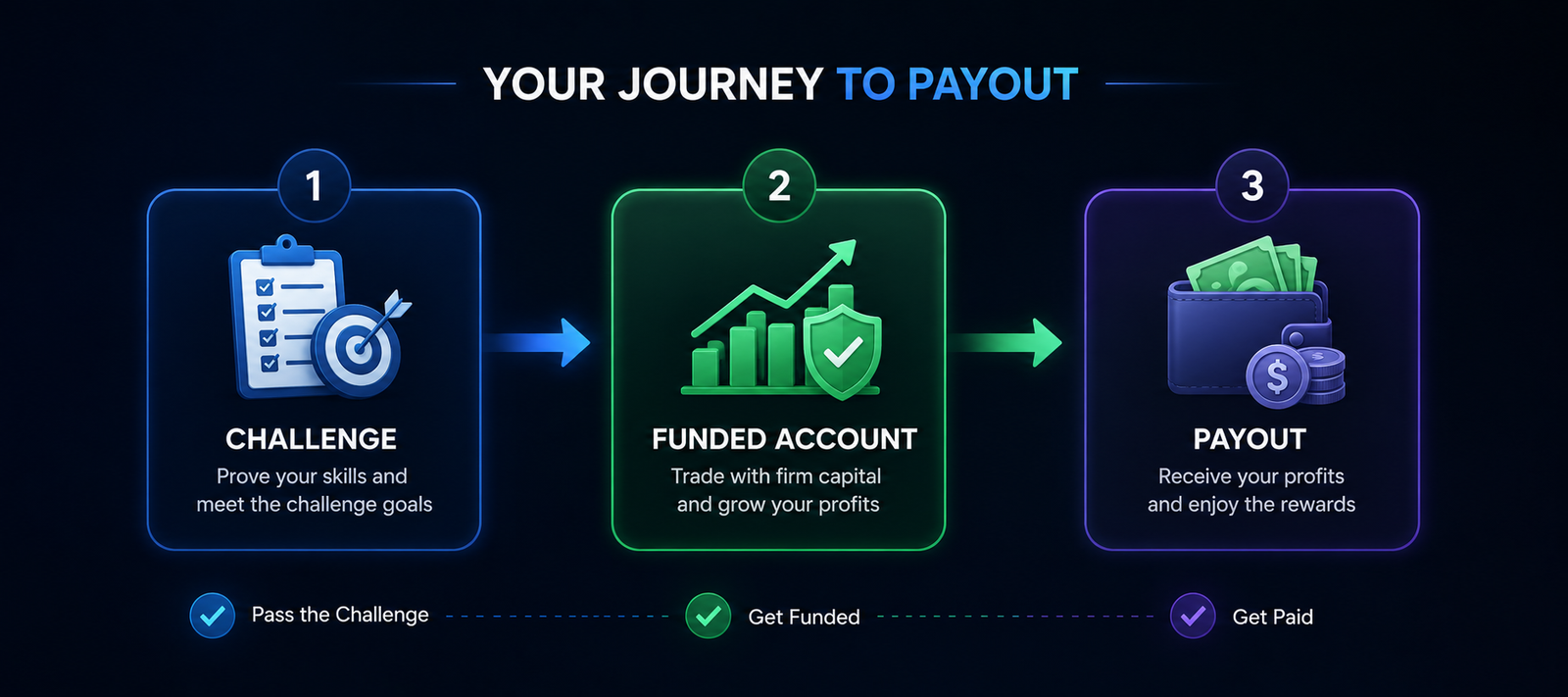
Fig 1.2 How to become a funded trader
The Real Funded Trader Program Benefits
The funded trader program benefits extend well beyond simply trading bigger numbers. The headline advantage is reduced personal financial risk — your downside is generally limited to the modest evaluation fee, while the upside is access to substantial capital. For many, this transforms trading from an anxious gamble with rent money into a structured professional pursuit.
There are subtler benefits too. The strict rules impose discipline that many traders struggle to enforce on themselves, effectively training better habits. Scaling plans reward consistency by increasing your capital over time, and the clear targets give structure to what is otherwise a lonely endeavour. The table below summarises the main advantages so you can weigh them at a glance.
| Benefit | What It Means for You |
|---|---|
| Reduced personal risk | Firm capital absorbs trading losses |
| Larger account access | Meaningful profits from proven skill |
| High profit split | Keep the majority of what you earn |
| Built-in discipline | Rules enforce strong risk habits |
| Scaling potential | Capital grows as you stay consistent |
| Professional structure | Clear targets and a defined path |
How to Become a Funded Trader
The honest answer to how to become a funded trader is that it requires proven skill, not just enthusiasm. The first step is developing a consistently profitable strategy on a demo or small live account, with a track record long enough to show your edge survives different market conditions. Skipping this stage and rushing into a paid challenge is the single most common way people waste money.
Once your strategy is reliable, choose a reputable firm whose rules suit your trading style — paying close attention to drawdown limits, profit targets, and the time allowed. Then approach the evaluation with the mindset of risk protection rather than fast profit. Most traders fail challenges not because their target was unreachable, but because they broke a loss rule by overtrading. Treat the evaluation as a discipline test, trade your normal plan, and let consistency carry you across the line.
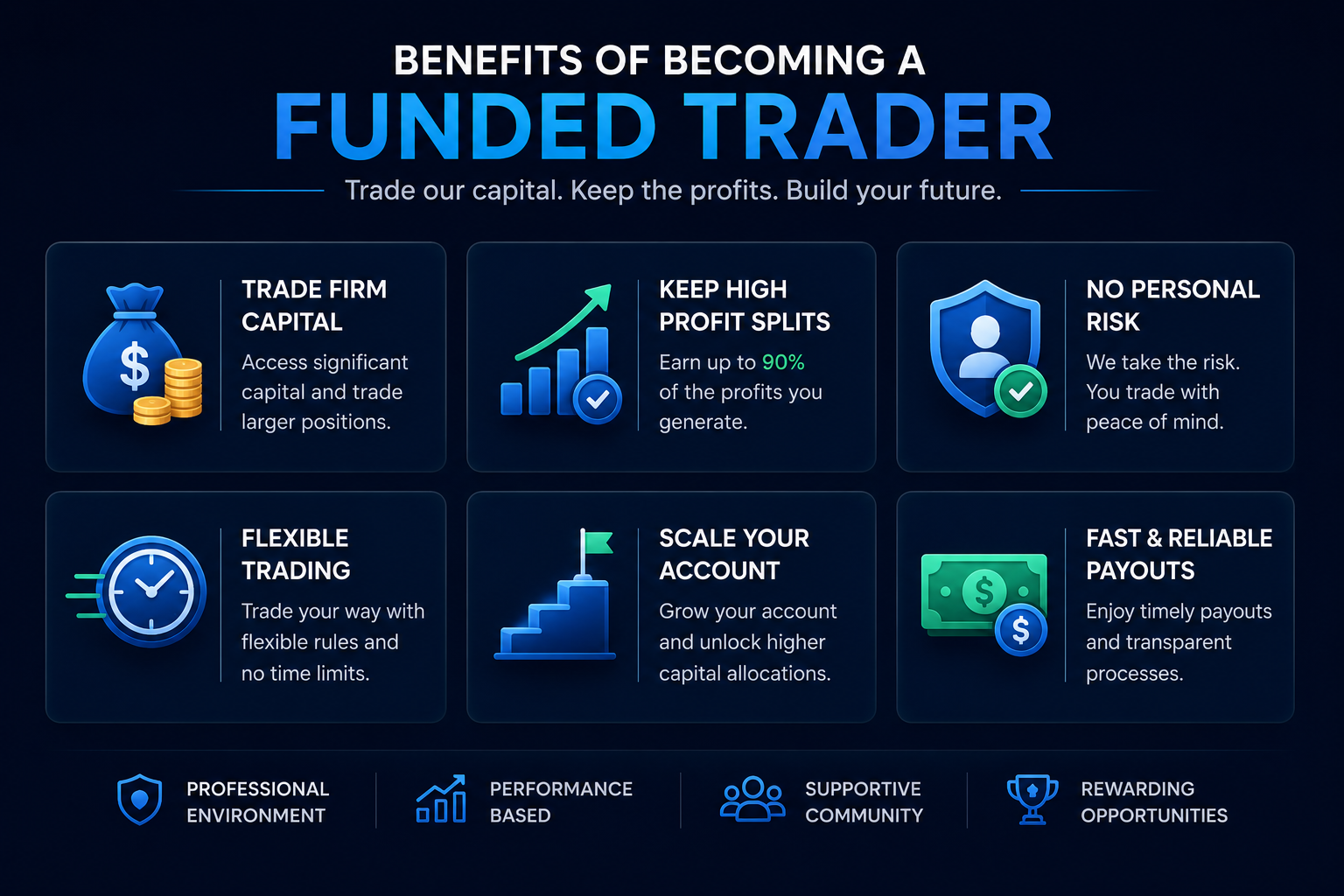
Fig 1.3 Funded trader program benefits
Risks and Rules You Must Respect
Funded trading is not free money, and pretending otherwise leads to disappointment. The evaluation fee is a real cost, and many traders fail their first attempts, so repeated tries can add up. More importantly, the rules are strict and non-negotiable: exceeding a daily loss limit or maximum drawdown ends the account immediately, regardless of how promising your strategy looked moments earlier.
You must also choose firms carefully. The industry has grown rapidly, and not every provider is reputable. Look for transparent rules, a track record of honouring payouts, and clear terms before paying any fee. Treat the model as a serious professional arrangement with genuine obligations, respect every rule as if your career depends on it, and you will navigate the risks far better than those chasing quick funding.
What Top Traders and Research Say
Professional traders consistently stress that protecting capital outranks chasing profit, which is exactly what funded evaluations demand. Paul Tudor Jones summed up the mindset that passes challenges: “Don’t focus on making money; focus on protecting what you have.” Funded firms essentially codify this wisdom into rules, rewarding traders who think like risk managers first.
The psychology research explains why so many capable traders still fail. The prospect theory of Daniel Kahneman and Amos Tversky showed that humans feel losses more intensely than gains, driving the impulsive, rule-breaking behaviour that ends funded accounts. Mark Douglas’s Trading in the Zone directly addresses this, teaching traders to operate from probabilities and discipline rather than fear and greed. The takeaway for aspiring funded traders is unmistakable: technical skill gets you to the challenge, but emotional control is what gets you funded and keeps you there.
Frequently Asked Questions
What is a funded trader in simple terms?
In simple terms, what is a funded trader means a person who trades a prop firm’s money instead of their own. After passing an evaluation that proves their skill and risk control, the firm grants a funded account, and the trader keeps most of the profits. The firm absorbs trading losses, while the trader’s main cost is the evaluation fee. It lets skilled traders earn meaningful returns without risking large personal capital.
How do you become a funded trader?
To understand how to become a funded trader, start by building a consistently profitable strategy with a real track record. Then choose a reputable prop firm and pass its evaluation by hitting a profit target without breaking drawdown or daily loss rules. Approach the challenge with a risk-protection mindset rather than chasing fast gains. Most failures come from overtrading and rule-breaking, so disciplined consistency is the true key to getting funded.
Are funded trader program benefits worth it?
The funded trader program benefits can be very worthwhile for skilled, disciplined traders. You gain access to large capital, keep a high profit split, and limit personal financial risk to a small fee. The model also enforces strong risk habits through its rules. However, it suits proven traders, not beginners hoping to learn on the firm’s money. If your strategy is already consistent, the benefits often outweigh the costs.
How much can a funded trader earn?
A funded trader’s earnings depend on their skill, the account size, and the profit split. Because firms allocate larger capital than most individuals own, even modest percentage returns can translate into meaningful payouts. That said, income is never guaranteed and varies widely. Many traders earn little or fail challenges, while consistent performers can scale up over time. Realistic expectations and steady risk management matter far more than dreams of instant wealth.
Are funded trader programs legitimate?
Many funded trader programs are legitimate, but the industry also contains weaker or unreliable providers. A reputable firm offers transparent rules, clearly stated profit splits, and a proven history of honouring payouts. Before paying any fee, research the firm thoroughly, read independent reviews, and understand every drawdown and loss rule. Treating the decision with the same caution you would apply to any financial commitment protects you from the few bad actors in the space.
Final Thoughts
Understanding what is a funded trader opens a realistic door for skilled traders held back by limited capital, but it is a door that only swings open for the disciplined. The model rewards consistency, risk control, and emotional steadiness rather than reckless ambition, and the traders who succeed treat their funded accounts as serious professional responsibilities. The genuine benefits — reduced personal risk, access to substantial capital, and a high profit share — are real, yet they are earned through proven skill and respect for every rule, not gifted to the impatient. If you build a reliable strategy first, choose a reputable firm, and approach the evaluation as a test of discipline, funded trading can become a legitimate and rewarding path. This article is educational and not financial advice; prop-firm participation carries real costs and risks.
Explore the funded route further. Visit forexmarkettrendss.com for prop-firm guides, evaluation tips, and strategy resources.
Related — how professional capital works: Forex Hedge Funds: How Currency Funds Work